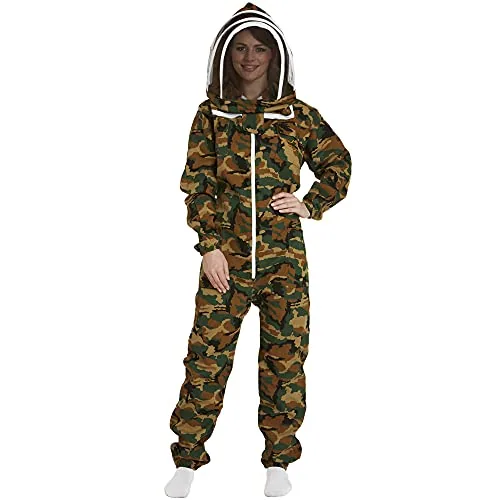
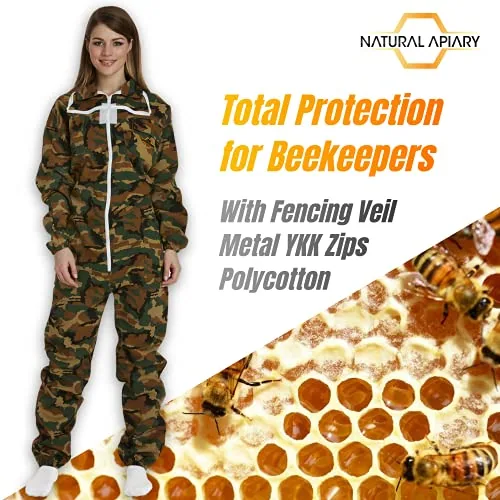
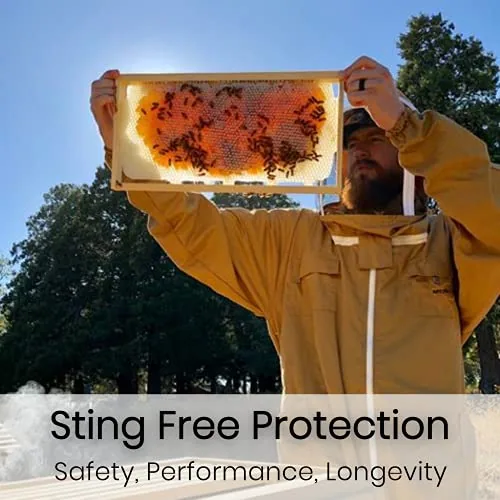
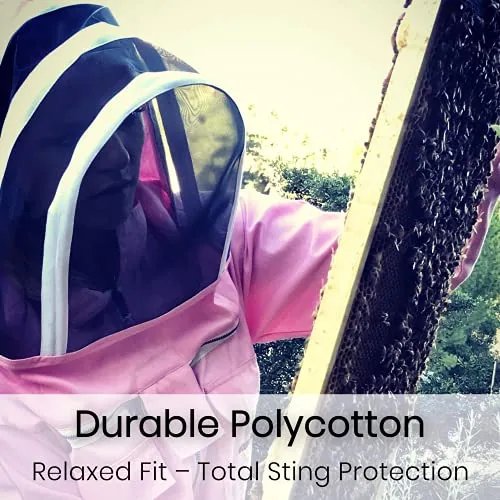
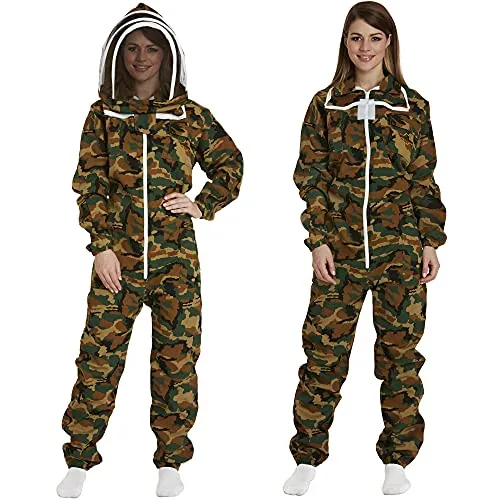
- The Apiarist is an all-in-one polycotton suit with a non-flammable fencing veil and metal YKK zippers.
- It is not ventilated; the Zephyros is the 3-layer vented model, with round and fencing veils.
- The Max Pro is 100% cotton with two veils, which Natural Apiary says resists stings better than polycotton.
- All three list a 1-year warranty. The listed Apiarist variant is camouflage, 2XL.
This Natural Apiary bee suit review centers on the Apiarist polycotton suit and compares it with the brand's Zephyros and Max Pro suits. It is written from the listings. Hive & Frame did not wear these suits, and we could not find a Natural Apiary maker site to confirm details beyond the listings.
For the wider field, see best beekeeping suits and best ventilated bee suits, or browse all protective gear. The brand-level matchup is in Humble Bee vs Natural Apiary.
Who it’s for, and who should skip it
- keep bees where inspection days are mild and want a full cloth suit without mesh
- like a fencing veil that holds the mesh away from your face
- want non-flammable veil mesh near the smoker
- value sturdy metal zippers on a suit you will zip and unzip often
- inspect in hot, humid weather, where the Zephyros or another 3-layer suit breathes better
- want a round veil or a choice of two veils (Zephyros and Max Pro include both)
- prefer a light-colored suit and the size you need only comes in camouflage
- want gloves in the box
Pros and cons
- Non-flammable mesh veil, per the listing
- Metal YKK zippers rather than plastic
- Double stitching with Velcro and elastic seals at cuffs
- Fencing veil keeps mesh off your face for clearer brood checks
- 1-year warranty listed
- No ventilation; warm in summer
- Only one veil style included with the Apiarist
- Camouflage variant runs against light-color advice
- Fabric weight (gsm) is not listed
Specs
| Fabric/Layers | Polycotton |
|---|---|
| Veil type | Fencing (non-flammable mesh) |
| Sizes | 2XL (listed variant) |
| Closure | Metal YKK zippers |
As stated by the maker or seller; confirm on the listing before you buy.
Which Natural Apiary suit is which?
Natural Apiary sells three full suits that share hardware but differ in fabric and veils. Here is what each listing states.
Natural Apiary suits, per the listings
| Model | Fabric | Ventilated | Veils included | Zippers |
|---|---|---|---|---|
| Apiarist | Polycotton | ✗ No | Fencing (non-flammable) | Metal YKK |
| Zephyros | 3 layers, 5 mm gap | ✓ Yes | Round + fencing (non-flammable) | Metal YKK |
| Max Pro | 100% cotton | ✗ No | Round + fencing (non-flammable) | Gunmetal YKK |
Source: Natural Apiary product listings
All three list a 1-year warranty, and none lists a fabric weight. The listing variants we track are the Apiarist in camouflage 2XL, the Zephyros in pink 2XS and the Max Pro in pink medium; other colors and sizes may be on the same listing.
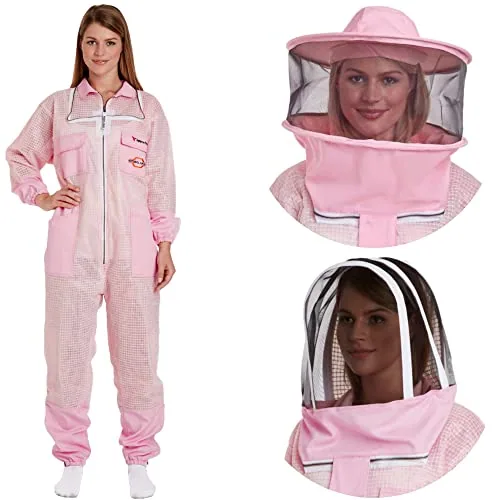
Natural Apiary Zephyros 3-Layer Vented Suit, 2 Veils
- Fabric
- 3 layers, 5 mm gap
- Veil
- Round and fencing (non-flammable)
- Sizes
- 2XS pink (listed variant)
Best for Hot weather with good coverage
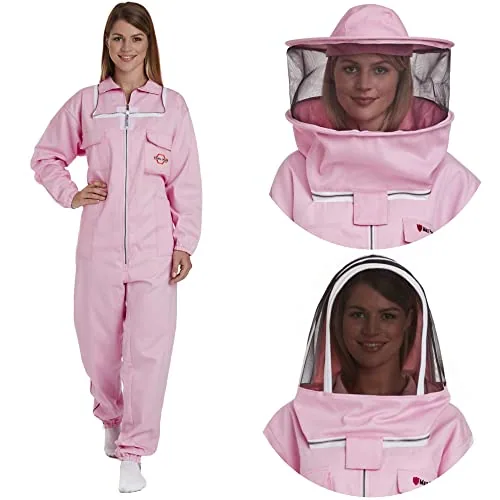
Natural Apiary Max Pro Cotton Suit, 2 Veils, Pink
- Fabric
- 100% cotton
- Veil
- Round and fencing (non-flammable)
- Sizes
- M (listed variant)
Best for Defensive colonies in cooler weather
Why the non-flammable veil matters
Every Natural Apiary suit lists non-flammable veil mesh, which the maker frames as protection from smoker or lighter flames. That is a practical point: you light the smoker close to your face, and puffing a smoker while leaning over a hive puts flame near the veil. Treat it as a margin of safety, not permission to be careless.
- Light the smoker before you put the veil on, or hold it at arm's length while it catches.
- Keep the smoker on the ground or a stand, not on the hive lid, when you set it down.
- Use cool, white smoke; if it is throwing sparks, add green grass or fuel to the top.
Fencing veil vs round veil
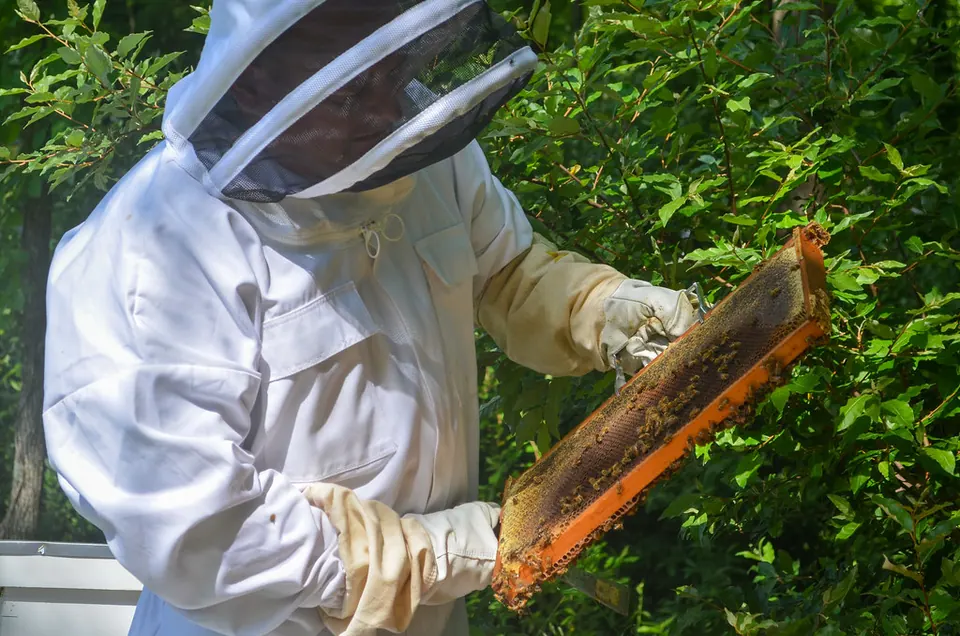
The Apiarist ships with a fencing veil, a squared hood with a stiffened mesh front. Natural Apiary says it improves visibility for spotting the queen and eggs. A round veil sits on a brim like a hat and gives more all-around vision. Neither is wrong; it is about comfort.
| Fencing veil | Round veil | |
|---|---|---|
| Mesh off the face | ✓ Stiffened front | ✓ Brim holds it out |
| Peripheral vision | ~ Good to the front | ✓ All around |
| Packs flat | ✓ Folds down | ~ Brim takes space |
| Fits with a hat or glasses | ✓ Usually | ~ Depends on brim size |
| Included with Apiarist | ✓ Yes | ✗ No |
If you want to try both, the Zephyros and Max Pro include one of each, as does the Oz Armour ventilated suit in the alternatives below.
Is the Natural Apiary Apiarist good in hot weather?
Not especially. Polycotton without vents traps heat, and summer inspections take longer than you think once you start looking for eggs, queen cells and mites. If your bees are in the South or the Southwest, or you inspect in the heat of the afternoon, a ventilated suit is the more comfortable choice.
Regional timing helps too: the seasonal calendar shows when the heaviest inspection months land where you live, and the hive inspection log keeps track of what you did each visit so you can work faster.
What about the camouflage color?
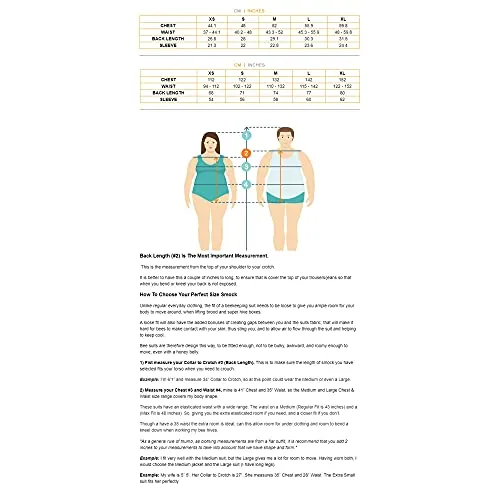
The listed Apiarist variant is camouflage. NIOSH advises light-colored, smooth-finished clothing around stinging insects, and most beekeeping suits are white or khaki for that reason. If your size is offered in white, that is the safer pick.
Polycotton, cotton or 3-layer mesh?
Natural Apiary covers all three fabric types, which makes the range a useful way to think about the choice. Cotton (Max Pro) is the heaviest and, by the maker's account, the most sting-resistant, but also the warmest. Polycotton (Apiarist) is lighter, dries faster and is easier to wash. Layered mesh (Zephyros) relies on distance from the skin rather than cloth thickness, so it breathes far better and still keeps stingers away when the layers are not compressed.
A simple rule: pick for your hottest inspection month and your most defensive colony. If those are the same hive in August, ventilation usually wins: an overheated beekeeper tends to rush, and rushed, jerky handling is what upsets a colony.
Getting the fit right
- Size for layers. Try the suit over the clothes you will actually wear on hive days.
- Kneel and reach. The suit should not pull tight across your back, knees or crotch, since bees sting where fabric presses on skin.
- Seal the cuffs. Use the Velcro and elastic at wrists and ankles, then pull gloves over the sleeves and boots under the legs.
- Check the veil zip. Close it fully and check for gaps at the neck.
Natural Apiary also sells an Apiarist jacket with the same fencing veil and a pullover smock for quick visits. Whether a full suit or a jacket fits your routine better is covered in our best beekeeping jackets list.
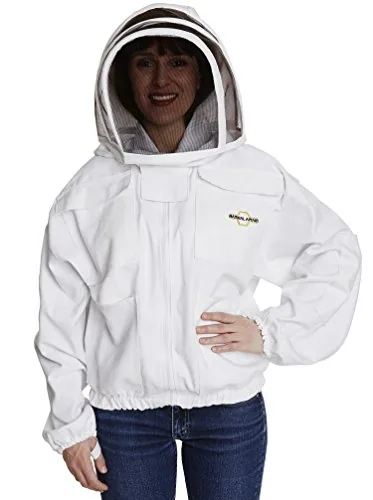
Natural Apiary Apiarist Polycotton Jacket, Fencing Veil
- Fabric
- Polycotton
- Veil
- Fencing (non-flammable)
- Sizes
- S/M (listed variant)
Best for Jacket for routine checks
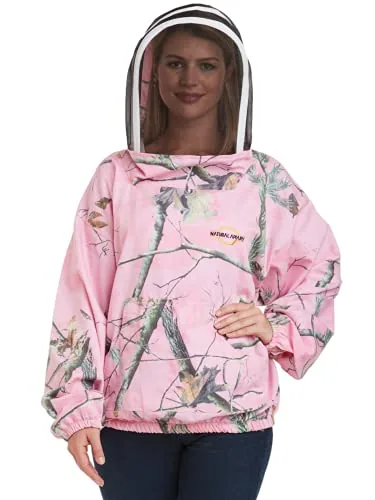
Natural Apiary Beekeeping Smock, Fencing Veil, Pink
- Fabric
- 65% cotton / 35% polyester
- Veil
- Fencing (non-flammable)
- Sizes
- M (listed variant)
Best for Short checks on calm hives
Still choosing a style? See bee suit vs jacket and the Humble Bee 430 review.
Alternatives worth a look
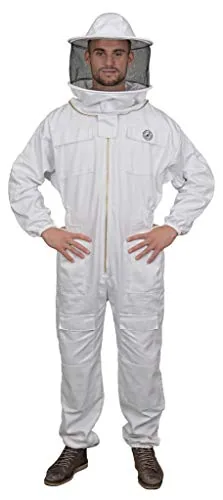
Humble Bee 410 Polycotton Suit with Round Veil
- Fabric
- 280 gsm 50/50 polycotton
- Veil
- Self-supporting round (removable)
- Sizes
- XXL (fits 6'2"-6'3")
Best for Mild-weather full coverage
Why consider it: A 280 gsm polycotton suit with a removable round veil, brass zippers and thumb and foot holds, sized by height.
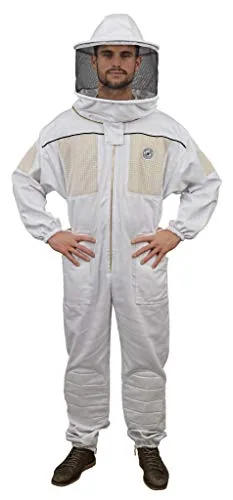
Humble Bee 430 Ventilated Suit with Round Veil
- Fabric
- 280 gsm polycotton + 220 gsm vent panels
- Veil
- Self-supporting round (removable)
- Sizes
- 3XL (fits 6'4"-6'6"); XXS-6XL range
Best for All-round ventilated suit
Why consider it: Polycotton body with 220 gsm vent panels: a step toward ventilation without going to all-mesh.
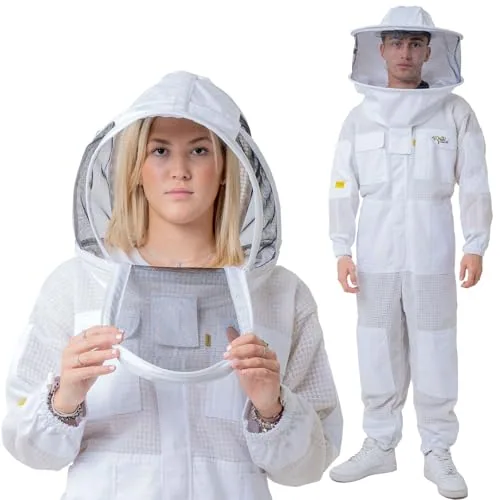
OZ ARMOUR 3-Layer Ventilated Suit, Fencing & Round, L
- Fabric
- Air mesh (listing says 3-layer and double-layer)
- Veil
- Fencing and round (detachable)
- Sizes
- L (listed variant); runs small per reviews
Best for Ventilated suit with two veils
Why consider it: A ventilated suit with both fencing and round veils and eight pockets; check its size chart before ordering.
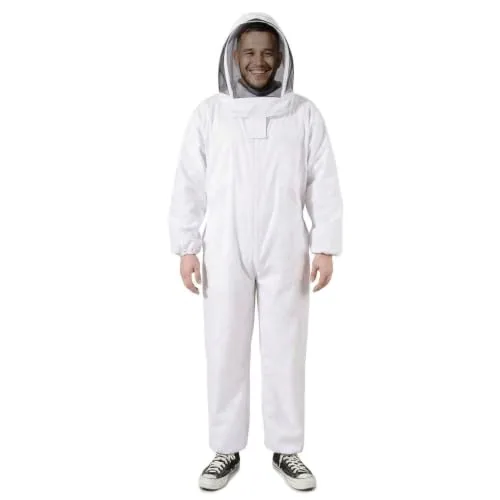
Flexzion Cotton Bee Suit with Veil Hood, Medium
- Fabric
- Cotton
- Veil
- Attached ventilated hood
- Sizes
- M (5'3"-5'5")
Best for Budget first suit
Why consider it: A full-body cotton suit with an attached ventilated hood and three pockets.
Built from the Natural Apiary listings (fabrics, veils, zippers, warranty) and compared with other suits in the Hive & Frame catalogue. Sting-prevention advice follows CDC NIOSH. We found no maker site to verify against, and Hive & Frame did not wear these suits.