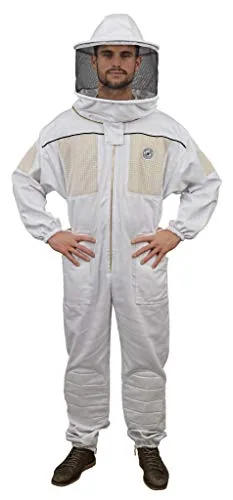
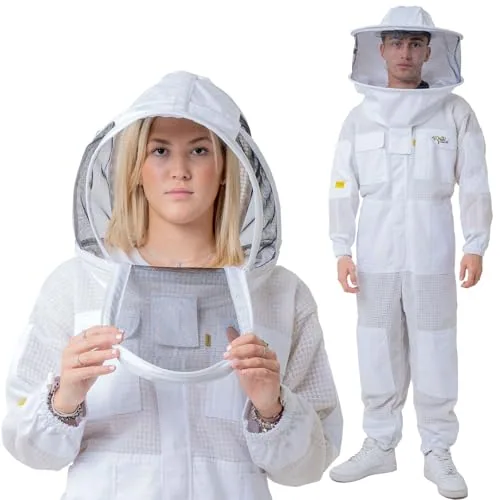
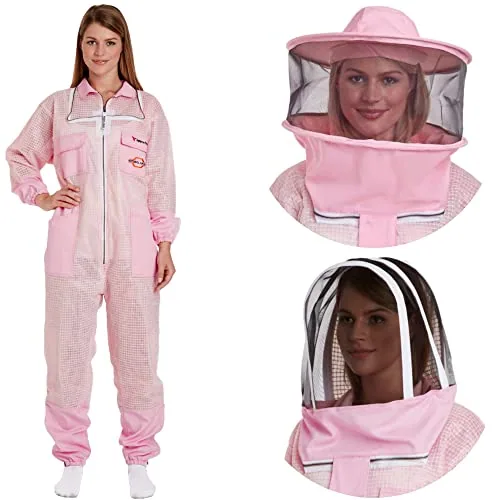
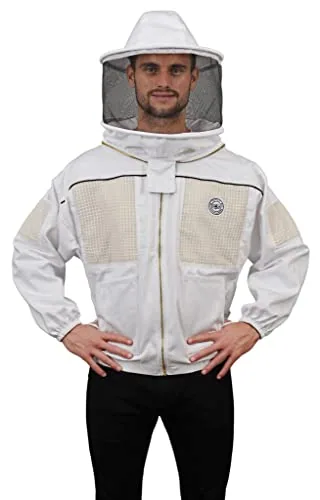
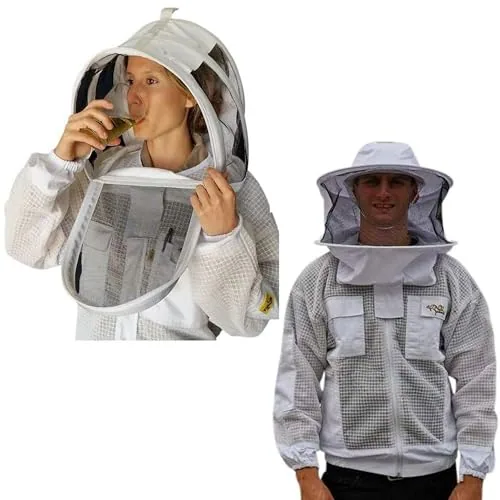
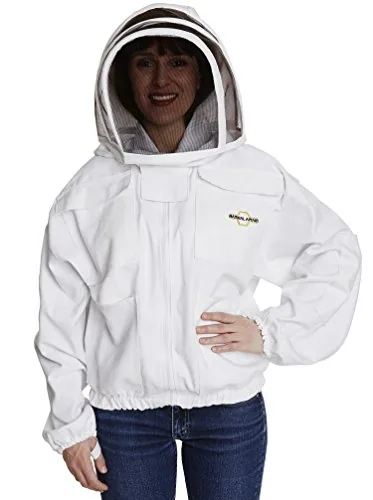
- A full suit covers legs and ankles, so it is the safer first buy for beginners, defensive colonies and long harvest days.
- A jacket covers the upper body and veil only. It suits short checks on calm colonies when you already own sturdy trousers and boots.
- Heat matters more than the cut: ventilated suits and jackets use layered mesh or vent panels (Humble Bee lists 220 gsm vent panels on 280 gsm body cloth).
- Many beekeepers end up with both: a suit for big jobs and a jacket for quick looks.
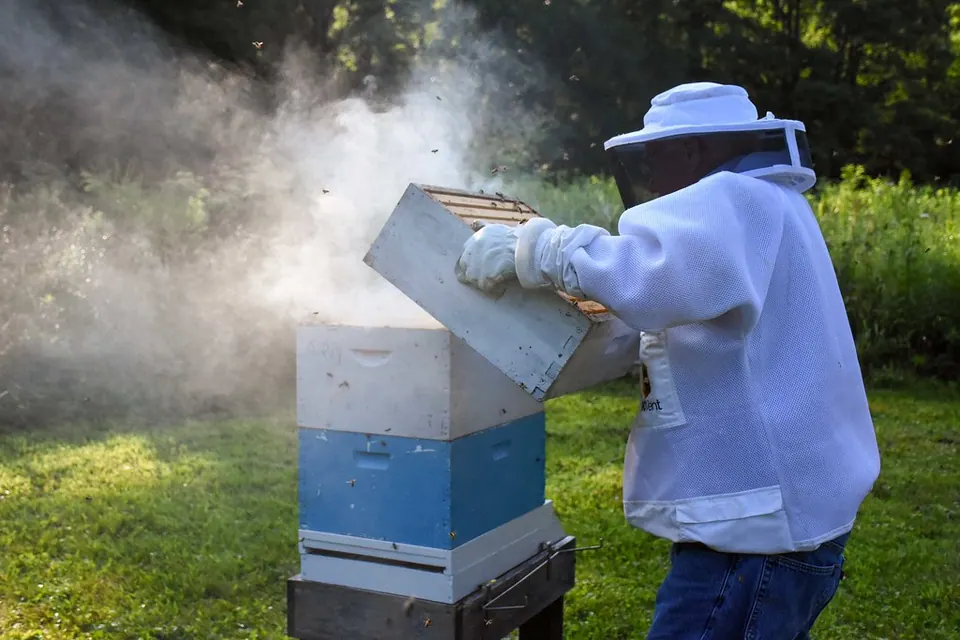
Bee suit vs jacket is one of the first gear choices a new beekeeper makes, and both answers are reasonable. A suit protects you from veil to ankle; a jacket protects the parts bees aim for most, your face and upper body, and leaves your legs to your own clothing.
This comparison uses the listed fabric, veil and closure specs of suits and jackets in the Hive & Frame catalogue, plus extension guidance on protective clothing. We did not wear or sting-test these garments, so fit notes come from maker size charts, not measurements.
Picks from each side
Full bee suit
Humble Bee 430 Ventilated Suit with Round Veil
- Fabric
- 280 gsm polycotton + 220 gsm vent panels
- Veil
- Self-supporting round (removable)
- Sizes
- 3XL (fits 6'4"-6'6"); XXS-6XL range
Best for All-round ventilated suit
OZ ARMOUR 3-Layer Ventilated Suit, Fencing & Round, L
- Fabric
- Air mesh (listing says 3-layer and double-layer)
- Veil
- Fencing and round (detachable)
- Sizes
- L (listed variant); runs small per reviews
Best for Ventilated suit with two veils
Natural Apiary Zephyros 3-Layer Vented Suit, 2 Veils
- Fabric
- 3 layers, 5 mm gap
- Veil
- Round and fencing (non-flammable)
- Sizes
- 2XS pink (listed variant)
Best for Hot weather with good coverage
Bee jacket
Humble Bee 330 Ventilated Jacket with Round Veil
- Fabric
- 280 gsm polycotton + 220 gsm synthetic vent panels
- Veil
- Self-supporting round (removable)
- Sizes
- M (fits 5'7"-5'8")
Best for Hot-weather jacket
OZ ARMOUR 3-Layer Ventilated Jacket, 2 Hoods, M
- Fabric
- 3-layer mesh
- Veil
- Fencing and round brim (detachable)
- Sizes
- M (listed variant)
Best for Jacket wearers in summer
Natural Apiary Apiarist Polycotton Jacket, Fencing Veil
- Fabric
- Polycotton
- Veil
- Fencing (non-flammable)
- Sizes
- S/M (listed variant)
Best for Jacket for routine checks
What is the difference between a bee suit and a jacket?
Both garments share the important part: an attached veil that zips to the body, elastic or thumb loops at the wrists and a waist seal. The difference is what happens below the waist. A suit is one piece with elastic ankles, and many add foot holds or leg zips so you can pull it over boots. A jacket stops at the hips, so your trousers, socks and boots become the lower half of your protection.
Suit vs jacket at a glance
| Full bee suit | Bee jacket | |
|---|---|---|
| Covers legs and ankles | ✓ Yes, elastic ankles | ✗ No, wear thick trousers |
| Veil attached by zip | ✓ Yes | ✓ Yes |
| Time to put on | ~ Slower, step-in and zip | ✓ Fast, like a hoodie |
| Heat in summer | ~ Warmer unless ventilated | ✓ Cooler, less fabric |
| Protects clothes from wax and propolis | ✓ Head to toe | ~ Upper body only |
| Good for defensive colonies | ✓ Yes | ✗ Legs exposed |
| Good for quick feeder or entrance checks | ~ Overkill | ✓ Yes |
| Kneepads or leg zips on some models | ✓ Humble Bee 430, OZ ARMOUR | ✗ Not applicable |
Source: Hive & Frame catalogue listings, November 2026
Texas A&M AgriLife's protective-clothing guide (ENTO-097) suggests starting with a full suit and moving to lighter options as you learn your tolerance and comfort around hives. It says a jacket paired with proper pants can give adequate protection, that shoes should cover the ankle, and that suit legs go over boots rather than tucked in. Leg covers from bee suppliers close the ankle gap for jacket wearers or suits with tired elastic.
Is bee suit vs jacket about stings or about heat?
For most backyard beekeepers it is about heat. Stings come through fabric that is pulled tight against skin, typically at the knees, thighs and shoulders. Thick cloth or layered mesh that holds away from the body stops most of them, and that works the same in a suit or a jacket. What a suit adds is coverage; what it costs is heat on a July afternoon.
Adult protective gear in our catalogue, by style
Count of products (gloves and kids' gear excluded)
Suits outnumber jackets in the catalogue more than two to one, and most new listings are ventilated three-layer mesh. That means you can get full coverage without a heavy cotton coverall. If you keep bees in a hot, humid region, compare ventilated suits first before deciding a jacket is the only way to stay cool. Our ventilated bee suit picks list mesh layers and veil types side by side.
When is a jacket enough?
A jacket is a good fit when your visits are short and your bees are calm. Most experienced hobbyists own one for these jobs:
- Topping up a feeder, swapping an entrance reducer or fitting a mouse guard.
- Quick brood checks on a gentle colony in good weather, with the hive open for a few minutes.
- Watching the entrance or doing a sugar roll from a single frame.
- Days when you already wear heavy work trousers and tall boots.
Jackets come in the same fabric families as suits. The Humble Bee 330 pairs polycotton with vent panels, the OZ ARMOUR jacket is three-layer mesh with two hood styles, and the Natural Apiary Apiarist jacket is plain polycotton with a fencing veil. If the yard is small and neighbors are close, a calm, short inspection matters more than what you wear; see the backyard and urban hub for setups that help.
When should you choose a full suit?
Choose a suit when you are new, when the job is long, or when the bees are not calm. Specific cases:
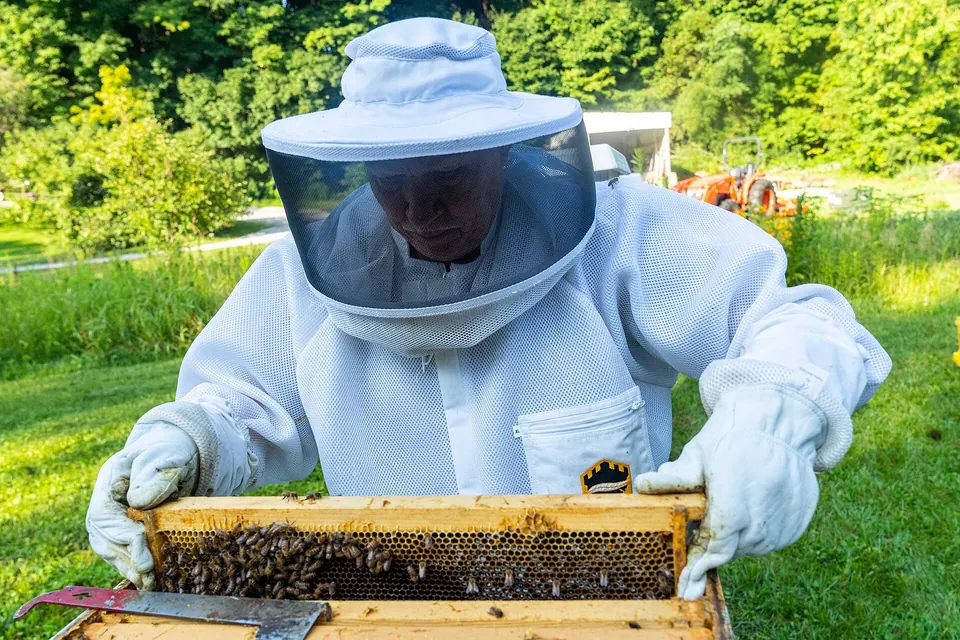
- Your first season. You will drop frames, move slowly and stay open longer than you plan. Full coverage takes one worry away.
- Honey harvest and big manipulations. Pulling supers, splitting or combining colonies keeps the hive open and the air full of bees.
- Defensive or unknown colonies. Swarms, cut-outs and colonies that have turned defensive deserve full coverage.
- Kneeling at the hive. Suits like the Humble Bee 430 and 431 list cushioned kneepads; jackets cannot help your knees.
- Keeping clothes clean. Wax, propolis and honey stay on the suit instead of your trousers.
How to fit and wear a suit or jacket
- Size by height and what you wear underneath
Humble Bee lists a height range for each size (the 430 in 3XL fits 6'4" to 6'6", for example). Leave room for a layer underneath and for bending. Other brands chart by chest or by letter size, so check each chart and size up if in doubt.
- Pick the veil you can see through
Round, self-supporting veils give a wide view and keep mesh off your face. Fencing veils stand up off the nose and suit glasses wearers; several Natural Apiary and OZ ARMOUR models ship with both.
- Seal the gaps
Zip the veil fully, check the zipper covers, pull thumb loops over your thumbs and put gloves over the cuffs. With a jacket, wear sturdy trousers and ankle-high boots, and add leg covers if bees find the gap. Texas A&M advises wearing gloves over the suit sleeves, pulled as far up the arm as possible.
- Light your smoker before you open the hive
Clothing is the backup. A calm approach and a little cool smoke do most of the work; our bee smoker picks compare sizes and heat shields.
- Wash and store it
Texas A&M suggests removing the hood or veil, using a mild unscented detergent and hanging the suit to dry; follow the maker's care label too (Humble Bee veils are removable, and US APIARY lists low-temperature machine washing). Store it hung up and aired out, since a folded damp suit may mold.
Mistakes to avoid
- Buying the cheapest jacket and wearing it with thin leggings or running shoes.
- Choosing a suit so tight that fabric presses on your thighs and shoulders when you crouch.
- Leaving the veil zipper half closed because you will only be a minute.
- Picking a heavy cotton suit for a hot climate when a ventilated suit would keep you working longer.
- Forgetting gloves. Most beginners start with goatskin or cowhide gloves and move to nitrile once confident; see our glove picks.
Building your first gear list? The startup shopping list counts one suit per person and lets you add a jacket as an extra.
Other options worth a look
Not set on the brands above? These listings cover the in-between styles: a pullover smock, an air-mesh jacket, a budget ventilated suit with gloves and a heavy poly-cotton jacket for larger sizes.
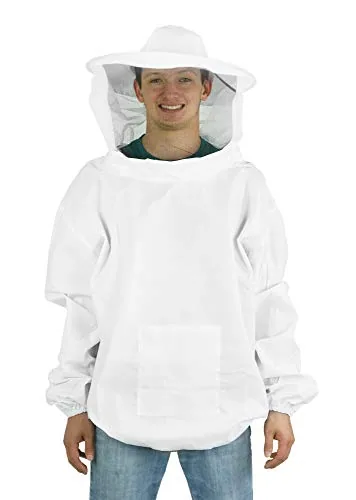
VIVO BEE-V105 Pullover Beekeeping Smock with Veil, L
- Fabric
- Lightweight fabric
- Veil
- Partly zip-off hood
- Sizes
- L (42" brim to waist)
Best for Budget jacket for starters
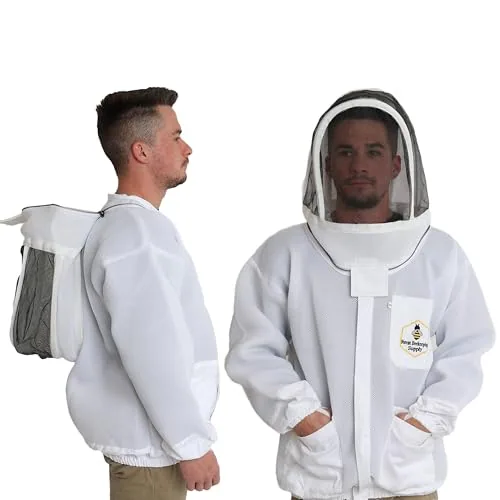
Forest Beekeeping Air Mesh Jacket with Veil, 2XL
- Fabric
- 3D air mesh
- Veil
- Fencing/round (2-way zip)
- Sizes
- 2XL (listed variant)
Best for Hot-weather jacket
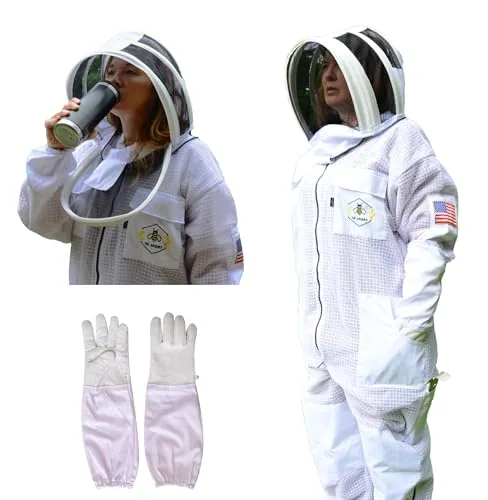
US APIARY 3-Layer Ventilated Suit, Fencing Veil, S
- Fabric
- Polycotton mesh outer/inner, EVA mesh middle
- Veil
- Fencing (non-flammable)
- Sizes
- S (listed variant)
Best for Hot-weather full suit
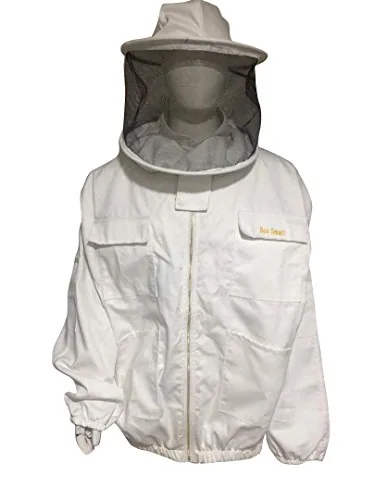
Bee Smart 900 Heavy-Duty Bee Jacket with Round Veil
- Fabric
- 260 g/m2 polyester/cotton
- Veil
- Round
- Sizes
- Listed 4XL (attribute says 3XL)
Best for Larger beekeepers wanting a jacket
Browse every suit, jacket and veil in protective gear, or start with the full rankings in best beekeeping suits and best beekeeping jackets.
Suit reviews: Humble Bee 430 and Oz Armour; for handling, see bee sting safety.
Choose a full bee suit if this is your first year, you do long inspections or harvests, your colonies can be defensive, or you kneel at the hive. Go ventilated if your summers are hot.
Choose a jacket if you already keep bees, your visits are short and your colonies are calm, and you will wear thick trousers and boots. Many beekeepers buy a suit first and add a jacket for quick checks in year two.
We compared listed fabric weights, layers, veil types, closures and sizing for the suits and jackets in our catalogue and checked them against extension guidance on protective clothing. We did not wear, wash or sting-test these garments, and we never publish scores or prices.