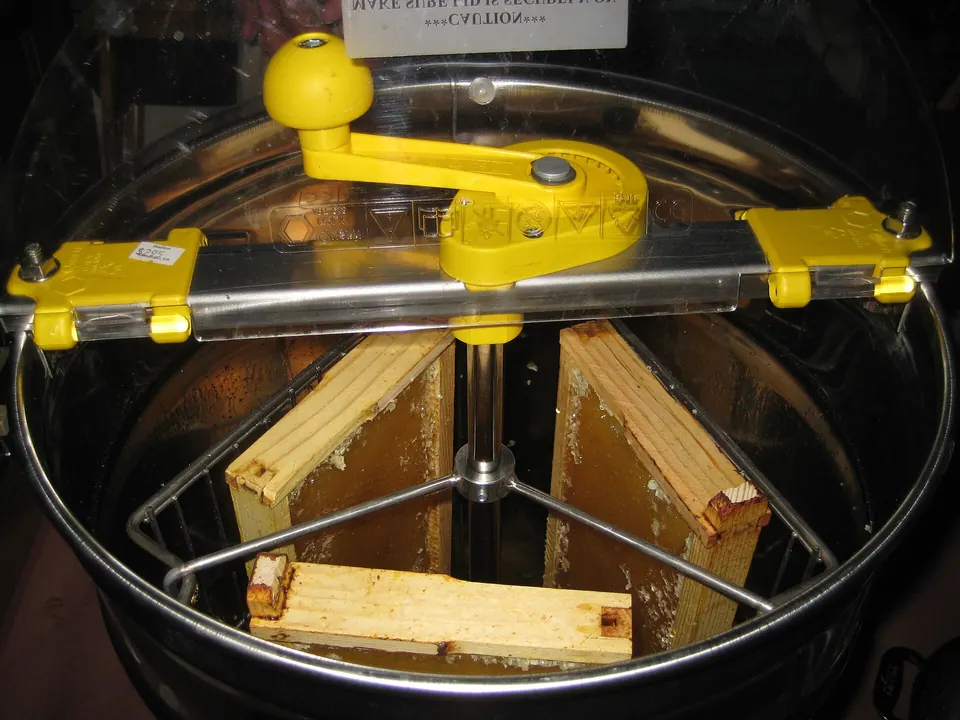
- In a tangential extractor each comb face points at the drum wall, so you spin, flip every frame and spin again.
- In a radial extractor frames sit like wheel spokes with the top bar outward, so both sides empty in one spin.
- Tangential units are usually smaller and cheaper; radial units hold more frames and suit larger harvests.
- Most hobby listings do not name the type. In our catalogue only one extractor states it (tangential).
Radial vs tangential extractor is about how the basket holds your frames. Both spin comb so centrifugal force throws honey out against the drum wall, where it runs down to the gate. The difference is the angle of the frame to the wall, which decides how many frames fit, whether you flip them, and how hard the spin is on new comb.
This page explains both using published extractor references and the listings in our honey harvest category. For the crank-or-motor question, see manual vs electric honey extractors.
Picks from each side
Tangential
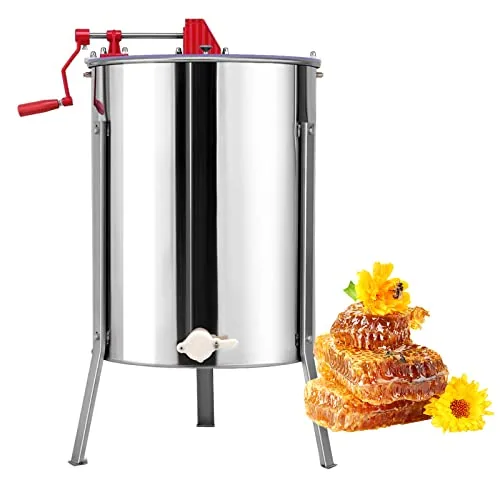
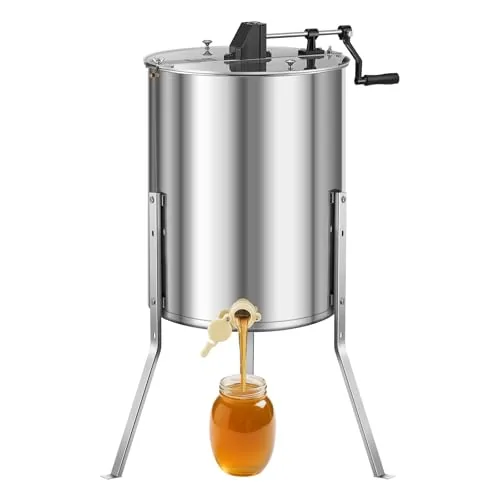
AIZYR 4-Frame Manual Honey Extractor with Stands
- Frames
- 4 (deep, medium or shallow)
- Drive
- Manual crank
- Gate
- Honey gate; clear perspex lids
Best for Hobbyists with a few hives
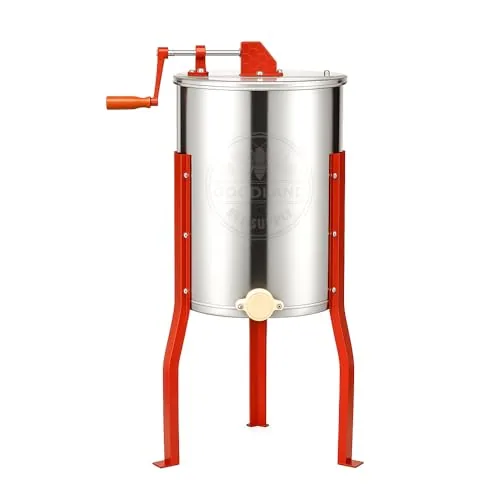
Goodland Hardin Professional 2-Frame Manual Extractor
- Frames
- 2
- Drive
- Manual crank
- Gate
- Clear Plexiglas top; optional legs included
Best for First extractor for 1-3 hives
Radial and dual-mode
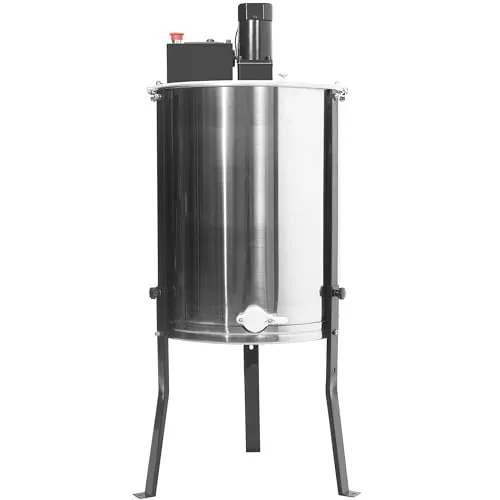
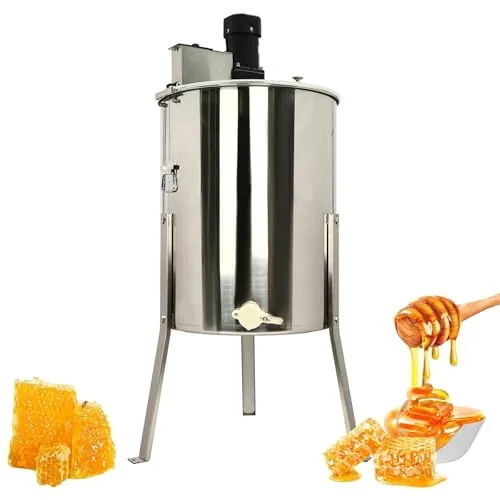
VIVO BEE-V004E Electric 4/8-Frame Extractor
- Frames
- 4 deep or 8 small/medium
- Drive
- Electric, 120V AC
- Gate
- 17.2 in from floor, 0.5 in above drum bottom
Best for Extracting several supers per session
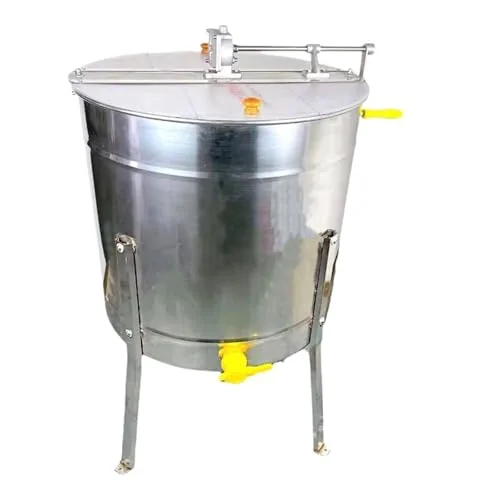
VEVOR 4/8-Frame Manual Extractor, Tripod Stand
- Frames
- 4/8 (shallow, medium, deep)
- Drive
- Manual crank
- Gate
- Acrylic lid; stand 11.8-15 in
Best for Larger manual batches
Radial vs tangential side by side
How the two basket types differ
| Tangential | Radial | |
|---|---|---|
| Frame position | One comb face toward the drum wall | Top bar toward the wall, like spokes |
| Sides per spin | ✗ One; flip and repeat | ✓ Both |
| Handling | ✗ Remove and turn every frame | ✓ Load once |
| Frames per load | ~ Usually 2–6 | ✓ Often more; large units hold dozens |
| New or fragile comb | ✓ Gentler, especially with a partial first spin | ~ Spin slowly |
| Frame depth | ✓ Usually any depth | ~ Rails may suit mediums and shallows best |
| Size and cost | ✓ Smaller, cheaper | ✗ Larger, costlier |
| Common in | Hobby kits and 2–4 frame units | Commercial and larger hobby units |
Source: Wikipedia: Honey extractor; Countryside Backyard Beekeeping
How does each extractor type work?
Tangential
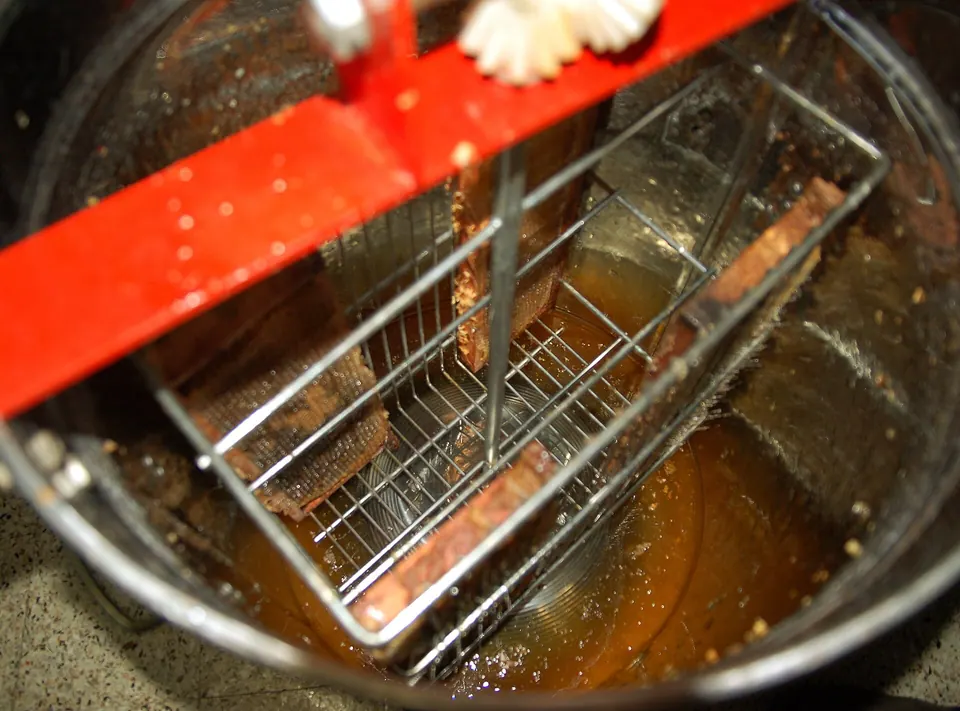
Frames sit in a cage with one face of the comb toward the drum wall. When the basket spins, honey flies out of the outward-facing cells only. Countryside's guide describes the routine: once that side is done, remove each frame, turn it around and spin again. Many beekeepers spin the first side only partway, flip, empty the second side fully, then flip back to finish the first. That keeps a heavy full side from pushing through the comb while the other side is empty.
Some tangential models have pivoting baskets that swing the frames around when you reverse direction, so you do not have to lift them out. These are often called reversible or self-reversing.
Radial
Frames sit like spokes, top bar toward the wall. Comb cells tilt slightly upward, and Wikipedia notes large commercial extractors rely on that slope; honey leaves both sides at once and the frames never need turning. Countryside cautions that some extractors sold as radial still need frames turned to get the last honey out, so read the listing's description of how frames load and whether they need turning.
Dual-mode baskets
Many mid-size extractors are sold as "4 deep or 8 medium". The VIVO and VEVOR 4/8-frame units in our catalogue are listed that way. A rack that fits more small frames than deep ones is often a dual-mode design, with deeps held tangentially and mediums set closer to radial, but neither listing says so. Look at the basket photos or ask the seller.
What the numbers look like for a hobby harvest
Countryside works through an example: four colonies with two supers each at nine to ten frames per super is 72 to 80 frames, which it estimates at three and a half to four hours of spinning in a 2-frame extractor that empties one side at a time. The chart below runs simpler arithmetic for 40 frames to show where flipping costs time.
Worked example: spins to empty 40 frames
Loads × spins per load: tangential 20 × 2 and 10 × 2; radial 5 × 1 and 4 × 1
Loading and unloading take time too, so real sessions run longer than spin counts suggest. The honey yield calculator estimates how many pounds and jars your hives might give, which tells you how big an extractor you really need.
How to tell which type a listing is
Because most listings skip the word, use the photos.
- Look down into the basket. Frames held flat against a mesh cage are tangential. Frames slotted toward the center like bicycle spokes are radial.
- Compare the frame counts. "2 frames" or "3 frames of any depth" almost always means a tangential cage. "4 deep or 8 medium" suggests a dual-mode rack.
- Look for reversing. Pivoting cages or "self-reversing" in the title mean tangential baskets that turn themselves.
- Check the depth note. Radial rails are often sized for medium and shallow frames; deeps may need a different insert.
- Ask. If the seller cannot say, assume tangential and plan to flip.
Borrow before you buy?
Many local beekeeping clubs lend or rent extractors to members, often both a small tangential unit and a larger radial one. Borrowing for one season is the cheapest way to learn which type suits your frames and your patience. Note how long your harvest takes, how many frames you pulled and whether flipping bothered you; those three numbers will tell you more than any listing.
Mistakes to avoid
- Spinning the first side of a full tangential frame to empty. Spin partway, flip, then finish.
- Starting fast. New comb and wax foundation blow out more easily; Countryside recommends speed control.
- Loading unevenly. Balance heavy frames opposite each other.
- Letting honey rise to the basket. Drain into a bucket so the level stays below the frames, as Wikipedia notes.
- Buying for one harvest. Count frames across your best year, not your first.
Comb strength depends on foundation, too. See plastic vs wax foundation.
Who should choose a tangential extractor, and who should choose radial?
Choose tangential if you…
- have one to four hives and extract a few dozen frames a year
- extract new comb or wax foundation that needs a gentle start
- want a small unit you can store in a closet
- run deep frames in your supers
Choose radial or dual-mode if you…
- extract many medium or shallow supers at once
- want to load frames once and walk away from an electric unit
- are growing toward selling honey
- have the space for a larger drum
Planning to sell? The selling honey page groups the strainers, buckets and jars that follow the extractor, and our VEVOR honey extractor review looks at one 4/8-frame unit in detail.
Other options worth a look
From other makers: a 6-frame hand-crank extractor, a 4-frame electric with a stated drum size, and a compact 2-frame metal extractor with a honey gate. None of these listings states its basket type either.
CHYLMAPHEN 6-Frame Manual Honey Extractor
- Frames
- 6
- Drive
- Manual crank
- Gate
- Honey outlet
Best for Growing hobby apiaries
TsoLay 4-Frame Electric Honey Extractor, 140W
- Frames
- 4
- Drive
- Electric
- Gate
- Clear lid; drum 18.5 x 23.6 in
Best for Hobbyists moving to electric
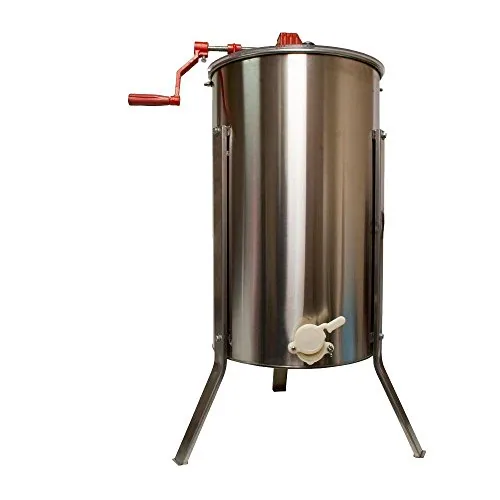
Harvest Lane Honey 2-Frame Metal Extractor
- Frames
- 2 (deep and medium)
- Drive
- Manual
- Gate
- Honey gate
Best for Hobby beekeepers starting extraction
See also the best honey extractors and how to extract honey.
Choose a tangential extractor for a small apiary, deep frames and new comb, and accept the flip. Choose a radial or dual-mode extractor when you spin many medium or shallow frames and want to load once. Since most listings do not say which they are, check the basket photos before you order.
Built from extractor references (Wikipedia, Countryside Backyard Beekeeping), listing specs and counts from the Hive & Frame catalogue, and simple arithmetic for the worked example. Type assignments for unlabeled listings are our inference from capacity and layout, as stated on the page. Hive & Frame did not spin frames in these units.