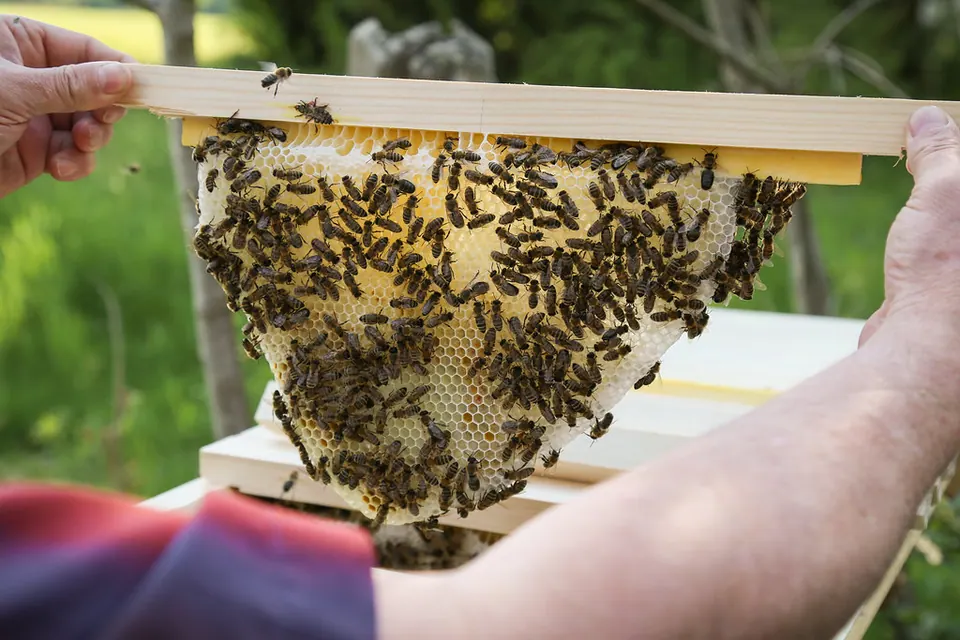
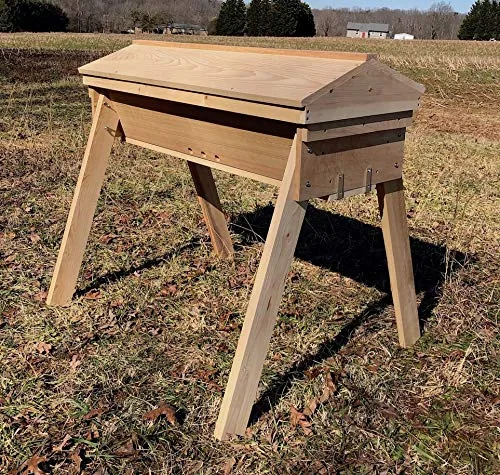
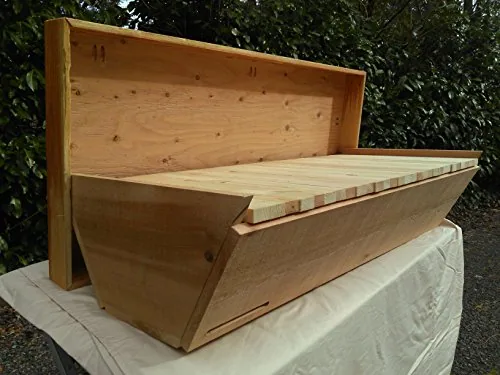
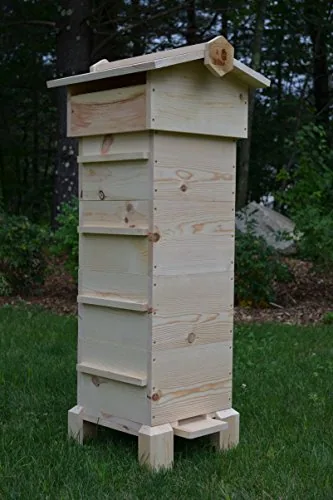
- A Langstroth grows upward in boxes; a top bar grows sideways along one long box.
- Top bars mean no heavy boxes: you lift one comb at a time.
- Langstroth frames take nucs, extractors and borrowed frames; top bar comb is natural and harvested by crush and strain.
- Most nucs come on Langstroth frames, so top bar beekeepers usually start with a package or swarm.
Langstroth vs top bar hive is the first real fork in the road for many new beekeepers. One is the standard stacked box system used by most US beekeepers and suppliers; the other is a horizontal trough where bees hang natural comb from wooden bars.
Both keep bees well. The choice comes down to your back, your harvest plans and where your bees will come from. This page compares them using the listings in our hives category; for a third style, see Flow Hive vs Langstroth.
Picks from each side
Langstroth
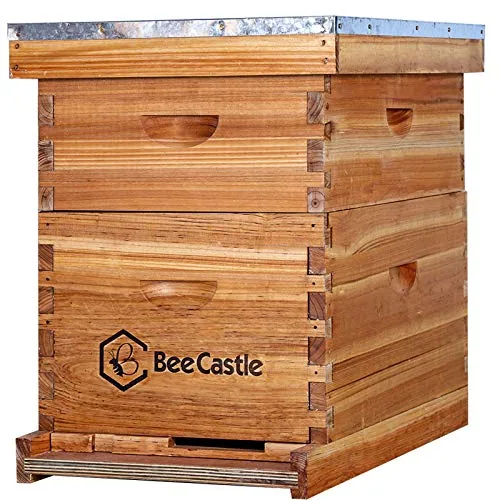
BeeCastle 10-Frame Beeswax-Coated Hive Kit, 2 Layer
- Frames
- 10
- Boxes
- 2 boxes
- Material
- Cedar
Best for First Langstroth hive without painting
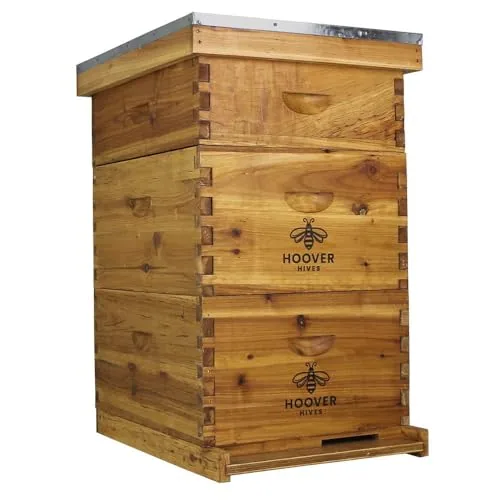
Hoover Hives 10-Frame Beeswax Kit, 2D+1M, Unassembled
- Frames
- 10 wooden
- Boxes
- 2 deep, 1 medium
- Finish
- Beeswax-coated
Best for A DIY-assembled full hive
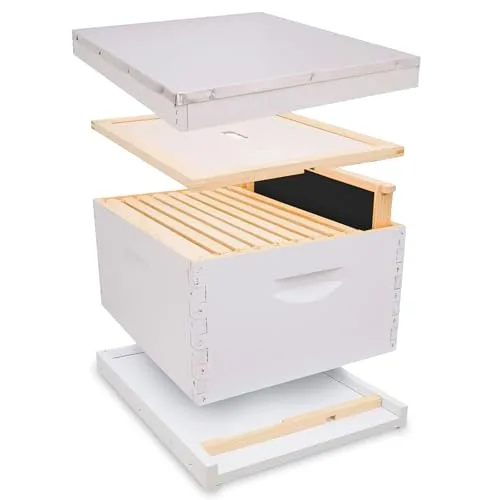
Mann Lake HK170 Traditional Complete Hive Kit, Painted
- Frames
- 10 assembled
- Boxes
- 1 deep (9-5/8")
- Material
- Radiata pine, made in USA
Best for A simple first hive
Top bar
Gold Star Honeybees Top Bar Hive Kit
- Type
- Top bar hive
- Size
- 48 x 48 x 36 in
- Includes
- Bevel-point top bars, glass observation window
Best for Beekeepers who want to avoid lifting
MtnViewHoney Western Cedar Top Bar Beehive
- Material
- Western cedar
- Type
- Top bar hive
- Size
- 40 x 18 x 13 in
Best for Natural comb without heavy boxes
Langstroth vs top bar hive side by side
How the two hive styles differ
| Langstroth | Top bar | |
|---|---|---|
| Layout | Vertical stack of boxes | One horizontal box |
| Comb support | Frames, usually with foundation | Bars with a comb guide; natural comb |
| Heaviest lift | ✗ Full boxes, about 40–80 lb (GloryBee) | ✓ One comb at a time |
| Accepts nucs | ✓ Standard deep frames drop in | ✗ Nuc frames do not fit |
| Extractor | ✓ Yes | ✗ Crush and strain |
| Comb honey and wax | ~ Possible with the right frames | ✓ Every harvest yields wax |
| Comb handling | ✓ Frames are sturdy, can be turned freely | ~ Keep comb vertical; soft in heat |
| Adding space | ✓ Add a box on top | ~ Move the follower board; length is fixed |
| Parts availability | ✓ Everywhere | ~ Usually from the maker |
| Varroa care | ~ Same thresholds, label rules | ~ Same thresholds, label rules |
Source: Hive & Frame catalogue; GloryBee box weights
How much comb space does each hive give you?
Comb count is the closest like-for-like measure the listings give, though frame and bar sizes differ. A two-deep, one-medium Langstroth kit holds 30 frames. The MtnViewHoney top bar hive ships with 24 bars plus 5 spares; a Warré-style hive with four boxes of 8 bars holds 32. Langstroth capacity can keep growing with more supers; a top bar hive tops out at its length.
Frames or bars per hive, as listed
Buzzing Rooster Warré, BeeCastle and Hoover 2D+1M kits, MtnViewHoney top bar, Mann Lake HK170 single deep
Footprint matters too. The listings give 40 × 18 × 13 in for the MtnViewHoney top bar and 48 × 48 × 36 in for the Gold Star kit. A Langstroth stack has a smaller footprint but gets taller each time you add a super, which is why lifting is the main trade-off.
Where will your bees come from?
Bees are bought from local or regional suppliers, not from a hive listing. They usually come in one of two forms: a package of loose bees with a caged queen, or a nuc, a small working colony on frames.
- Langstroth: takes either. Nuc frames are standard Langstroth deep frames that drop straight into the brood box. UF/IFAS covers installing both.
- Top bar: nuc frames will not hang from top bars, so most top bar beekeepers install a package or catch a swarm. A few suppliers sell top bar nucs; ask locally.
Penn State notes a 3 lb package holds roughly 10,000 bees and should be ordered well ahead of spring. Check the seasonal calendar for timing in your region.
Harvesting honey from each hive
In a Langstroth hive, honey goes in supers above the brood. You uncap the frames and spin them in an extractor, keeping the comb for the bees to refill, or crush and strain. In a top bar hive, honey comb sits at the end of the box away from the entrance. You cut the comb from the bar and either keep it as comb honey or crush and strain it. Each harvest yields beeswax, but the bees must rebuild that comb.
If you choose Langstroth and plan to extract, compare manual vs electric honey extractors and radial vs tangential extractors. The honey yield calculator estimates jars either way.
Inspections and comb handling
Top bar inspections are calm and low-effort: lift one bar, look, put it back. The catch is the comb. Natural comb attached only at the top bar is fragile, especially on hot days, so keep it hanging vertically and never tilt it flat. Cross-combing, where bees build comb across several bars, makes inspections hard; Gold Star says its bevel-point bars are designed to prevent it.
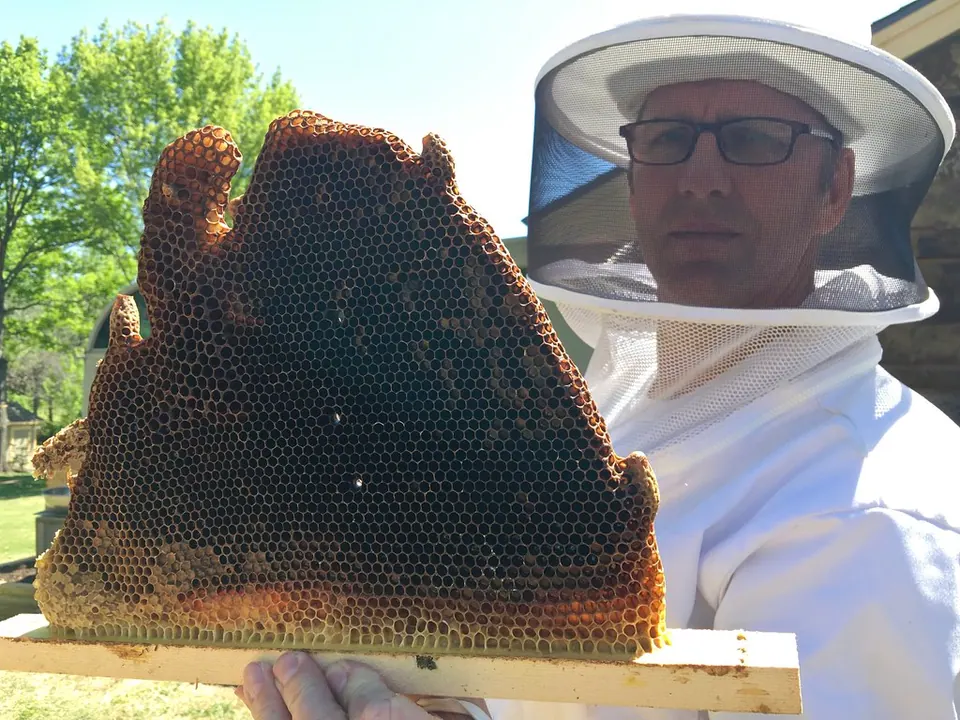
Langstroth frames are sturdier and can be turned in any direction, which makes checking for eggs easier. The cost is weight: by GloryBee's figures a full 10-frame deep is about 80 lb, and you may move several boxes to reach the brood nest.
Whichever you pick, record what you see at each visit. The hive inspection log works for both hive types.
Mistakes to avoid
- Ordering a nuc for a top bar hive. Confirm what your supplier sells before you buy the hive.
- Tilting top bar comb. Lift straight up and keep the comb vertical.
- Skipping mite counts. Both styles need monitoring against the HBHC 9th-edition thresholds and EPA-registered treatments used per the label.
- Starting a Langstroth with no help for lifting. Consider 8-frame or medium boxes, or plan a helper for harvest day.
- Letting a top bar hive run out of space. Move the follower board before the colony fills the open bars.
Who should choose a Langstroth, and who should choose a top bar?
Choose a Langstroth if you…
- want to start with a nuc or join a club that shares frames and extractors
- plan to extract honey and keep comb for the next flow
- want the widest choice of parts, feeders and treatments sized for your hive
- expect to grow past two hives
Choose a top bar if you…
- cannot or would rather not lift heavy boxes
- want natural comb, comb honey and beeswax
- are happy to start from a package or swarm
- keep one or two hives at a comfortable working height
New to all of it? Our best beehive for beginners list ranks both styles, and 8-frame vs 10-frame helps if you go Langstroth.
Other options worth a look
If neither feels right, a Warré hive is a vertical natural-comb compromise, a Layens hive is a horizontal box with large frames and foam insulation, and an insulated Langstroth-size hive keeps standard frames with built-in extras.
Buzzing Rooster Warre Hive with Windows, 4 Box
- Boxes
- 4 Warre boxes
- Material
- Natural pine
- Includes
- 8 bars per box, quilt, top, stand
Best for Natural, low-intervention beekeeping
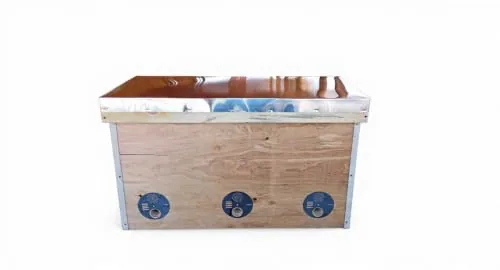
Layens Horizontal Hive, Insulated, 20 Frame
- Frames
- 20 Layens (21 without divider)
- Material
- Double wall, 1.5 in foam
- Includes
- Aluminum roof, 3 entrances with steel doors
Best for Cold-climate horizontal hive
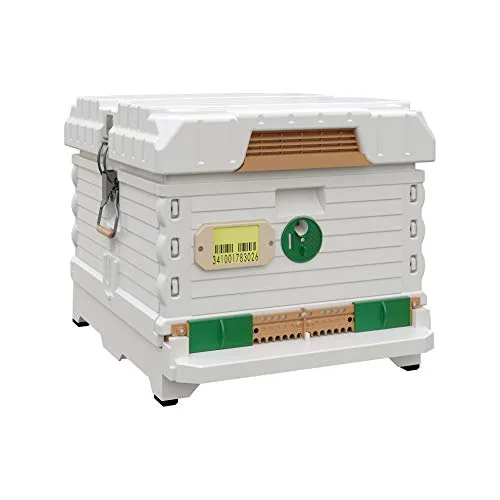
Apimaye Ergo Insulated 10-Frame Hive Set, No Frames
- Frames
- 10 (frames not included)
- Boxes
- Double deep
- Material
- Insulated plastic
Best for Cold-winter apiaries using their own frames
Choose a Langstroth if you want nucs, extractors and the most compatible equipment, and you can manage lifting. Choose a top bar if avoiding heavy boxes and harvesting natural comb matter more to you than extraction, and you can source a package or swarm. Bee care is the same in both: regular inspections, swarm control and mite counts.
Built from listing specs in the Hive & Frame catalogue (capacity, sizes, features), GloryBee box weights, and Penn State and UF/IFAS extension guidance on packages and nucs. Hive & Frame keeps no test colonies.
Questions
Is a Langstroth or top bar hive better for beginners?
Can you put a nuc in a top bar hive?
Do top bar hives produce less honey?
Can you use an extractor with a top bar hive?
How heavy is a Langstroth hive box?
Langstroth vs top bar hive: which is easier to inspect?
Sources
- GloryBee: Eight is Great Because of Weight
- Penn State Extension: Installing Packaged Bees
- UF/IFAS: Installing Packages and Nucs
- Honey Bee Health Coalition, Tools for Varroa Management, 9th edition (2026)
- EPA: registered pesticide products approved for use against varroa mites
- Apiary Inspectors of America