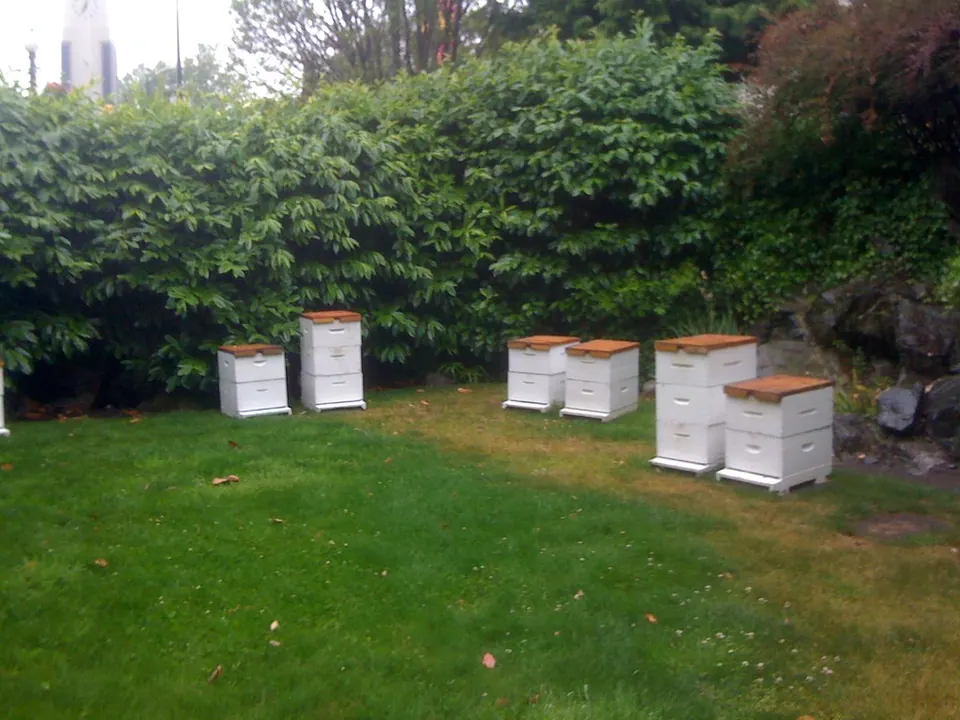
- Best overall: Hoover Hives' fully assembled 10-frame Langstroth (2 deeps + 1 medium, 30 frames, beeswax-dipped fir) is ready the day it arrives.
- Lighter lifting: an 8-frame deep such as the assembled Hoover 8-frame kit.
- Cold winters: an insulated Apimaye Ergo set; no lifting at all: a top bar hive, with trade-offs.
- Flow Hive 2 is a real option for backyard honey, but buy only the official listing; knockoff "flow" kits are common.
The best beehive for beginners is usually a 10-frame or 8-frame Langstroth hive. Not because it is fancy, but because almost every nuc, frame, book, club mentor and extension guide in the US assumes it. When you are learning to spot eggs and judge stores, it helps that the advice you read matches the box in your yard.
That said, the right first hive depends on your yard and your body. Below we compare eight hives from seven brands by listed specs: box count, frame count, material and finish, and what comes included. Then we cover who should pick an insulated hive, a Flow Hive or a top bar hive instead.
Our picks
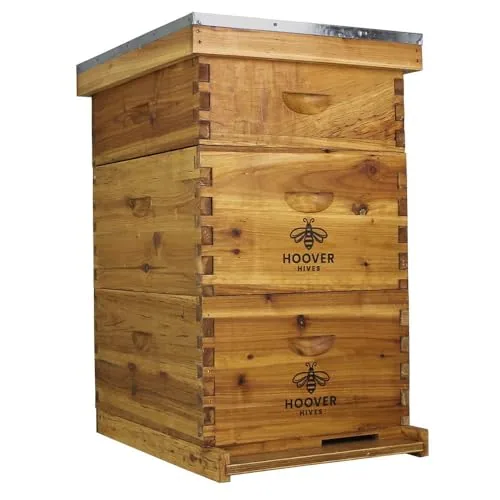
Hoover Hives 10-Frame Langstroth, Assembled, 2D+1M
- Frames
- 10 (30 NZ pine frames)
- Boxes
- 2 deep, 1 medium
- Material
- Fir exterior
- Finish
- Dipped in 100% beeswax
Hoover Hives ships this 10-frame Langstroth fully assembled: two deep brood boxes (16-1/4 x 19-7/8 x 9-5/8 in) and one medium super (6-5/8 in tall), all fir with dovetail joints and dipped in 100% beeswax. It includes 30 New Zealand pine frames with beeswax-dipped CellTech plastic foundation, a solid bottom board, telescoping top cover, inner cover and entrance reducer. That is the whole first-season brood nest plus a super, with no gluing, nailing or painting.
Best for: beginners who want a complete, ready-to-use 10-frame stack
Skip if: you want lighter 8-frame boxes or an unassembled kit to build yourself
- Fully assembled, 30 frames installed
- Fir exterior, beeswax-dipped (no painting per maker)
- Standard Langstroth dimensions listed
- No queen excluder listed
- Plastic foundation, not pure wax
- Full 10-frame deeps are heavy
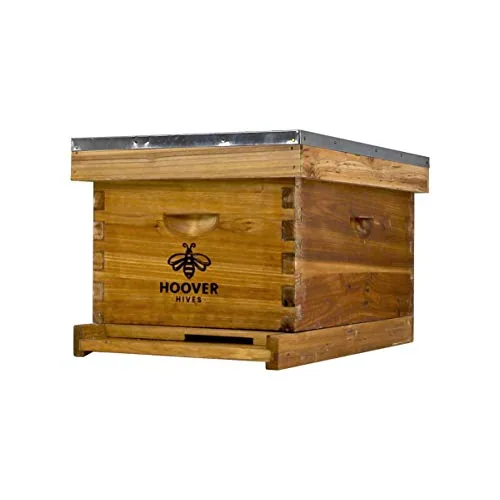
Hoover Hives 8-Frame Deep Hive Kit, Assembled
- Frames
- 8 with foundation
- Boxes
- 1 deep
- Material
- Fir
- Finish
- Wax-coated
This Hoover Hives kit is one assembled 8-frame fir deep, wax-coated, with frames and foundation, top cover, queen excluder, bottom board and entrance reducer. An 8-frame box holds two fewer frames than a 10-frame box, so a full box weighs noticeably less. It is a single deep, so plan a second deep or medium and a super.
Best for: beekeepers who worry about lifting heavy boxes
Skip if: your nuc supplier only sells 10-frame nucs
- Assembled fir box, wax-coated
- Queen excluder included
- Lighter 8-frame format
- One deep only
- 8-frame parts don't fit 10-frame boxes
- Inner cover not listed
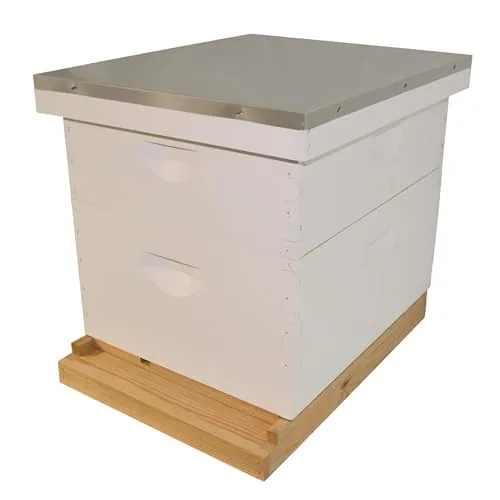
Mann Lake HK385 10-Frame Hive Combo, 1D+1M, Painted
- Frames
- 10
- Boxes
- 1 deep, 1 medium
- Material
- Pine, made in USA
- Finish
- Low-VOC white paint
Mann Lake's HK385 combo arrives fully assembled in pine, made in the USA, with one deep and one medium super painted with low-VOC white paint and a screened bottom board (left unpainted). If you prefer a classic painted white hive and want it ready on arrival, this is the simplest option from a long-running US bee supplier.
Best for: beginners who want a painted, assembled US-made hive
Skip if: you want two deeps for the brood nest from day one
- Assembled, painted with low-VOC paint
- Screened bottom board for ventilation and mite checks
- Made in USA
- One deep plus one medium: you may add a deep
- Frame details not itemized in our data
- Pine needs paint touch-ups over time
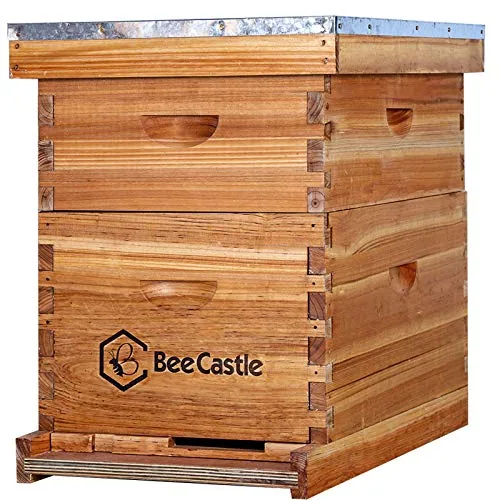
BeeCastle 10-Frame Beeswax-Coated Hive Kit, 2 Layer
- Frames
- 10
- Boxes
- 2 boxes
- Material
- Cedar
- Finish
- Beeswax-dipped
BeeCastle's 10-frame 2-layer kit uses cedar boxes soaked in boiled beeswax, with pre-cut dovetail joints and pre-drilled holes for easier assembly. Frames and beeswax-coated foundation are included. Two boxes give you a deep brood nest to start; add a super when the colony grows.
Best for: a durable cedar hive without painting
Skip if: you want everything fully assembled
- Cedar boxes, beeswax-dipped
- Dovetail joints, pre-drilled
- Frames and waxed foundation included
- Some assembly required
- Box depths not itemized for this listing
- Only two boxes
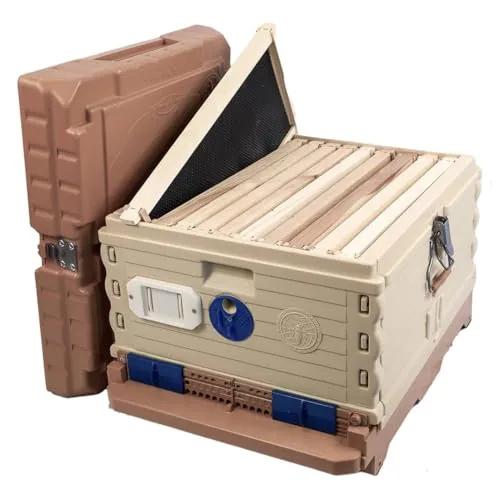
Apimaye Ergo Insulated Hive Set with 10 Wood Frames
- Frames
- 10 wood frames, double-wax foundation
- Boxes
- Single
- Material
- Insulated plastic
- Includes
- Screened bottom, pollen trap, excluder, top feeder
The Apimaye Ergo set is an assembled, insulated plastic hive that takes standard 10-frame Langstroth frames and comes with 10 wood frames on double-wax foundation. Apimaye lists a screened bottom board with pollen trap and drawer, entrance reducer, queen excluder, division board, frame spacers and top feeder as standard. It does not need painting. It suits cold or very hot climates, but it is a single box, so you will add Apimaye supers.
Best for: beginners in cold-winter or hot-summer areas
Skip if: you want wood or the simplest, cheapest setup
- Insulated walls, no painting
- Feeder, pollen trap, excluder built in
- Takes standard 10-frame frames
- Single box: supers sold separately
- Plastic hive, different feel from wood
- Latches and parts are Apimaye-specific
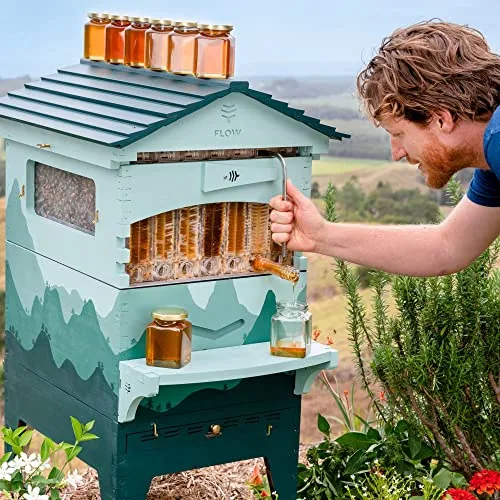
Flow Hive 2, 6 Flow Frames
- Frames
- 6 Flow Frames in super
- Includes
- Multifunction tray, adjustable stand, harvest shelf
This is the official Flow Hive 2 listing: a super with 6 Flow Frames that let you drain honey from a tap without uncapping or extracting, plus a multifunction tray, adjustable stand and harvest shelf. Flow says a full super can yield up to 40 lb of honey (maker claim). You still inspect the brood box like any Langstroth hive, and you still manage mites. Buy only this official listing or from Flow directly; see the knockoff warning below.
Best for: backyard beekeepers who want honey without an extractor
Skip if: you want the lowest-cost hive or plan to sell lots of honey
- Honey harvest without extractor
- Multifunction tray and adjustable stand
- Strong brand support and learning materials
- Knockoff listings are common
- Flow Frames are plastic and need cleaning
- Brood box still needs regular inspections
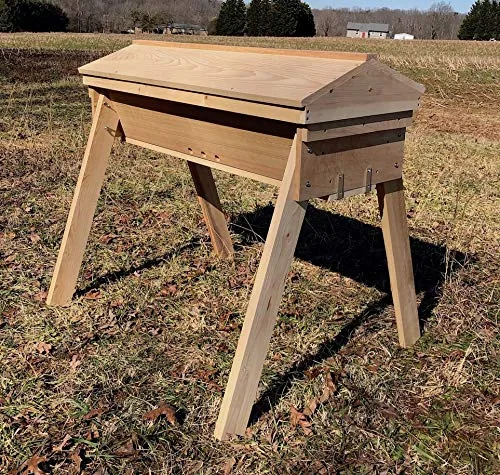
Gold Star Honeybees Top Bar Hive Kit
- Type
- Top bar hive
- Size
- 48 x 48 x 36 in
- Includes
- Bevel-point top bars, glass observation window
Gold Star Honeybees makes a horizontal top bar hive with bevel-point top bars (meant to reduce cross-combing) and a glass observation window. Bees build natural wax comb, and you lift one comb at a time, never a box. The catch: top bar comb is fragile, harvest is crush-and-strain, and fewer mentors and nuc suppliers work with top bars.
Best for: gardeners who cannot lift heavy, full boxes
Skip if: you want to buy a nuc or use an extractor
- No heavy box lifting
- Observation window
- Natural comb
- Can't install a standard nuc directly
- Comb is fragile in heat
- Less local support
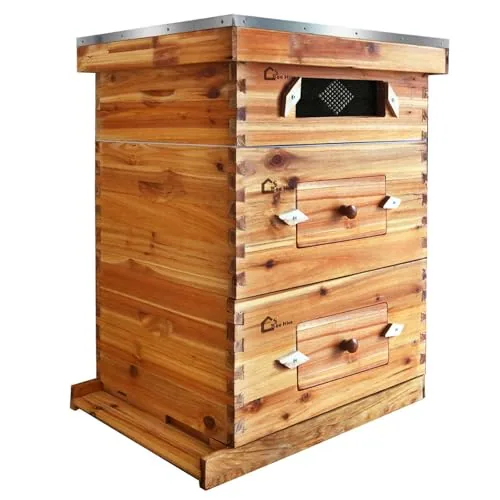
Takywep 10-Frame Hive Kit with Window, 2D+1M
- Frames
- 10 with waxed foundation
- Boxes
- 2 deep, 1 medium
- Material
- Fir
- Finish
- Beeswax-dipped
Takywep's 10-frame Langstroth comes as 2 deeps and 1 medium in beeswax-dipped fir with waxed foundation and a clear acrylic observation window. A window lets kids and visitors see comb and bees without opening the hive, though you still need full inspections to check brood and queen health.
Best for: families who want to watch the colony
Skip if: you never plan to look through a window anyway
- Observation window
- 2 deeps + 1 medium
- Beeswax-dipped fir
- Window panel adds a part to maintain
- Brand has a short track record
- Frame material not detailed
What is the best beehive for beginners?
For most first-year beekeepers, a Langstroth hive is the safest choice. Penn State Extension's Beekeeping Basics uses it as the standard hive, and nucs from most suppliers come on Langstroth deep frames. That means you can buy a nuc, follow a club mentor and read any beginner book without translating.
Beginner hive styles at a glance
| 10-frame Langstroth | 8-frame Langstroth | Insulated (Apimaye) | Flow Hive 2 | Top bar | |
|---|---|---|---|---|---|
| Takes standard nucs | ✓ | ✓ (8-frame nucs) | ✓ | ✓ brood box | ✗ |
| Heavy box lifting | ✗ heavy | ~ lighter | ~ similar | ~ similar | ✓ none |
| Extractor needed | ✓ | ✓ | ✓ | ✗ tap harvest | ✗ crush & strain |
| Painting needed | ~ unless dipped | ~ unless dipped | ✓ none | ~ wood care | ~ varies |
| Local advice and parts | ✓ most | ✓ | ~ | ~ | ✗ fewer |
Source: Hive & Frame summary of maker listings and Penn State Extension
Boxes included in each Langstroth-style pick
A typical first-season Langstroth stack is two brood boxes plus a honey super.
Is a Flow Hive good for beginners?
A Flow Hive is a Langstroth-style hive with a special honey super. The brood box below it is managed exactly like any other hive: inspections, swarm prevention, mite checks and feeding. What changes is the harvest: you turn a key and honey drains from the Flow Frames into jars. That removes the uncapping and extracting step, which many backyard beekeepers find appealing.
It does not remove the learning. New beekeepers still need to learn colony management, and the Flow super only fills when the colony is strong and there is a nectar flow. Read our full Flow Hive 2 review and Flow Hive vs Langstroth before you decide.
Top bar or Langstroth for a first hive?
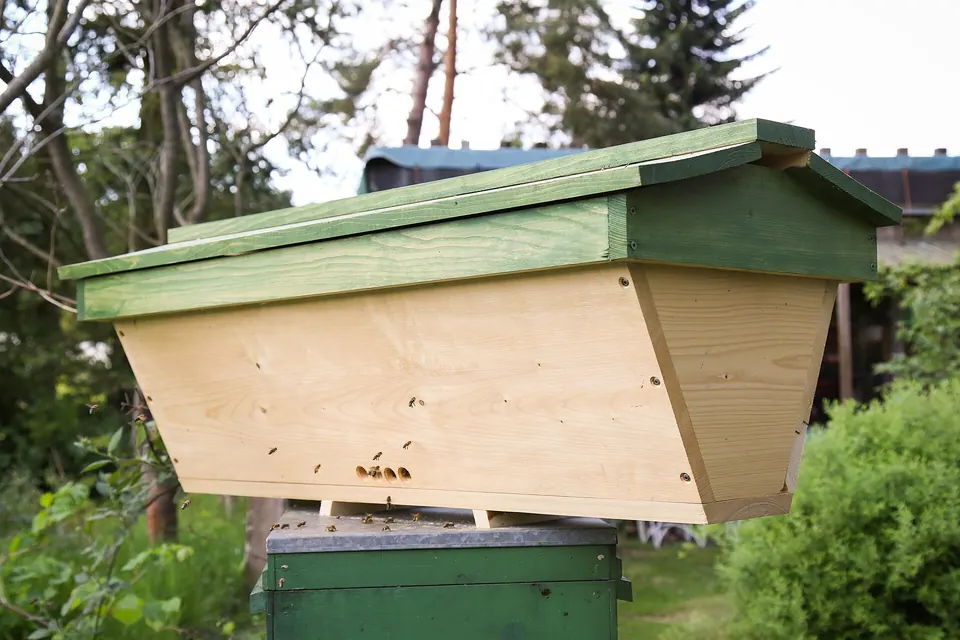
Top bar hives appeal to beginners who want natural comb and no heavy lifting. They are a real option, but they are harder to start: you can't drop a standard Langstroth nuc into one, natural comb can break off in summer heat if handled roughly, and fewer local beekeepers can help. We cover the trade-offs in Langstroth vs top bar hive and list every top bar option in best top bar hives.
How to set up your first hive
- Pick the spot
Utah State Extension suggests facing the entrance south or southeast for 6 to 8 hours of direct sun starting early in the morning, raising the hive 12 to 18 inches on a stand, and keeping 10 to 15 feet in front of the entrance clear in a low-traffic spot.
- Assemble and finish before bees arrive
Build any frames, and paint raw pine on the outside only. Dipped and pre-painted boxes skip this step.
- Order bees early
Packages and nucs come from local or regional suppliers. Penn State notes a 3 lb package is about 10,000 bees. Compare options in packages vs nucs vs swarms.
- Have the next box ready
Single-box hives fill quickly in spring. Keep a second brood box or super assembled and waiting.
- Start a log
Note queen, eggs, brood pattern, stores and mite counts every inspection.
Mistakes beginners make with their first beehive
- Mixing 8- and 10-frame boxes. Frames fit both, but boxes, covers and bottom boards do not. Choose one width.
- Buying a knockoff because the photo looks right. Check the brand on anything sold as a Flow Hive.
- Starting with one colony. Two hives let you compare and share resources if one fails.
- Skipping mite checks. HBHC's 9th edition thresholds (1% dormant and population increase, 2% peak and decrease) are lower than the old 8th-edition "3%" rule. Use our mite threshold calculator.
- Ignoring registration. Some states require apiary registration. See beekeeping laws by state.
Which beginner hive fits you?
- Want the standard, ready-to-use option: Hoover Hives assembled 10-frame stack.
- Need lighter boxes: Hoover 8-frame deep.
- Prefer painted and US-made: Mann Lake HK385.
- Cold winters or hot summers: Apimaye Ergo with frames; more options in best insulated beehives.
- Honey without an extractor: official Flow Hive 2.
- No lifting: Gold Star top bar hive.
Compare all hives in the hives and kits category or the small yards situation page.
The Hoover Hives fully assembled 10-frame Langstroth is the easiest first hive to recommend: standard dimensions, 30 frames installed, beeswax-dipped fir and nothing to build. Choose the Hoover 8-frame deep if lifting is a concern, an Apimaye Ergo for harsh climates, or the official Flow Hive 2 if harvesting without an extractor is the goal and you are ready to learn colony management first.
We compared maker listings for each hive: number and size of boxes, frame count, frame and foundation type, wood species and finish, assembly status and included parts. Flow Hive picks are limited to official Flow listings. We did not install colonies in these hives. Hive placement and package guidance comes from Penn State and Utah State extension publications; mite thresholds from the Honey Bee Health Coalition 9th edition.