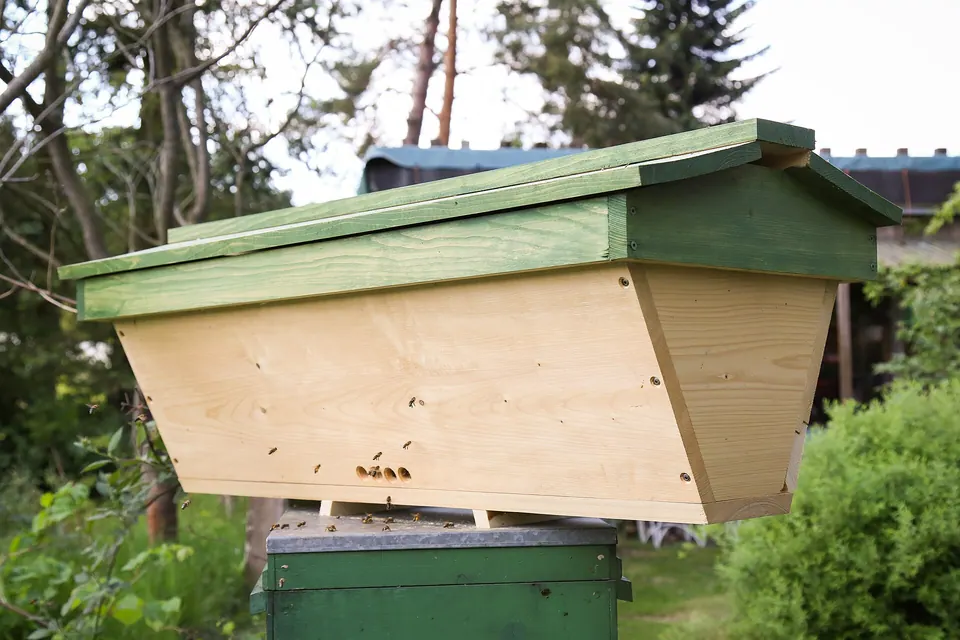
- Honest note: our catalogue has only two ready-made top bar hives (Gold Star Honeybees and MtnViewHoney). We widened the list with a Warré, an insulated Layens and two build-it-yourself books.
- Best top bar kit: Gold Star Honeybees, with bevel-point bars and a glass window.
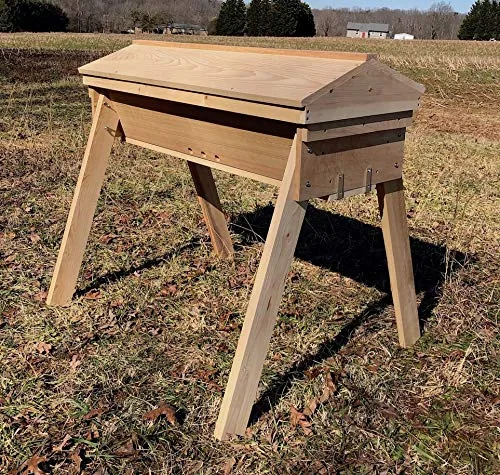
- Best value top bar: MtnViewHoney western cedar, 24 bars + 5 spares, window, stand and screened bottom.
- Top bar hives mean no box lifting and natural comb, but you can't install a standard nuc directly, and harvest is crush and strain.
A top bar hive is a long horizontal box where bees hang natural comb from wooden bars instead of frames. You open it from the top and lift one comb at a time, so you never lift a heavy box. That makes it attractive for gardeners with bad backs, for natural-comb fans and for anyone who likes the idea of a hive at waist height.
The market is small, though. Most hive brands sell Langstroth equipment only, and in our catalogue just two makers sell a ready-made top bar hive. Rather than pad the list, we say so and add the closest alternatives: a vertical top-bar Warré, an insulated horizontal Layens hive, and two books for building or managing your own.
Our picks
Gold Star Honeybees Top Bar Hive Kit
- Type
- Top bar hive
- Size
- 48 x 48 x 36 in
- Includes
- Bevel-point top bars, glass observation window
Gold Star Honeybees builds its hive around bevel-point top bars, a pointed underside meant to guide straight comb and prevent cross-combing, the most common top bar frustration. A glass observation window comes standard, so you can check comb building and stores without opening the hive. The listed size is 48 x 48 x 36 in; the bar count and wood species are not listed in the data we reviewed, so check the maker's page.
Best for: a purpose-built top bar hive with comb guides done right
Skip if: you want a standard Langstroth nuc or extractor harvest
- Bevel-point bars to guide straight comb
- Glass observation window standard
- No heavy lifting
- Bar count and wood not listed
- Bulky footprint per listing
- Smaller community of top bar mentors
MtnViewHoney Western Cedar Top Bar Beehive
- Material
- Western cedar
- Type
- Top bar hive
- Size
- 40 x 18 x 13 in
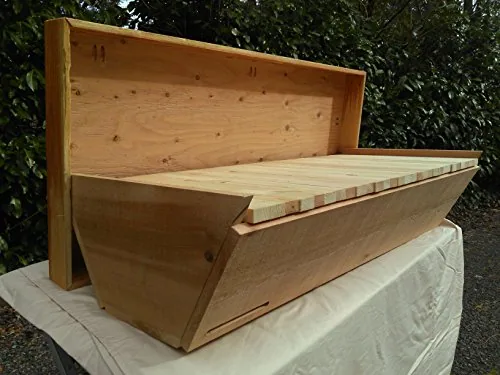
MtnViewHoney's western cedar top bar hive lists 40 x 18 x 13 in, 24 top bars with comb guides plus 5 extra bars, 2 oz of wax for comb guides, a waterproof telescoping lid, screened bottom board, 5 ventilation holes, a plexiglass viewing window and a removable stand. It is one of the most complete top bar listings we found.
Best for: a complete cedar top bar hive with stand and spares
Skip if: you need the longest possible comb run
- 24 bars + 5 spare, wax for comb guides
- Screened bottom and telescoping lid
- Western cedar with window and stand
- Comb guide style differs from beveled bars
- Plexiglass window may need care
- No follower boards mentioned
Buzzing Rooster Warre Hive with Windows, 4 Box
- Boxes
- 4 Warre boxes
- Material
- Natural pine
- Includes
- 8 bars per box, quilt, top, stand
- Assembly
- Fully assembled
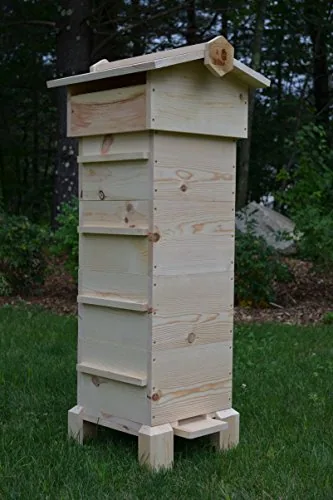
A Warré hive is a stacked box hive that uses top bars instead of frames. Buzzing Rooster's fully assembled kit has four natural pine Warré boxes with observation windows, 8 bars per box, a quilt, top and stand. Bees build natural comb downward and you add boxes at the bottom. You lift boxes, but Warré boxes are small compared with Langstroth deeps.
Best for: natural-comb beekeepers who don't mind lifting small boxes
Skip if: you want zero lifting
- Fully assembled, 4 boxes
- Windows in each box
- Quilt and stand included
- Boxes are added from the bottom (lifting the stack)
- Not compatible with Langstroth nucs
- Pine needs weather protection

Layens Horizontal Hive, Insulated, 20 Frame
- Frames
- 20 Layens (21 without divider)
- Material
- Double wall, 1.5 in foam
- Includes
- Aluminum roof, 3 entrances with steel doors
A Layens hive is a horizontal hive with tall frames rather than top bars. This US-built unit lists double-wall construction with 1.5 in of foam insulation, room for 20 Layens frames plus a divider board (or 21 without), an aluminum roof and three entrances with stainless sliding doors. You still work one comb at a time without lifting boxes, but you get frames you can handle more like Langstroth frames.
Best for: no-lift beekeepers in cold climates who want framed comb
Skip if: you want true top bars and natural-comb simplicity
- 1.5 in foam, double wall
- 20 extra-deep frames
- Three entrances with steel doors
- Layens frames are not Langstroth size
- Unbranded listing, limited support info
- Heavy frames when full

Top-Bar Beekeeping: Organic Practices
- Format
- Paperback
- Publisher
- Chelsea Green
- Published
- 2012
Top-Bar Beekeeping: Organic Practices for Honeybee Health (Chelsea Green, 2012) is written specifically for horizontal top bar hives. It is worth reading before you buy, because top bar management differs from Langstroth management in comb handling, space management and harvest.
Best for: anyone choosing between top bar and Langstroth
Skip if: you already keep top bar hives successfully
- Top bar-specific management
- Organic, low-intervention focus
- Useful before you buy a hive
- Published 2012: check current varroa guidance from HBHC
- Not a build plan
- US regions vary from the authors' climate
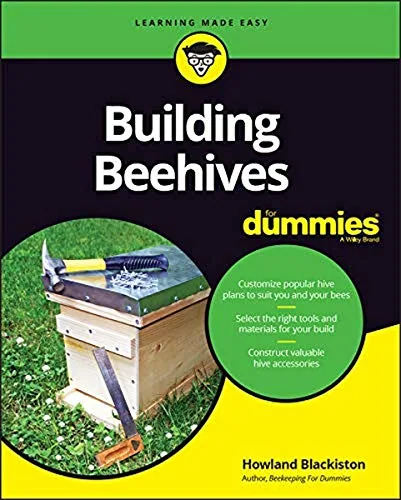
Building Beehives For Dummies
- Format
- Paperback
- Publisher
- Wiley
- Published
- 2019
Building Beehives For Dummies (Wiley, 2019) includes a chapter on the Kenya top-bar hive with a materials list, cut list and assembly steps, plus plans for a Warré hive, a five-frame nuc and Langstroth equipment. Building your own is the realistic way to get a top bar hive sized for your yard when ready-made options are this limited.
Best for: DIY builders with basic carpentry tools
Skip if: you don't want to cut lumber
- Kenya top-bar plan with cut list
- Warré and nuc plans too
- Materials lists for each plan
- Requires tools and time
- Your build quality decides bee space accuracy
- Plans, not a kit
Why are there so few top bar hive kits?
Top bar hives are a niche in the US. Big suppliers build around Langstroth parts, and many top bar beekeepers build their own from plans. That is why our list includes only two ready-made top bar hives. If you see a long list elsewhere, check whether it is padding with Langstroth kits or with listings that are no longer sold.
Top bar and horizontal options compared
| Gold Star top bar | MtnViewHoney top bar | Buzzing Rooster Warré | Layens horizontal | |
|---|---|---|---|---|
| Comb type | Natural comb on bars | Natural comb on bars | Natural comb on bars | Frames (Layens size) |
| Lift boxes? | ✓ no | ✓ no | ✗ small boxes | ✓ no |
| Window | ✓ glass | ✓ plexiglass | ✓ windows | ✗ not listed |
| Bars / frames listed | not listed | 24 + 5 spare | 8 per box, 4 boxes | 20 (+ divider) |
| Stand | not listed | ✓ removable | ✓ | not listed |
| Insulation | not listed | not listed | ✓ quilt | ✓ 1.5 in foam |
Source: Hive & Frame catalogue (maker listings)
Comb positions listed per hive
Bars or frames as listed; Gold Star does not list a bar count.
Is a top bar hive good for beginners?
It can be, with eyes open. The no-lift design is a real advantage, and watching natural comb is rewarding. But there are three trade-offs a beginner should plan for.
- Bees: standard nucs come on Langstroth frames, which don't fit. Most top bar beekeepers start with a package or a swarm. See packages vs nucs vs swarms.
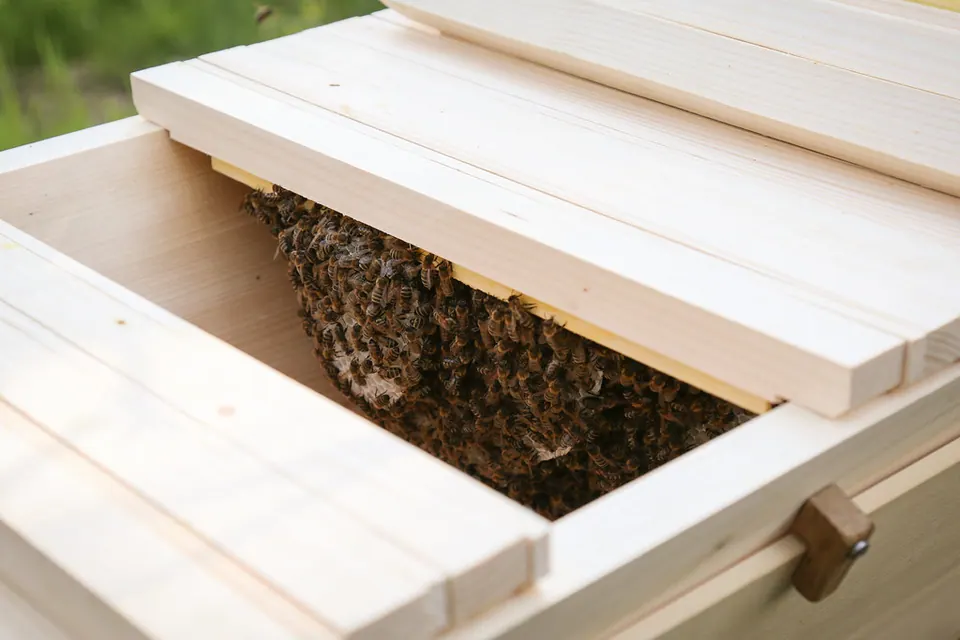
- Comb handling: natural comb has no frame around it. Lift bars straight up and keep combs vertical, especially on hot days.
- Harvest: you cut comb and crush and strain it; there is no extractor step. See how to extract honey with or without an extractor.
Our full comparison is in Langstroth vs top bar hive. If you mostly want a standard hive that is easier to lift, an 8-frame Langstroth is the other route; see best beehive for beginners.
How to start a top bar hive
- Level the hive
Comb hangs straight down. Level the hive side to side so comb is centered on each bar.
- Use comb guides
Beveled bars or a wax strip (MtnViewHoney includes 2 oz of wax) give bees a starting line.
- Start small with a follower board
Confine a package to a few bars and move the divider as they build.
- Check comb direction early
Correct any comb that crosses bars in the first weeks; it only gets harder later.
- Monitor mites like any hive
Top bar colonies get varroa too. Sample about 300 bees and compare with HBHC 9th-edition thresholds in the mite threshold calculator.
Mistakes to avoid with a top bar hive
- Starting with too much space. A small cluster in a long cavity builds slowly and can cross-comb. Use a follower board.
- Tipping combs sideways. Natural comb can snap off the bar. Rotate combs vertically when inspecting.
- Skipping mite checks. Natural comb does not prevent varroa.
- Assuming any "horizontal" kit is a top bar. Layens and long Langstroth hives use frames; true top bar hives use bars only.
Gold Star Honeybees Top Bar Hive Kit
- Type
- Top bar hive
- Size
- 48 x 48 x 36 in
- Includes
- Bevel-point top bars, glass observation window
Best for Beekeepers who want to avoid lifting
MtnViewHoney Western Cedar Top Bar Beehive
- Material
- Western cedar
- Type
- Top bar hive
- Size
- 40 x 18 x 13 in
Best for Natural comb without heavy boxes
Which top bar hive should you choose?
- Want the best-designed ready-made top bar: Gold Star Honeybees.
- Want a complete, cedar top bar with spares and stand: MtnViewHoney.
- Natural comb, small boxes, more insulation: Buzzing Rooster Warré.
- Cold climate, no lifting, framed comb: insulated Layens.
- Handy with tools: build a Kenya top bar from Building Beehives For Dummies.
See all hive styles in the hives category or the backyard and urban situation page.
There are only two ready-made top bar hives worth listing here. Gold Star Honeybees is the purpose-built pick with beveled bars and a glass window; MtnViewHoney is the most complete listing, with cedar, a stand, screened bottom and spare bars. If neither fits, a Warré or an insulated Layens hive keeps the natural-comb or no-lift spirit, and a build plan lets you size a top bar hive yourself.
We searched our catalogue for every ready-made top bar hive and found two makers, so we added clearly labeled alternatives rather than unrelated Langstroth kits. We compared listed dimensions, bar or frame counts, windows, stands, ventilation and insulation. We did not build or keep bees in these hives. Varroa guidance follows the Honey Bee Health Coalition 9th edition.