- A package is about 3 lb of bees (roughly 10,000) with a caged queen and a can of syrup, and no comb or brood.
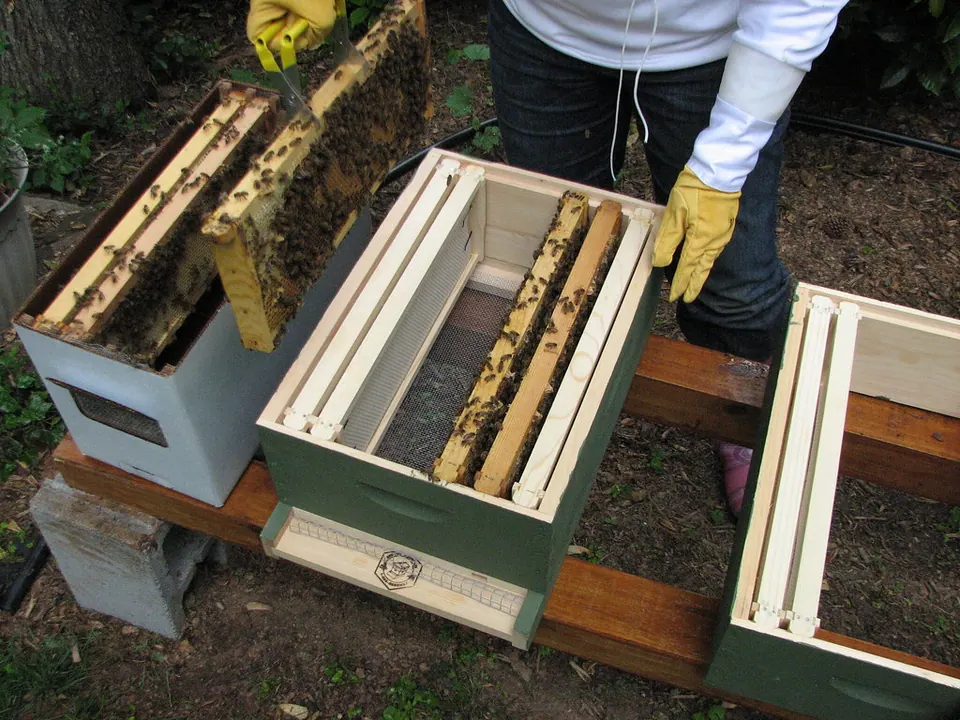
- A nuc is a small working colony, usually on five frames with a laying queen, brood and some stores. It builds up faster but must match your frame size.
- A swarm is free and often vigorous, but its queen, genetics and health are unknown, and you can’t schedule it.
- Most beginners do best with nucs or packages from a local supplier, ordered by early winter. Packages and nucs are not sold through the gear links on this site.
- UF/IFAS notes that nucs can carry more pests and pathogens than packages, because they come with comb and brood.
Package bees vs nucs vs swarms is the first real decision after choosing a hive. All three put bees in your box, but they arrive in very different states. A package is a box of loose bees with a separately caged queen. A nuc (nucleus colony) is a small colony already living on frames. A swarm is a colony that left its old home on its own and is looking for a new one.
This guide compares the three using Penn State Extension, UF/IFAS, Utah State University Extension and the regional calendars behind our seasonal calendar. Bees are a local purchase. Ask your beekeeping association which regional producers and nuc builders they trust, because local stock is usually adapted to your climate.
What is the difference between packages, nucs and swarms?
Package vs nuc vs swarm at a glance
| Package | Nuc (5-frame) | Swarm | |
|---|---|---|---|
| What arrives | ~3 lb of bees, caged queen, syrup can | 5 frames: laying queen, brood, stores, bees | A cluster of bees with their queen |
| Comb included | ✗ none | ✓ drawn frames | ✗ none |
| Queen status | ~ new queen, must be accepted | ✓ already laying | ~ unknown age and quality |
| Build-up speed | ~ slower: bees must draw comb first | ✓ fastest | ✓ often fast; swarms draw comb readily |
| Brood break at start | ✓ yes, useful against mites | ✗ no | ✓ yes |
| Disease and pest carry-over | ✓ lower (no comb) | ~ higher (comb and brood come along) | ~ unknown history |
| Fits any hive | ✓ yes, including top bar | ~ only the matching frame size | ✓ yes |
| Can you schedule it? | ✓ pickup date | ✓ pickup date | ✗ whenever it happens |
Source: Penn State Extension; UF/IFAS Installing Packages and Nucs
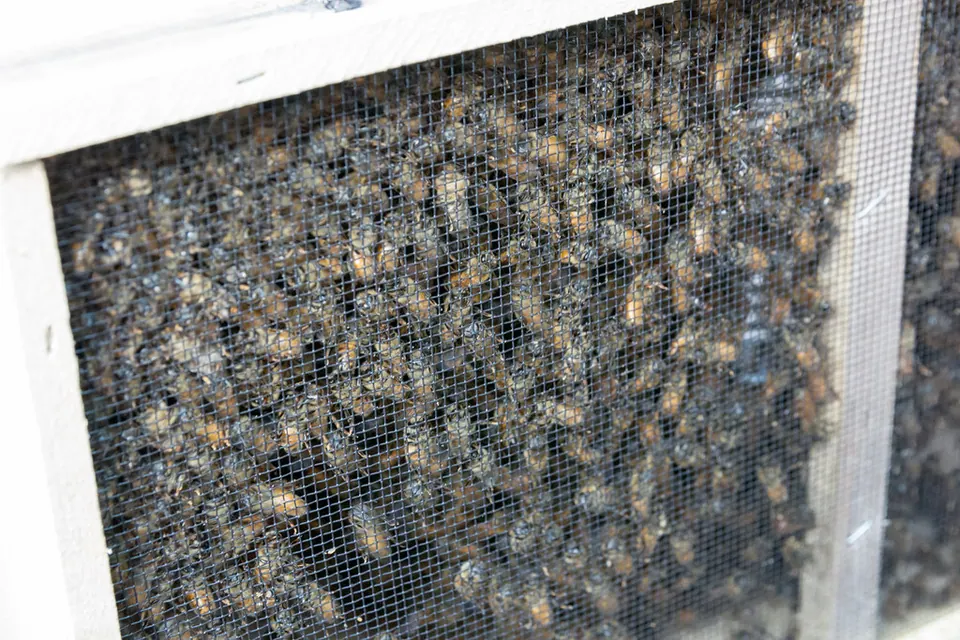
Penn State Extension describes the standard package as three pounds of worker bees, about 10,000 bees, with a can of sugar syrup and a young queen in her own cage. Two- and four-pound packages also exist, but three pounds is the most common size. The bees in a package are not related to the queen, so the colony has to accept her before she is released.
A nuc is a colony in miniature. Because the queen is already laying and the frames already hold brood, a nuc can grow through spring without the comb-building pause a package goes through. The trade-off, as UF/IFAS notes, is that comb and brood can bring pests and pathogens with them, so buy from a supplier who inspects or registers their colonies.
Package bees vs nucs: which grows faster?
In most springs a nuc gets ahead. A package colony has a gap: workers must draw comb before the queen can lay much, and the first new workers emerge about three weeks after she starts. A nuc already has capped brood, so new bees begin emerging almost at once.
That head start matters most in short-season regions, such as the northern states and the mountains, where the main flow comes in June and there is little time to build up. In long-season regions a package has more time to catch up.
A package has one real advantage against varroa: it starts with no capped brood, so mites have nowhere to hide for the first few weeks. Some beekeepers use that window for a mite check and, if needed, a treatment with an EPA-registered product, used per its label. Either way, start monthly alcohol washes once brood is capped.
Is a swarm a good way to get your first bees?
Swarms are free and often vigorous. A swarm leaves with a full crop of honey and an urge to build comb, so it can fill a box quickly. Many beekeepers get their second or third colony this way.
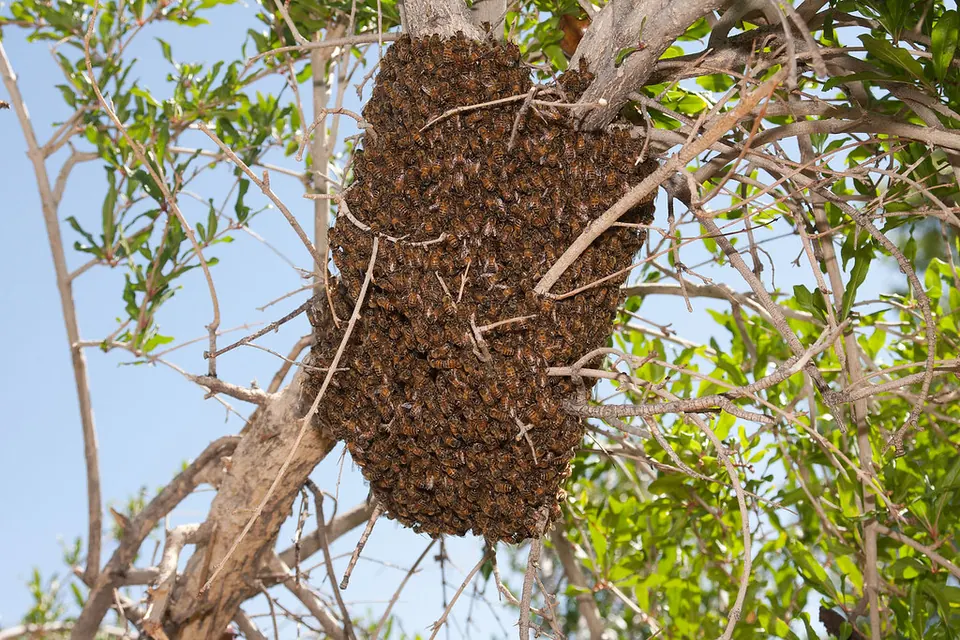
For a first colony, swarms have drawbacks. You can’t schedule one, so your hive might sit empty all spring. The queen’s age and genetics are unknown. The colony’s disease and mite history are unknown. In parts of the Southwest and the South, swarms can be Africanized, and our Southwest calendar notes that a mated-queen source matters there. If you catch one, house it away from your other hives at first and watch the first brood closely.
Our swarm-catching guide covers bait hives, lures and safely boxing a cluster.
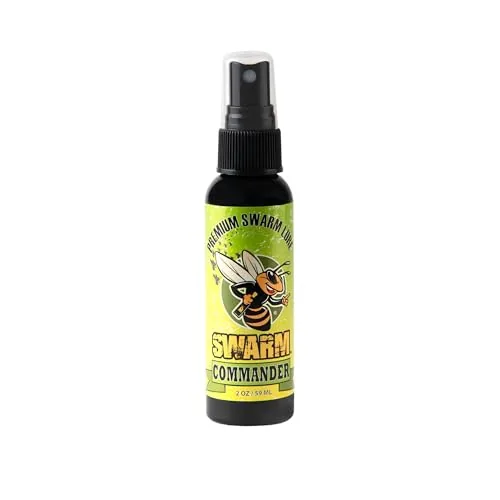
Swarm Commander Premium Swarm Lure, 2 oz Spray
- Type
- Synthetic Nasonov pheromone
- Size
- 2 oz spray bottle
- Shelf life
- 2 years minimum (maker)
Best for Baiting swarm traps

Swarm Sauce Swarm Lure, 2 oz Dropper
- Type
- Synthetic Nasonov pheromone
- Size
- 2 oz dropper
- Made in
- USA
Best for Catching spring swarms
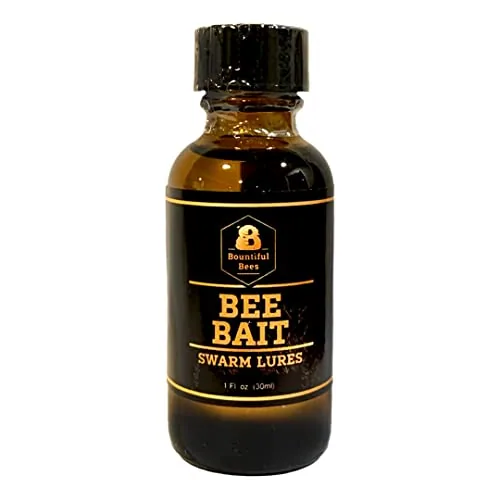
Bountiful Bees Bee Bait Swarm Lure, 1 oz Dropper
- Type
- Synthetic Nasonov pheromone lure
- Size
- 1 oz dropper bottle
- Shelf life
- Up to 2 years (maker)
Best for Baiting swarm traps in spring
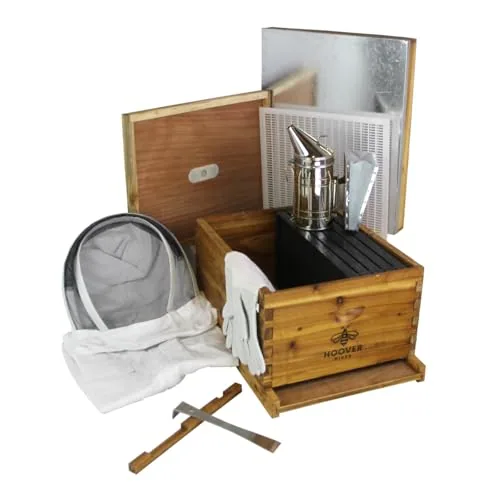
Hoover Hives 10-Frame Wax-Coated Starter, 5 Frames
- Frames
- 10-frame box, 5 frames included
- Boxes
- 1 deep
- Finish
- Wax-coated
Best for Installing a purchased nuc
When should you order packages or nucs?
Order early. Penn State advises ordering packages by early winter. The regional calendars we use say the same: the Deep South calendar puts nuc and queen orders in the first two weeks of January, and the Northeast and Pacific Northwest calendars put orders in December and January. Pickup usually runs from about March in the Deep South to April or May further north.
When regional calendars say to order and install bees
| Region | Order | Install |
|---|---|---|
| Northeast & Upper Midwest | December–January | April |
| Mid-Atlantic & Upper South | January | April |
| Deep South & Gulf Coast | First two weeks of January | April |
| Florida & subtropical | December–January | April (as they arrive) |
| Southwest & California | January (mated-queen source) | Early spring, as flows start |
| Pacific NW & Mountain West | December–January | April (later in Alaska) |
Source: Hive & Frame seasonal calendar, adapted from extension calendars
Most calendars land on April, but the date that actually counts is your supplier’s. Packages ship on a fixed schedule, and local nuc builders wait until their colonies are strong enough to split. Ask for a pickup window when you order, and have the hive set up before that date. See the seasonal checklist for your region’s full spring list.
What else do you need for each option?
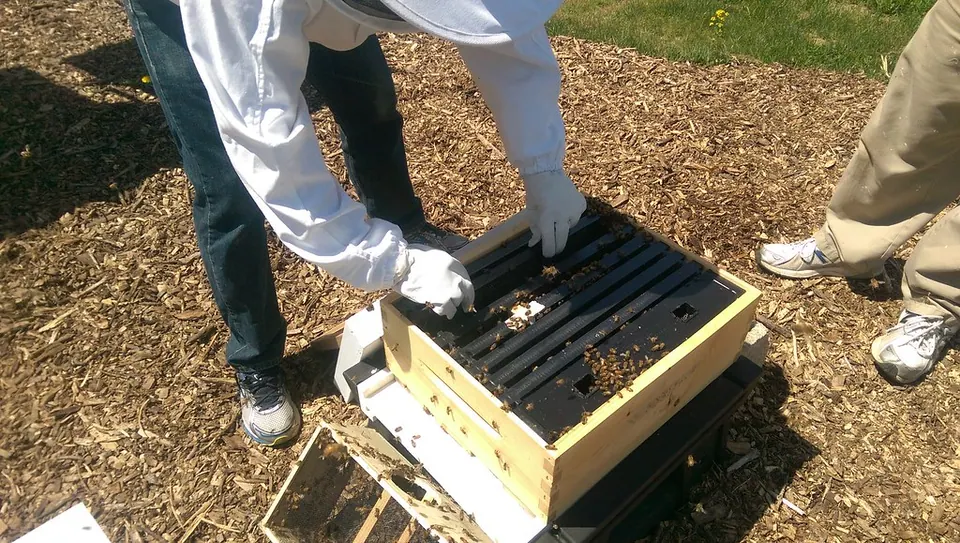
All three need a complete hive and a feeder on day one. Packages and swarms need more frames and foundation, because they arrive with no comb. A nuc needs a box with the same frame size, and you should confirm before buying whether it comes on deep or medium frames.
- Package
A full set of frames with foundation, a feeder and 1:1 syrup, an entrance reducer, and a spray bottle for syrup. Plan on feeding until the bees have drawn most of the comb in the first box.
- Nuc
A box with the matching frame size, five frames with foundation to fill the gaps, and a feeder. Move the nuc frames into the center of the box in the same order they came out.
- Swarm
A box with frames (one frame of old drawn comb helps the bees settle), a feeder in a dearth, and a sheet or tarp. A nuc box is easier to carry than a full deep.
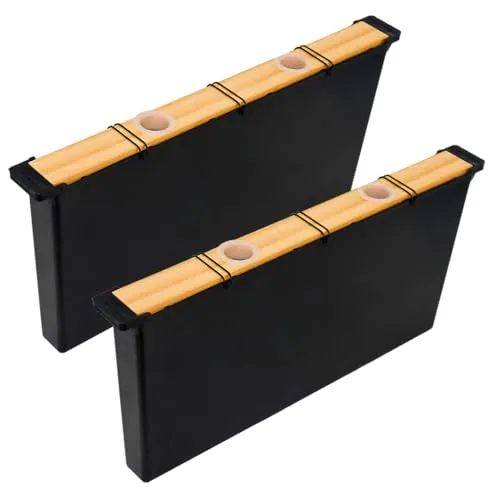

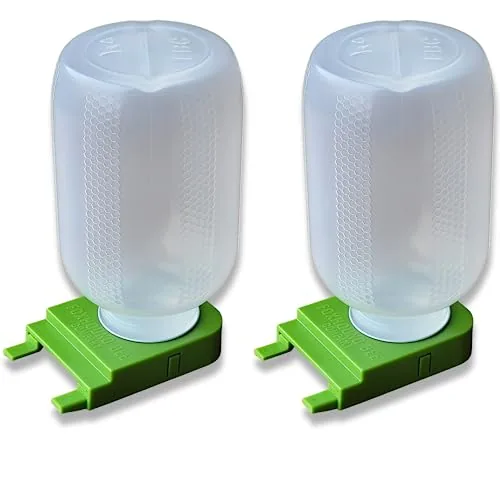
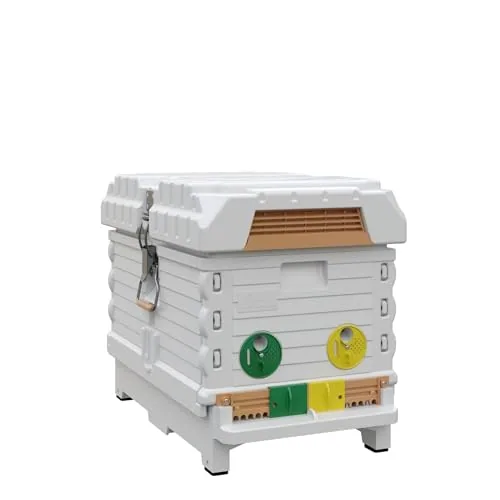
See the best nuc boxes, the best beehives for beginners and our guide on how to install a package of bees.
Mistakes to avoid when buying bees
- Ordering in March. By then many good suppliers have sold out.
- Buying a nuc on the wrong frame size. Deep and medium frames don’t swap. Confirm before you pay.
- Skipping the nuc inspection. Look at the frames at pickup: eggs or young larvae, a reasonable brood pattern, no sunken or perforated cappings. If brood looks diseased, don’t take it, and contact your state apiarist.
- Leaving bees in the car. Packages and nucs overheat fast. Drive straight home with them ventilated and shaded.
- Assuming the swarm will come. If you need bees this spring, order a package or nuc and treat a swarm as a bonus.
Which should you choose?
- Choose a nuc if you run Langstroth boxes, live in a short-season region, or want the fastest start and a laying queen from day one.
- Choose a package if you have a top bar hive, want a clean start without carried-over comb, or can’t find a local nuc builder.
- Try a swarm as your second colony, once you have a hive running and know what healthy brood looks like. Gear for this is under swarm season.
- First-time beekeepers: start with two colonies from the same source, so you can compare them. See your first hive.
For most first-year beekeepers with Langstroth hives, a nuc from a trusted local supplier is the easiest start: a laying queen, brood and drawn comb from day one. A package is the cleaner and more flexible choice, especially for top bar hives. Swarms are a great second colony but a poor plan A. Whichever you pick, order by early winter and have the hive ready before pickup day.
Questions
Are nucs better than packages for beginners?
How many bees are in a package?
Can I put a nuc in a top bar hive?
Is a swarm safe to catch?
When do I order package bees vs nucs?
Where can I buy bees?
Sources
- Penn State Extension: Installing packaged bees
- UF/IFAS Honey Bee Lab: Installing packages and nucs (April 2015)
- Utah State University Extension: Splitting the hive
- Mississippi State University Extension P4053: Mississippi Beekeeping Calendar
- University of Arizona: Spring and Summer Management of Honeybees (AZ2016)