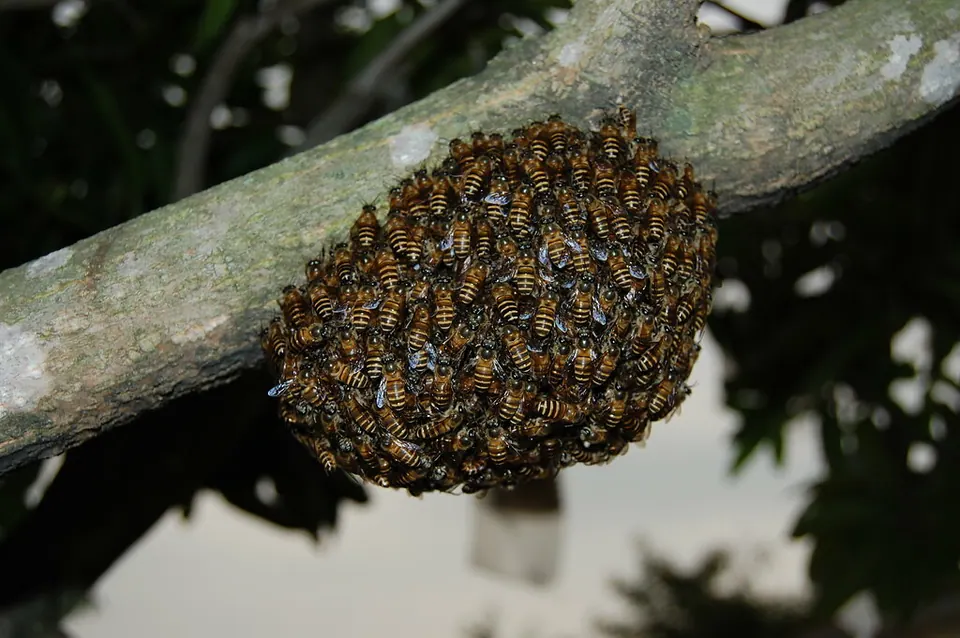
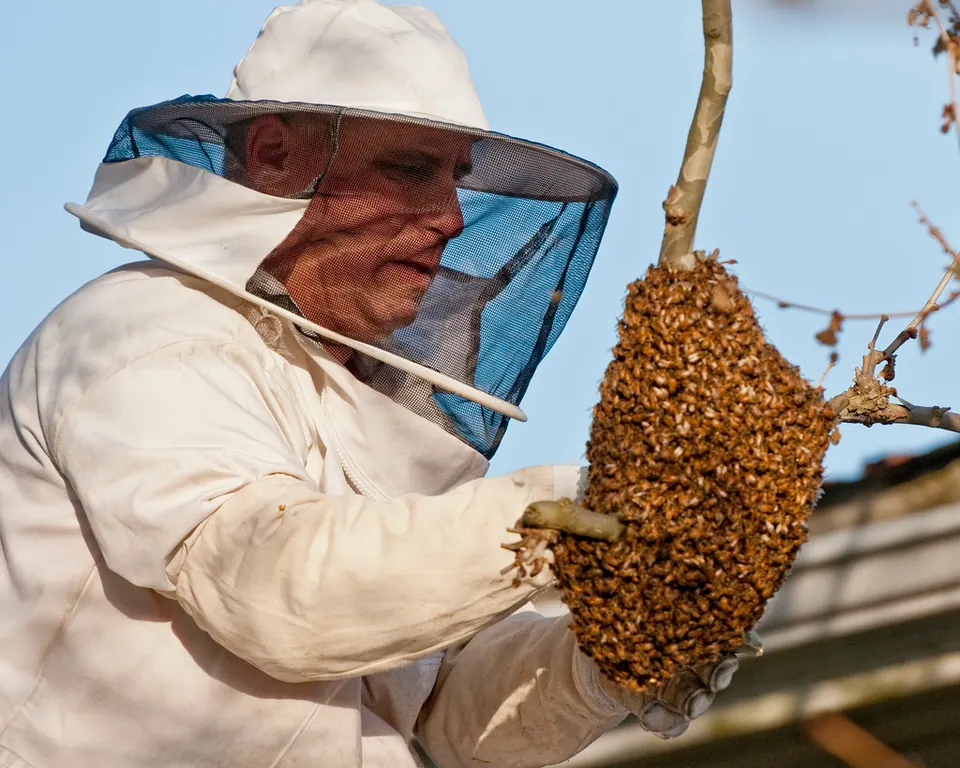
- A swarm that has just left a hive usually hangs in a cluster for a few hours to a day or two while scouts search for a new home. That is your window to catch a swarm.
- Swarms are usually calm because they have no comb or brood to defend, but wear a veil and gloves anyway.
- Clusters within easy reach: shake or brush them into a box, wait for the bees to fan at the entrance, then move the box at dusk.
- Bait hives with a swarm lure catch swarms you never see. Regional calendars put them out from February (Mid-Atlantic) to May.
- Leave swarms that are high up, inside walls, or in areas with Africanized bees to experienced beekeepers or removal specialists.
Knowing how to catch a swarm turns a neighbor’s scare into a free colony. When a colony swarms, the old queen and a large share of the workers leave together and settle in a cluster, often on a branch, fence or post. Scout bees then search for a cavity. Until they agree on one, the cluster hangs in place, sometimes for an hour, sometimes for a day or two.
This guide covers both ways to get swarm bees: boxing a cluster you can reach, and setting bait hives that swarms move into on their own. It draws on Michigan State University’s swarm management handout, UF/IFAS ENY-160, Utah State University Extension and the regional calendars in our seasonal calendar. If you would rather your own colonies didn’t swarm in the first place, see how to prevent swarms.
Should you catch this swarm?
Check the situation before you check your gear. Many swarm calls are best handled by someone else.
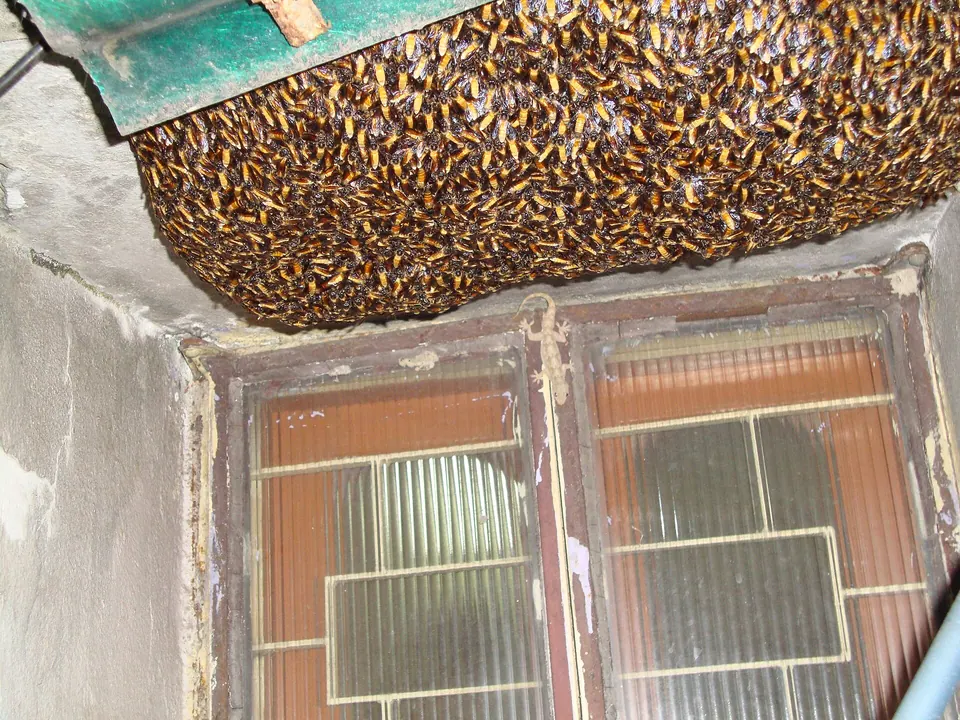
Catch it yourself, or call someone?
| Situation | Your call | Why |
|---|---|---|
| Cluster on a low branch or fence, open air | ✓ good first catch | Easy to reach and shake |
| Cluster above head height | ~ only with a pole catcher, never from the top of a ladder | Falls are the real hazard |
| Bees going in and out of a wall, roof or tree hollow | ✗ not a swarm anymore | An established colony; needs a removal specialist |
| Bees defensive, chasing people | ✗ back off | Possibly Africanized or provoked; call a professional |
| Southwest, Texas, Florida or other areas with Africanized bees | ~ only if experienced | Defensive genetics are common |
| On someone else’s property | ~ ask first | Permission and liability |
Most local beekeeping associations keep a swarm-call list. Adding your name is the easiest way to get swarm calls, and the club can match difficult removals with experienced members.
What do you need to catch a swarm?
Keep a swarm kit packed from early spring, because a swarm doesn’t wait for you to find your gloves.
- A box: a nuc box, a deep with frames, or a ventilated cardboard box for transport.
- A frame of old drawn comb, if you have one. It smells like home and helps the bees settle.
- A bed sheet or tarp to put under the box and the cluster.
- A veil, jacket or suit, and gloves.
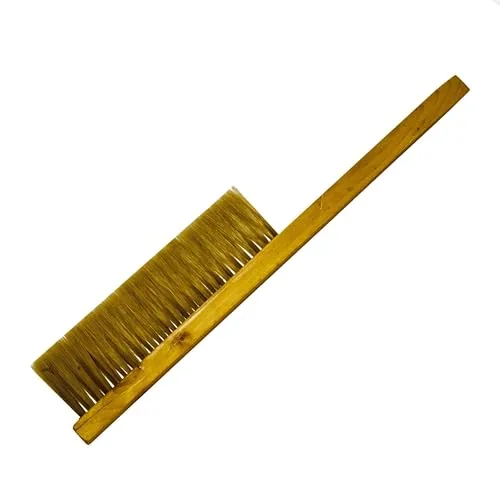
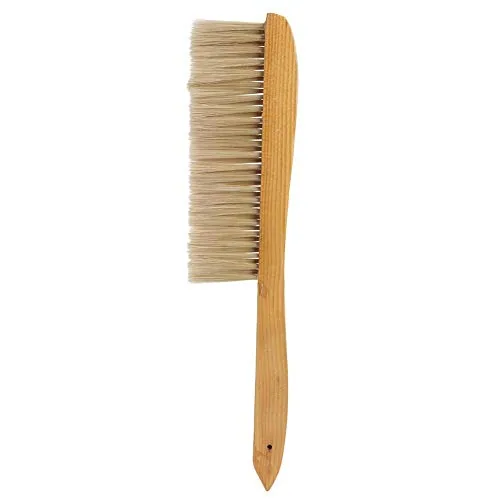
- A soft bee brush, a spray bottle of water or 1:1 syrup, and pruning shears for small branches.
- Ratchet straps or tape and a screen for moving the box.
- Optional: a pole-mounted swarm catcher for clusters a little higher up.
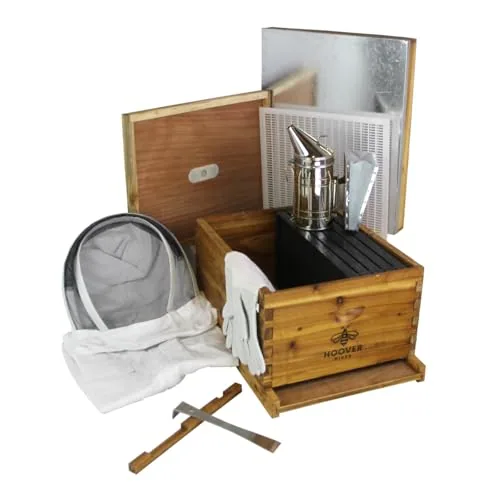
Hoover Hives 10-Frame Wax-Coated Starter, 5 Frames
- Frames
- 10-frame box, 5 frames included
- Boxes
- 1 deep
- Finish
- Wax-coated
Best for Installing a purchased nuc
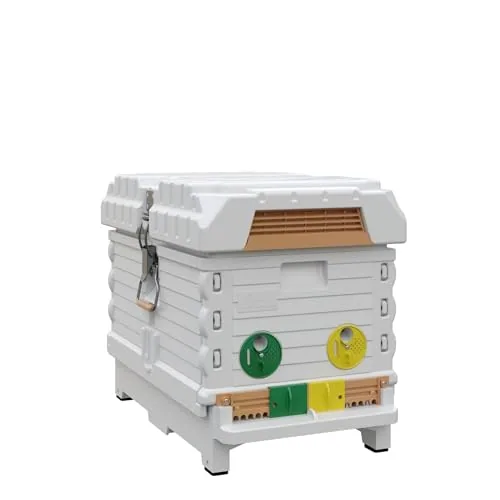
Apimaye Insulated 7-Frame Nuc, Plastic Core Frames
- Frames
- 7
- Boxes
- Nucleus box
- Material
- Insulated plastic
Best for Housing splits and caught swarms
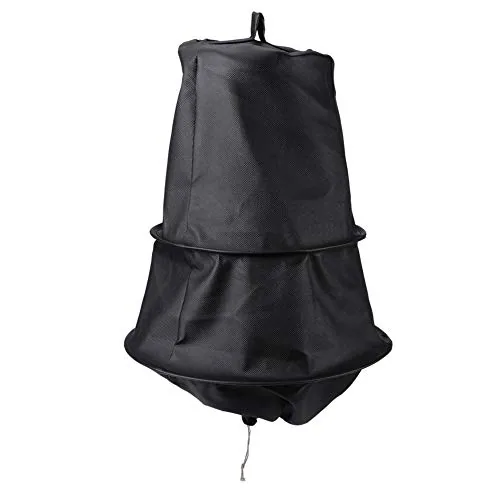
Haosie Bee Swarm Catching Cage
- Material
- PU leather, cloth, 3-layer steel wire
- Use
- Pole-mounted swarm catcher
- Closure
- Tie-closed bottom
Best for Catching swarms from trees and bushes
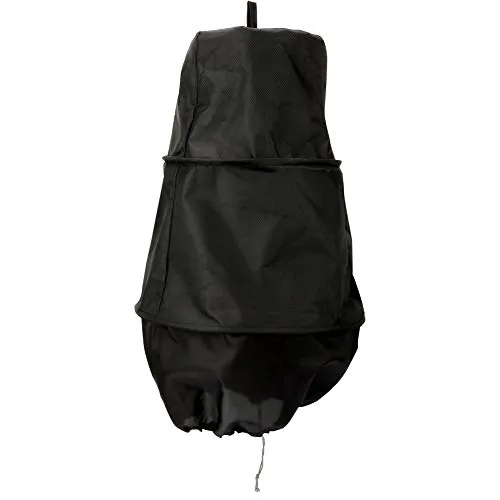
Hilitand Bee Swarm Catching Cage
- Material
- Fabric with 3-layer steel wire
- Use
- Pole-mounted swarm catcher
- Closure
- Tie-closed bottom
Best for Reaching swarms in trees
Gear compared: best swarm traps and lures, best nuc boxes and best beekeeping suits.
How to catch a swarm, step by step
- Gear up and set the box below the cluster
Spread the sheet under the cluster and set the open box on it, as close beneath the bees as you can. Remove a few frames from the middle to leave a gap.
- Mist the cluster
A light mist of water or 1:1 syrup makes the bees heavier and less likely to fly. Smoke is rarely needed; it can make a swarm move.
- Drop the bees into the box
Hold the branch over the box and give one sharp shake or downward jolt so the cluster falls in. For a cluster on a post or fence, brush or scoop bees gently into the box. Small branches can be clipped and laid in the box, bees and all.
- Replace frames slowly and leave a gap at the top
Lower the frames back in without crushing bees, and leave the lid slightly open or the entrance clear so stragglers can walk in.
- Watch for fanning
If the queen is in the box, bees at the entrance will raise their abdomens and fan, spreading the scent that calls the others in. If bees stream back to the branch instead, the queen is probably still there; shake again.
- Wait until dusk, then close and move
Leave the box in place until evening, when the foragers are in. Then close the entrance with screen, strap the box, and move it to its new spot.
- Install, feed and check for eggs
Put the bees in a hive with frames, feed 1:1 syrup if there is no nectar flow, and look for eggs after about a week. Keep the new colony apart from your others until you know its brood looks healthy.


How do bait hives and swarm lures work?
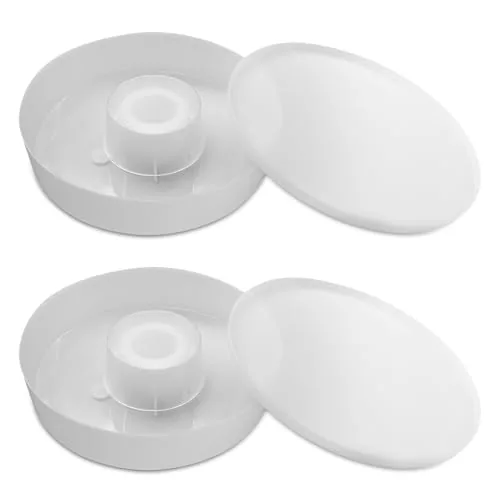
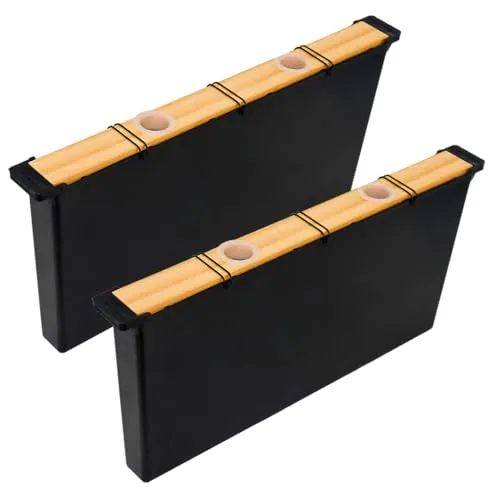
A bait hive (or swarm trap) is an empty box set out in swarm season, where scout bees may choose it as the swarm’s new home. You catch swarms you never see, including ones from wild colonies. Most beekeepers use a box about the size of a hive body, with a small entrance, a frame or two of old dark comb and a swarm lure.
Commercial lures mimic the Nasonov scent that worker bees release to guide others to a new home. The catalogue options below are compared by listed size, type and the maker’s stated shelf life.
| Product | Size | Type | Shelf life |
|---|---|---|---|
| Swarm Commander Premium Swarm Lure, 2 oz Spray | 2 oz spray bottle | Synthetic Nasonov pheromone | 2 years minimum (maker) |
| Swarm Sauce Swarm Lure, 2 oz Dropper | 2 oz dropper | Synthetic Nasonov pheromone | — |
| Swarm Science Swarm Lure, 2 oz Spray | 2 oz spray bottle | Nasonov pheromone mimic | Over 2 years (maker) |
| Bountiful Bees Bee Bait Swarm Lure, 1 oz Dropper | 1 oz dropper bottle | Synthetic Nasonov pheromone lure | Up to 2 years (maker) |
Specs as listed by the maker or seller; check the listing before you buy.
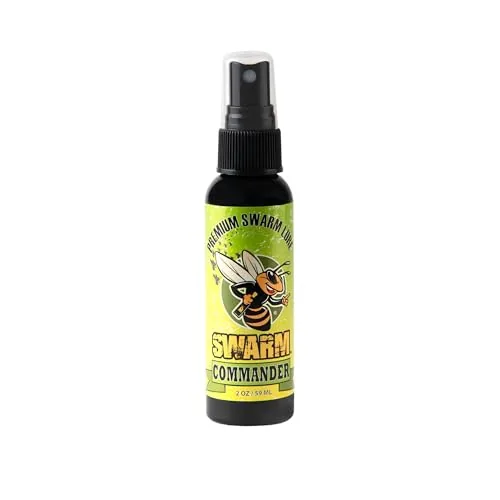
Swarm Commander Premium Swarm Lure, 2 oz Spray
- Type
- Synthetic Nasonov pheromone
- Size
- 2 oz spray bottle
- Shelf life
- 2 years minimum (maker)
Best for Baiting swarm traps
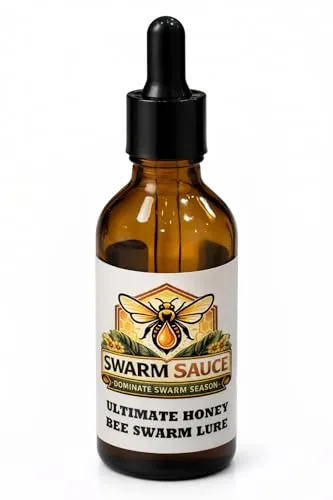
Swarm Sauce Swarm Lure, 2 oz Dropper
- Type
- Synthetic Nasonov pheromone
- Size
- 2 oz dropper
- Made in
- USA
Best for Catching spring swarms

Swarm Science Swarm Lure, 2 oz Spray
- Type
- Nasonov pheromone mimic
- Size
- 2 oz spray bottle
- Shelf life
- Over 2 years (maker)
Best for Spraying swarm traps
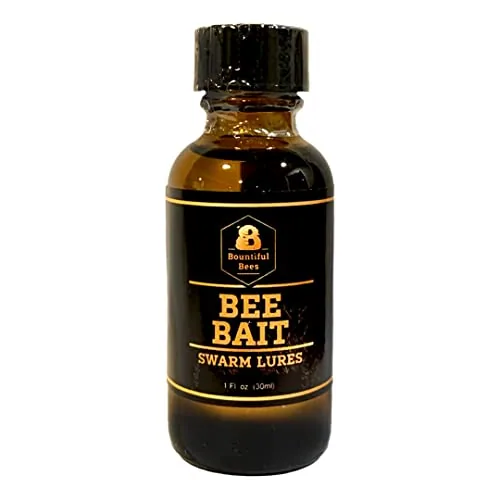
Bountiful Bees Bee Bait Swarm Lure, 1 oz Dropper
- Type
- Synthetic Nasonov pheromone lure
- Size
- 1 oz dropper bottle
- Shelf life
- Up to 2 years (maker)
Best for Baiting swarm traps in spring
Follow each lure’s directions for how much to use and how often to refresh it. Check bait hives about weekly. When scouts are investigating, you will see a few dozen bees going in and out; when a swarm has moved in, traffic is steady and bees carry pollen. Move the new colony into a hive within a few days, before it builds comb you will have to cut out.
When should you set bait hives?
Set bait hives a couple of weeks before your local swarm season starts. Our regional calendars include a bait-hive task at these points in the year:
When regional calendars say to set bait hives
Month number (2 = February, 5 = May)
The Southwest calendar says to catch any swarms you can in April, alongside swarm control. Leave bait hives up through the end of your swarm season, which often runs into June. Use the seasonal checklist to get a reminder for your region.
What happens after you catch a swarm?
- Give it frames to build on. Swarms draw comb quickly. Give them foundation or drawn comb and feed if there is no flow.
- Check for a laying queen. Look for eggs after about a week. A swarm with a virgin queen (an afterswarm) may take longer.
- Watch the first brood. The colony’s disease history is unknown. If brood looks sunken, greasy or smells foul, stop and contact your state apiarist before moving any equipment.
- Count mites. A swarm starts with a brood break, which is a good time to check mites. Do an alcohol wash once the first brood is capped.
- Note temperament. If the colony turns defensive, ask your club about requeening with a mated queen of gentle stock.
Swarm-catching mistakes to avoid
- Climbing high with a box of bees. Use a pole catcher or call for help.
- Closing the box right away. Wait for the stragglers and for dusk.
- Heavy smoke. It can drive the swarm off.
- Leaving a caught swarm in a hot, closed box. Ventilate and shade it.
- Mixing it straight into your apiary. Keep it apart until you have seen healthy brood.
- Treating a colony in a wall as a swarm. That needs a removal, not a catch.
Who should do what?
- Beekeepers with one season behind them: join your club’s swarm list and keep a kit ready. Gear is under swarm season.
- First-year beekeepers: set a bait hive, and catch a low swarm with a mentor first.
- Non-beekeepers with a swarm in the yard: leave it alone, keep people and pets back, and call a local beekeeping association. Most swarms move on within a day or two.
- Anyone in an area with Africanized bees: leave swarm catching to experienced beekeepers. Browse hives and nuc boxes for bait-hive boxes.
Catching a swarm is simple when the cluster is low and you are ready: veil on, box underneath, one firm shake, wait for fanning, move at dusk. Bait hives with a lure, set out just before your regional swarm season, catch the swarms you never see. Leave high, hidden or defensive bees to experienced removers, and watch every new swarm colony’s first brood before it joins your apiary.
Questions
How do you catch a swarm of bees?
How long does a swarm stay in one place?
Are swarming bees dangerous?
What attracts a swarm to a bait hive?
When is the best time to catch a swarm?
What if bees have moved into a wall?
Sources
- Michigan State University: Swarm management handout
- UF/IFAS EDIS ENY-160 (IN785): Swarm Control for Managed Beehives
- Utah State University Extension: Splitting the hive
- University of Arizona: Spring and Summer Management of Honeybees (AZ2016)
- Penn State Center for Pollinator Research: Honey Bee Management Throughout the Seasons
- Apiary Inspectors of America: state apiarist directory