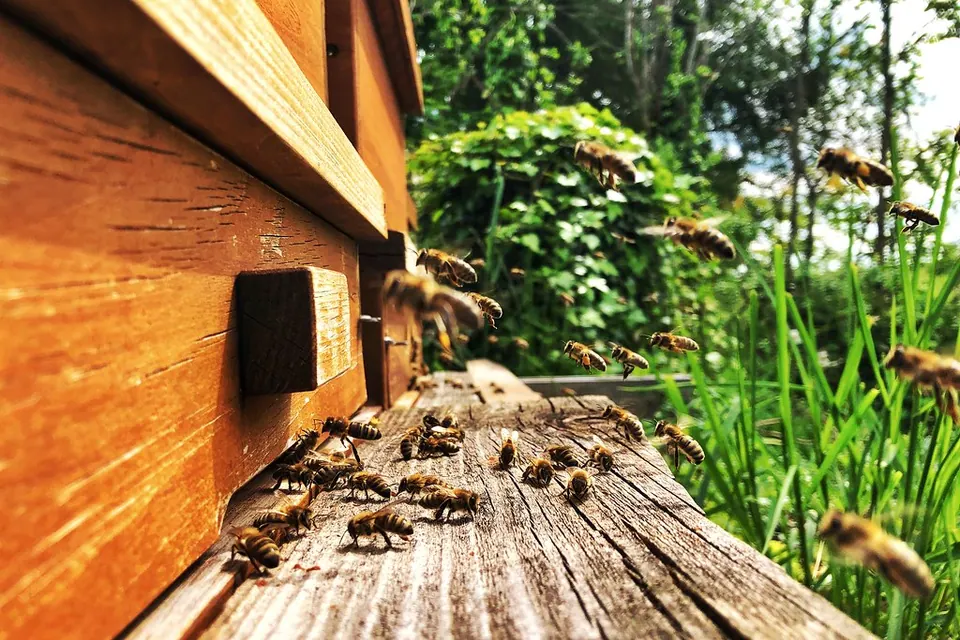
- To prevent swarms, deal with the main trigger: a crowded colony with no room for the queen to lay. Add space before the bees need it.
- Inspect every 7–14 days in swarm season and look for queen cells along the bottom edges of frames.
- Splitting a strong colony before it swarms is the most reliable prevention, and the brood break helps with varroa (Utah State).
- Swarm season runs from about March in the South to May–June in the North and mountains.
- Queen cells already capped? Removing them rarely stops a determined colony. Split instead.
Swarming is how honey bee colonies reproduce: the old queen leaves with a large share of the workers, and the bees left behind raise a new queen. Utah State University Extension notes that a swarm roughly halves the colony, leaving it with fewer bees, less honey and a higher risk of not surviving winter. If you want to know how to prevent swarms, the short answer is to stay ahead of crowding in spring and split strong colonies on your terms.
This guide draws on Utah State University Extension’s splitting guide, UF/IFAS ENY-160 Swarm Control for Managed Beehives, Michigan State’s swarm management handout and the regional calendars in our seasonal calendar. Track each colony in the hive inspection log, because swarm prevention is all about timing.
Why do bees swarm?
Colonies swarm when they are strong, healthy and short of space, usually in spring as brood rearing peaks and the first big flow begins. The triggers stack up:
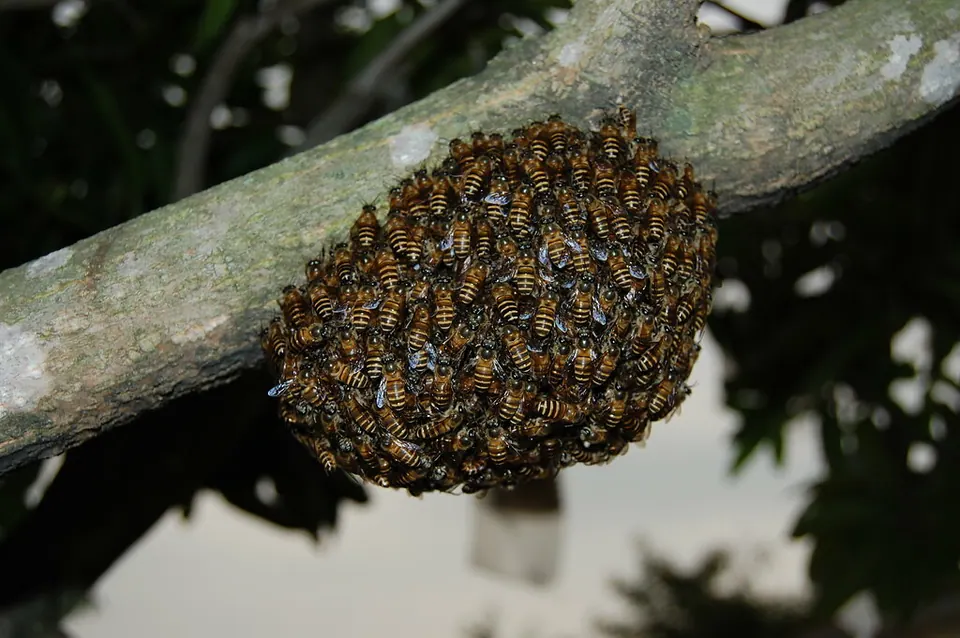
- Congestion: the brood boxes are packed with bees.
- A honey-bound brood nest: nectar fills the cells the queen needs for eggs.
- An older queen: Utah State lists a queen over a year old among the warning signs.
- An early spring or mild winter: early pollen and nectar push fast build-up.
- Early drone rearing and a high spring population.
None of these alone guarantees a swarm, and some colonies swarm with room to spare. But space and a timely split prevent most of them.
How do you know a colony is about to swarm?
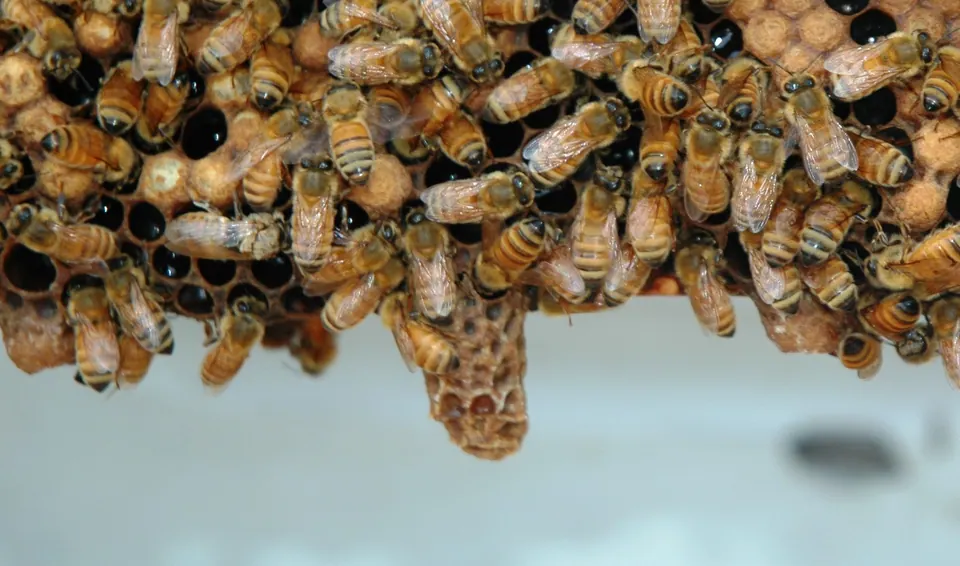
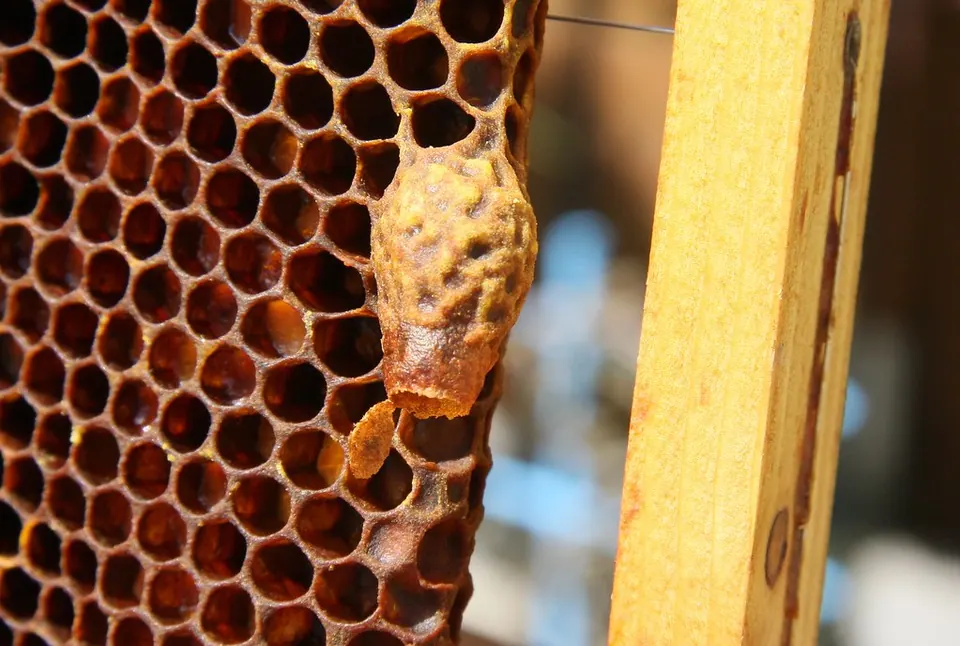
The clearest sign is queen cells: peanut-shaped cells hanging vertically from the comb. Utah State notes that swarm cells usually hang along the bottom edges of frames, while supersedure cells (the bees replacing a failing queen) usually sit mid-frame. Position is a clue, not a rule.
Swarm signs and what they mean
| What you see | How urgent | What to do |
|---|---|---|
| Brood boxes 70–80% full of bees | ~ getting close | Add the next box or a super now |
| Nectar packed into brood-nest cells | ~ getting close | Give empty comb or foundation in the brood nest |
| Empty queen cups along the bottom edges | ~ normal in spring | Keep inspecting every 7–14 days |
| Queen cups with eggs or larvae | ✗ swarm preparation has started | Split the colony now |
| Capped queen cells | ✗ swarm imminent or already left | Split, keeping a cell in each part |
| Fewer bees, no eggs, capped queen cells | ✗ likely already swarmed | Don’t destroy cells; let the colony requeen |
Source: Utah State University Extension; Hive & Frame seasonal calendar
How to prevent swarms, step by step
- Inspect every 7–14 days from early spring
Our regional calendars all move to 7–14-day checks once swarm season starts: March in the Mid-Atlantic and Deep South, May in the Northeast and Pacific Northwest. Look at the brood nest and the bottom edges of frames.
- Reverse brood boxes if the bottom one is empty
In early spring, the cluster often moves up and leaves the bottom deep empty. The Mid-Atlantic calendar suggests swapping the boxes, without splitting the brood nest across them, so the queen has room to move up again.
- Add space before the bees need it
Add the next deep or a honey super when the top box is about 70–80% full of bees. Strong colonies on a big flow can fill a super in days.
- Open up the brood nest
If nectar is crowding the brood, move a full honey frame up into a super and put a frame of drawn comb or foundation in the brood nest. The Deep South calendar suggests giving the queen empty comb.
- Split strong colonies
Once drones are flying, make a split from your strongest colonies. Utah State recommends splitting early in spring, before heavy flows, and never splitting weak colonies.
- Requeen older queens
Utah State lists a queen over a year old among the swarm warning signs, so many beekeepers requeen older colonies in spring or late summer. Mark and date your queens so you know their age.
- Set a bait hive as backup
Even good management misses some swarms. A bait hive with a lure gives you a chance to catch them. See how to catch a swarm.



Which split should you make?
Utah State describes three split approaches. All reduce congestion; they differ in how much skill they need and where the new queen comes from.
Split types compared
| Walk-away split, purchased queen | Walk-away split, colony-reared queen | Swarm-control split (nuc) | |
|---|---|---|---|
| You need to find the queen | ✗ no | ✗ no | ✓ yes |
| Frames moved | 2 brood + 2 honey/pollen | Brood with eggs, honey/pollen | 2 brood + 2 honey/pollen + 1 drawn comb |
| New queen | Bought, mated | Raised by the bees | Old queen goes in the nuc; requeen the parent |
| Time to first new eggs | ✓ fastest | ~ about 24–28 days | ✓ queen keeps laying in the nuc |
| Skill needed | ✓ low | ✓ low | ~ moderate |
Source: Utah State University Extension: Splitting the hive
Colony-reared queen: days from split
Upper end of each range in the Utah State timeline
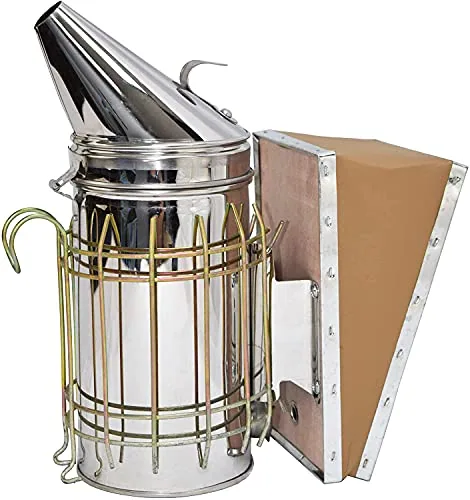
Utah State’s swarm-control split puts the old queen, one brood frame with her on it, one more brood frame, two honey and pollen frames and one drawn comb into a five-frame nuc. Move the nuc away for a week if you can, so foragers don’t drift back. Feed it 1:1 syrup and check it every 7–14 days for the first month.
A split also gives a short brood break, which Utah State notes can reduce varroa. Keep up monthly alcohol washes in both halves.
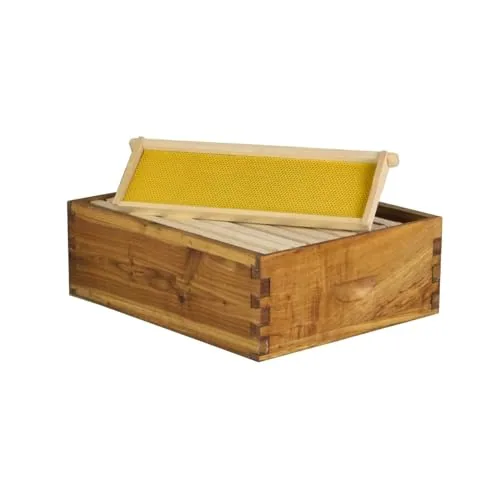
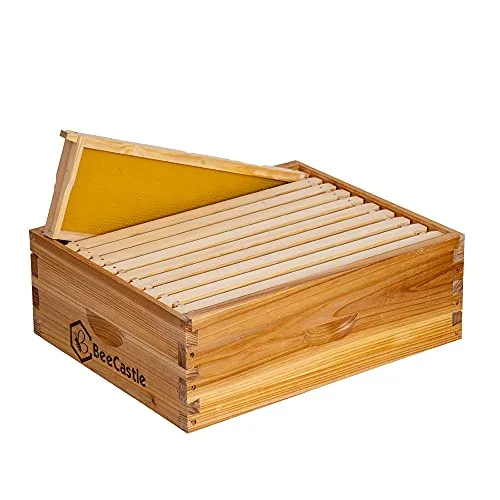
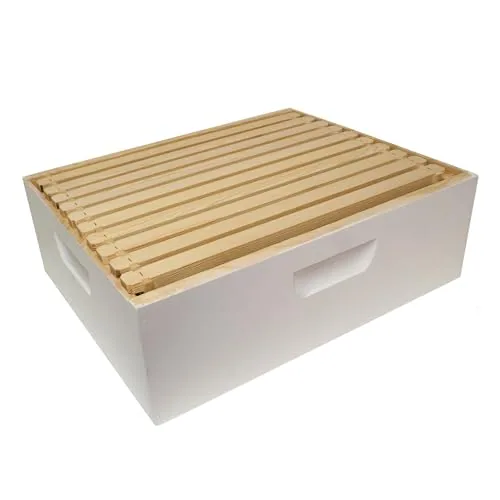
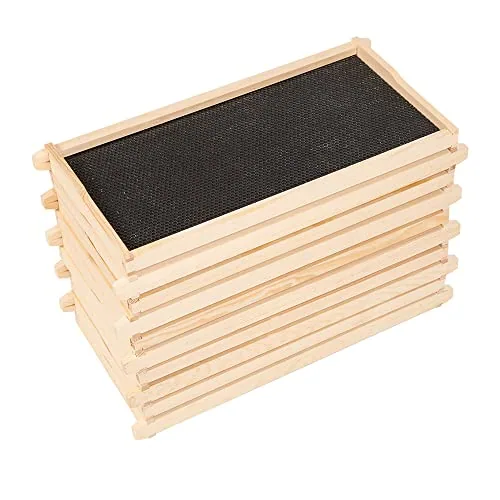
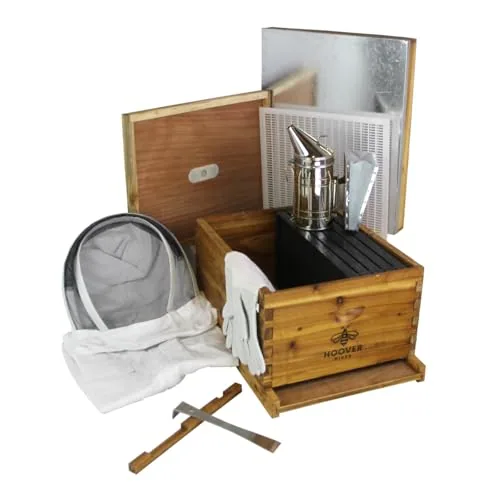
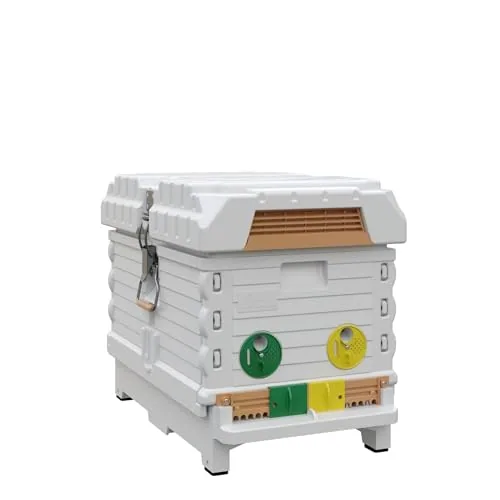
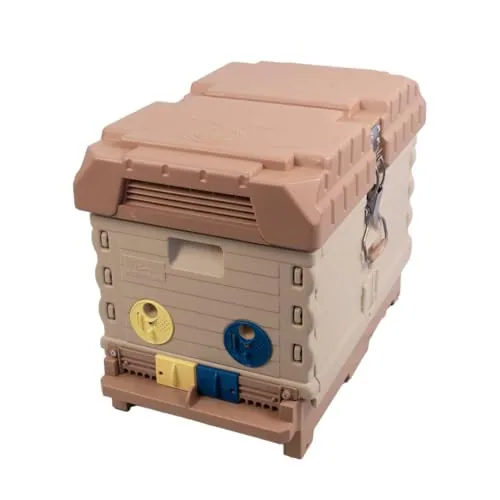
For split equipment, see the best nuc boxes and best Langstroth hives; if a swarm leaves anyway, the best swarm traps page covers bait hives and lures.
What does a split cost you in honey?
Utah State notes that honey production usually drops in the year of a split, and most hives recover the following year. Some splits fail to raise a queen or grow slowly and need a frame of brood or a purchased queen. Even so, a planned split keeps both halves in your boxes, while a swarm leaves with the bees and the honey they carried.
Swarm prevention mistakes to avoid
- Adding room too late. By the time you see capped queen cells, space alone won’t stop the swarm.
- Skipping a week in May. A colony can go from empty cups to a swarm between visits.
- Adding only supers above an excluder when the brood nest itself is crowded. Give the queen room too.
- Splitting weak colonies. Utah State says to split strong ones only.
- Destroying every queen cell. If the old queen has already gone, the colony is left hopelessly queenless.
- Forgetting the split needs food. Feed new splits until they are established.
Who should use which method?
- First-year colonies from packages: usually don’t swarm in year one; just keep adding room on time.
- Overwintered colonies: plan a split every spring. Gear is under swarm season.
- Backyard beekeepers near neighbors: prevention matters more, because a swarm on a neighbor’s fence is alarming. See backyard and urban.
- Southwest beekeepers: the Arizona calendar advises giving splits a mated queen of gentle stock rather than letting them open-mate near Africanized drones.
The surest way to prevent swarms is to stay ahead of crowding: inspect every 7–14 days in spring, add room when boxes are 70–80% full of bees, keep the brood nest open, requeen old queens, and split strong colonies before queen cells hold larvae. Treat a bait hive as backup, not as the plan.
Questions
How do you prevent swarms in a beehive?
What month do bees swarm?
Does removing queen cells prevent swarming?
Can a first-year colony swarm?
Does a queen excluder stop swarming?
Does splitting help with varroa mites?
Sources
- Utah State University Extension: Splitting the hive
- UF/IFAS EDIS ENY-160 (IN785): Swarm Control for Managed Beehives
- Michigan State University: Swarm management handout
- Calendar for Beekeeping in Central North Carolina (updated Dec. 2023)
- University of Arizona: Spring and Summer Management of Honeybees (AZ2016)
- Penn State Center for Pollinator Research: Honey Bee Management Throughout the Seasons