Free tool

First-hive shopping list builder

Pick your setup and the list adjusts: boxes, frames, covers, feeders, tools, protective gear and the bee-health basics. We list no prices. Tick “add my own prices” to type what your supplier charges today; the total is worked out in your browser and never leaves it.

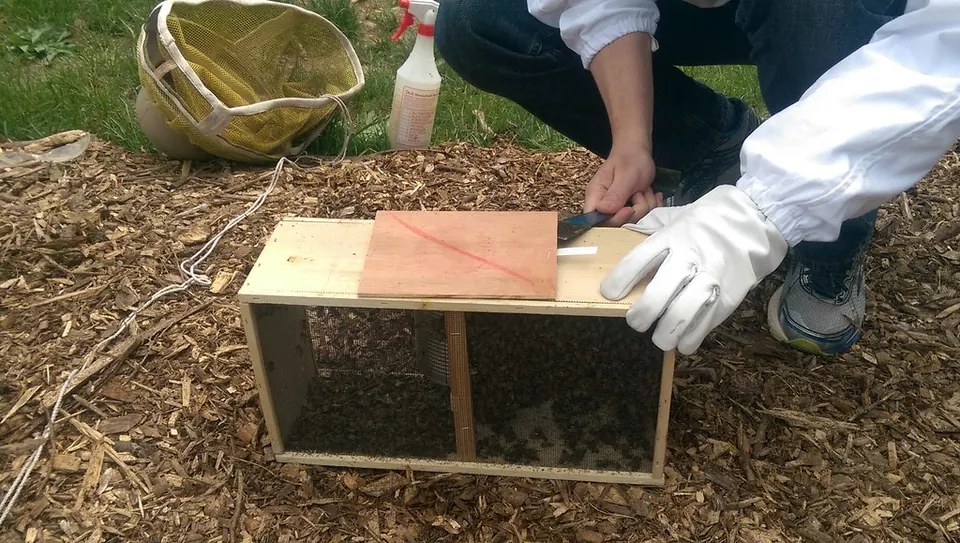
Gloved beekeeper prying the lid of a screened package of bees before installation
Photo: Rob React, CC BY 2.0, via Flickr
Many extension programs suggest starting with two, so you can compare colonies and share frames.
Bees from
Hive style
Beekeepers who need gear
Honey harvest plan (year 2)
Your first-hive list
ItemQtyYour price eachLine
Your total—
We show no prices. Type what your local supplier or the listing charges today, if you want a total.

How the quantities are worked out

The list assumes a common starting setup: two deep boxes for the brood nest and two (10-frame) or three (8-frame) medium supers for honey, with a frame and a sheet of foundation for every slot. A five-frame nuc arrives with its own drawn frames, so you need five fewer deep frames per hive.

Starting setup per colony

Langstroth 10-frameLangstroth 8-frameTop bar
Brood boxes2 deeps2 deeps1 long body
Honey supers2 mediums3 mediumssame body
Frames per box108bars included
Works with nucs✓ yes✓ yes✗ not standard nucs
Works with an extractor✓ yes✓ yes✗ crush & strain

Your local club may suggest something different for your climate, for example a third deep in the far north or single-deep brood nests in the Southeast. Treat the list as a starting point, not a rule.

Why two hives instead of one

Extension beekeeping programs often suggest that beginners start with two colonies. With two, you can compare brood patterns and temperament, move a frame of eggs to a colony that has lost its queen, and still keep bees if one colony fails.

Honey yield and profit calculatorPlanning ahead for jars? Estimate a harvest and see what is left after your own costs.

What you buy elsewhere

Bees themselves are not sold through the shops we link to. Packages and nucs come from regional suppliers and local beekeepers, and many sell out by late winter, so order early. Some specialist items, such as certain registered oxalic acid products and vaporizers, are mostly sold through bee-supply dealers.

Questions

What do I need to start beekeeping?
A complete hive (bottom board, brood boxes, supers, frames with foundation, inner and outer cover), bees, a feeder, a smoker and fuel, a hive tool, a veil with suit or jacket, gloves and a mite test kit. The builder above lists quantities for your setup.
How many frames do I need for one hive?
For a 10-frame Langstroth with two deeps and two medium supers, 20 deep and 20 medium frames. Subtract 5 deep frames if you start from a 5-frame nuc.
Should I buy a beekeeping starter kit?
Kits can be convenient, but compare what is actually included with this list. Many kits leave out the second deep, the supers or the mite test kit. Our starter kit rankings compare what each kit includes.
Does the tool save my prices?
Yes, in this browser only (localStorage). Nothing is sent to us, and clearing your browser data removes them.

Sources

  1. Penn State Extension: Installing packaged bees
  2. Penn State / MAAREC: Beekeeping Basics (AGRS-93)
  3. Utah State University Extension: Setting up and placing a hive