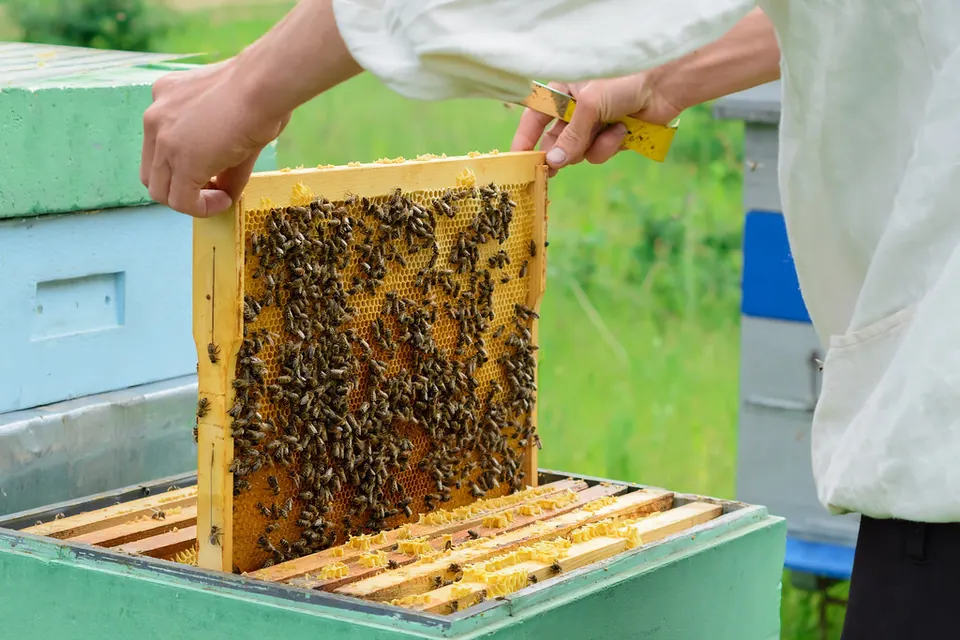
What to record at each inspection
- Queen right? Eggs and young larvae tell you a laying queen was there in the last few days, even if you do not see her.
- Brood pattern: solid capped brood is a good sign; a spotty pattern can mean a failing queen, disease or mites.
- Stores: honey and pollen, especially going into dearths and winter.
- Queen cells: cells along the bottom edge often mean swarm preparation; cells on the face of the comb often mean supersedure.
- Mite count: the number per 100 bees from your last wash or roll.
- Actions: what you added, removed or fed, and what to check next time.
Sunken, perforated cappings or ropey broodThese can be signs of American foulbrood, which is reportable in many states. Close the hive, do not move frames or equipment to other hives, and contact your state apiarist or apiary inspector before doing anything else.Source: Texas Apiary Inspection Service: American foulbrood
How often to inspect
Many beekeepers inspect every 7–14 days in spring and early summer, when swarming is most likely, and less often in summer dearths and late fall. Skip full inspections in cold weather; a quick lift of the cover or a hive-weight check is often enough.
Seasonal beekeeping checklist by regionSee what this month’s inspections should focus on in your region.Questions
Where are my inspections saved?
In your browser’s local storage on this device. Nothing is uploaded. Download a CSV now and then if you want a backup.
Can I print a blank inspection sheet?
Yes. Use “Print a blank sheet” to get the form without your saved entries.
What should I look for in a hive inspection?
Eggs or young larvae, the brood pattern, honey and pollen stores, queen cells, space for the colony to grow, pests, and the bees’ temperament. Record the mite count from your monthly sample too.