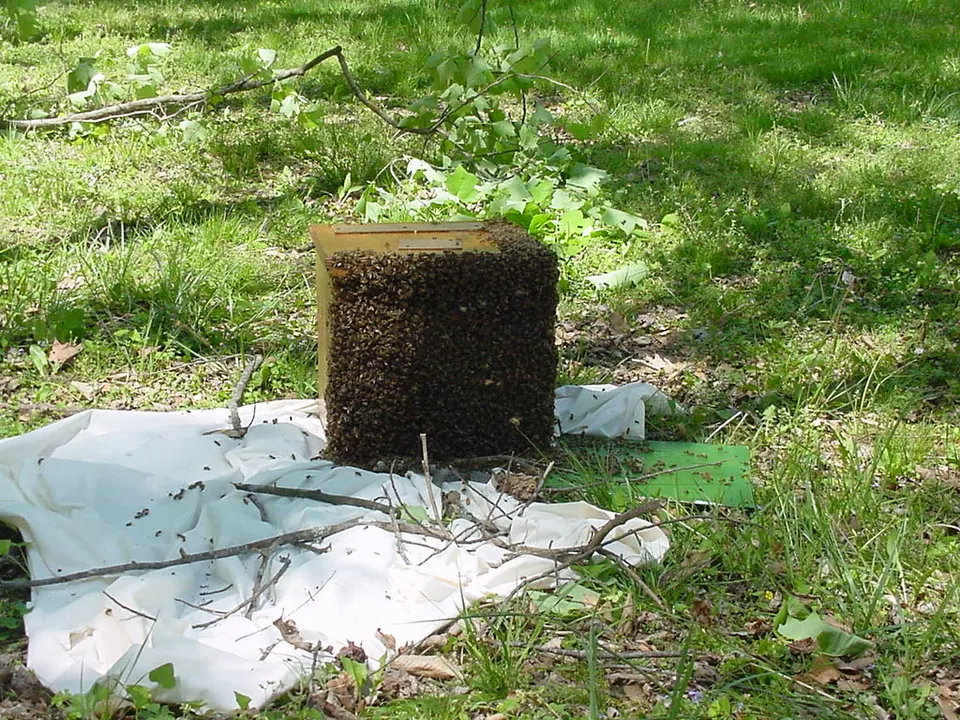
- Honest note: we found no dedicated pulp or cardboard swarm trap box in our catalogue, so the "trap" picks are standard hive boxes used as bait hives. Lures and catchers are labeled as such.
- Best bait box: Hoover Hives 10-frame deep with 5 frames; the colony can stay in the box you catch it in.
- Best lure: Swarm Commander, 2 oz spray, synthetic Nasonov pheromone, 2-year minimum shelf life per maker.
- Best catcher for low-hanging swarms: Haosie pole-mounted swarm cage with tie-closed bottom.
A swarm trap (or bait hive) is an empty box set up to look like a perfect new home to the scout bees of a swarm. When a colony swarms, scouts search for a dry cavity, and a box that smells of old comb and Nasonov pheromone gets their attention. Catching your own swarms, or swarms from the neighborhood, is the cheapest way to add colonies.
A working swarm trap setup has three parts: a box of the right size, an attractant, and a good spot. We compared bait boxes, four swarm lures and two catchers from eight brands by what the listings say. Every pick is labeled as a bait box, a lure or a catcher so you know what each one does.
Our picks
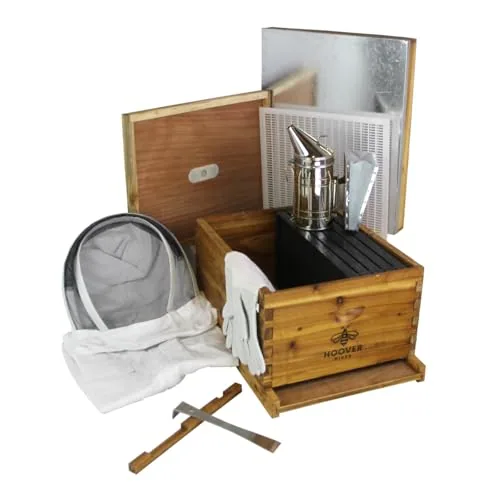
Hoover Hives 10-Frame Wax-Coated Starter, 5 Frames
- Frames
- 10-frame box, 5 frames included
- Boxes
- 1 deep
- Finish
- Wax-coated
Hoover Hives' HH10-1DSK is a wax-coated 10-frame deep with 5 frames included. As a bait hive, a standard deep is a good cavity size, the wax coating adds a hive-like smell, and when a swarm moves in you can add frames and keep the colony in the same box. Add a bottom, a lid, a small entrance and a lure.
Best for: beekeepers who want to keep the caught swarm in the same box
Skip if: you need a light trap to hang high in a tree
- Wax-coated deep
- 5 frames included
- Swarm stays in a standard 10-frame box
- Heavy to hang high
- Bottom, cover and entrance block not listed
- Needs a lure for best results
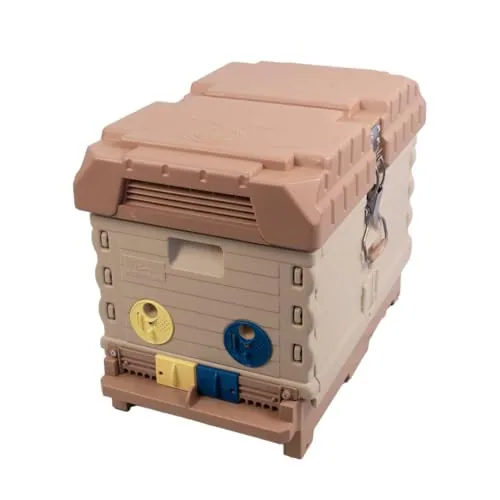
Apimaye Insulated 7-Frame Nuc with Core Frames, Tan
- Frames
- 7
- Boxes
- Nucleus box
- Material
- Insulated plastic
- Includes
- Core frames and foundations
Apimaye's assembled, insulated 7-frame Langstroth nuc with core frames is lighter than a full deep and easier to place on a stand, roof or low branch. Insulated plastic does not smell like wood or old comb, so add a lure and, if possible, an old comb frame.
Best for: a reusable, lighter bait hive
Skip if: you want the swarm to stay in its trap all season
- Lighter than a deep
- Insulated, assembled, frames included
- Doubles as a split nuc
- Smaller cavity than a deep
- Plastic, so a lure matters more
- Move the swarm up within weeks
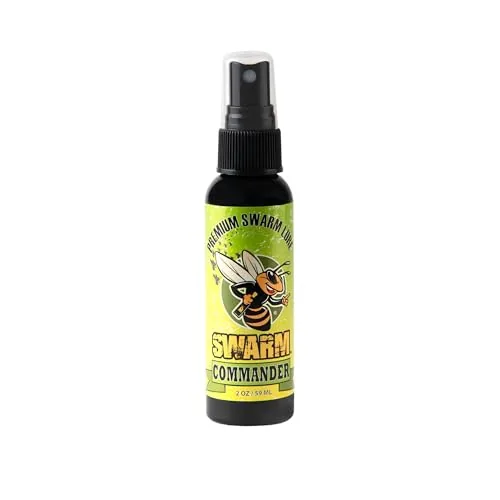
Swarm Commander Premium Swarm Lure, 2 oz Spray
- Type
- Synthetic Nasonov pheromone
- Size
- 2 oz spray bottle
- Shelf life
- 2 years minimum (maker)
Swarm Commander is a synthetic Nasonov pheromone lure in a 2 oz spray bottle with a high-mist sprayer. The maker lists a minimum 2-year shelf life and says one bottle allows about 200 applications. Spray inside the trap near the entrance and reapply through the season as directed.
Best for: most swarm traps
Skip if: you prefer a dropper for precise placement
- 2 oz spray, about 200 applications per maker
- 2-year minimum shelf life per maker
- Synthetic Nasonov pheromone
- Reapplication needed
- Lure helps, location still matters most
- Effectiveness claims are the maker's
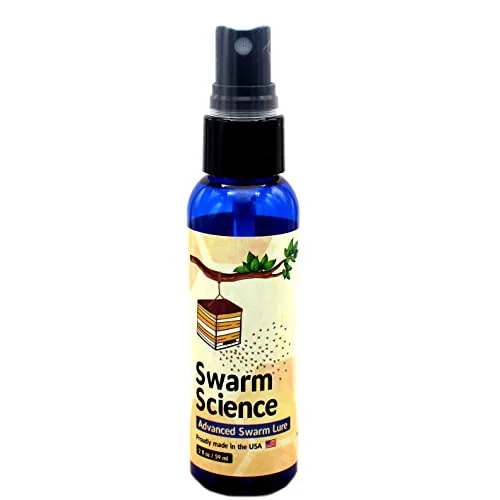
Swarm Science Swarm Lure, 2 oz Spray
- Type
- Nasonov pheromone mimic
- Size
- 2 oz spray bottle
- Shelf life
- Over 2 years (maker)
Swarm Science is a Nasonov pheromone mimic in a 2 oz spray bottle. The maker says it lasts over 2 years and contains enough to treat 100 traps. It is a good choice if you run a trap line across several sites.
Best for: beekeepers running several traps
Skip if: you only hang one trap a year
- 2 oz spray
- Enough for 100 traps per maker
- Over 2-year shelf life per maker
- Spray dose varies by user
- Reapply during the season
- Claims are the maker's
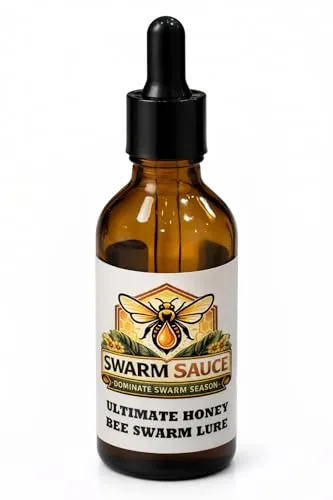
Swarm Sauce Swarm Lure, 2 oz Dropper
- Type
- Synthetic Nasonov pheromone
- Size
- 2 oz dropper
- Made in
- USA
Swarm Sauce is a synthetic Nasonov pheromone lure in a 2 oz dropper bottle, made in the USA. The listing suggests a few drops inside the trap near the entrance, in the inside rear of the trap, or on an absorbent material. A dropper gives you control over where the scent goes.
Best for: precise application on a cotton ball or comb
Skip if: you prefer a quick spray
- 2 oz dropper
- Made in USA
- Clear application directions
- Shelf life not listed
- Dropper is slower than spray
- Newer brand
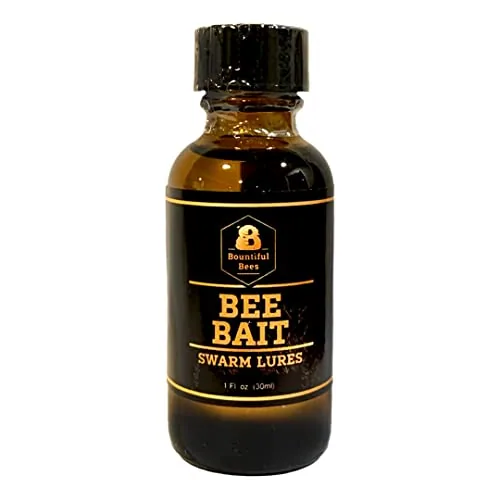
Bountiful Bees Bee Bait Swarm Lure, 1 oz Dropper
- Type
- Synthetic Nasonov pheromone lure
- Size
- 1 oz dropper bottle
- Shelf life
- Up to 2 years (maker)
Bountiful Bees Bee Bait is a synthetic Nasonov pheromone lure in a 1 oz dropper bottle, with added natural scents per the maker and a shelf life of up to 2 years. The maker suggests using it in an empty hive with frames placed within a few hundred feet of your apiary to recapture your own swarms.
Best for: one or two traps near your own hives
Skip if: you run many traps
- 1 oz dropper, smaller commitment
- Up to 2-year shelf life per maker
- Suggested setup for your own swarms
- Half the volume of the others
- Effectiveness claims are the maker's
- Reapply during season
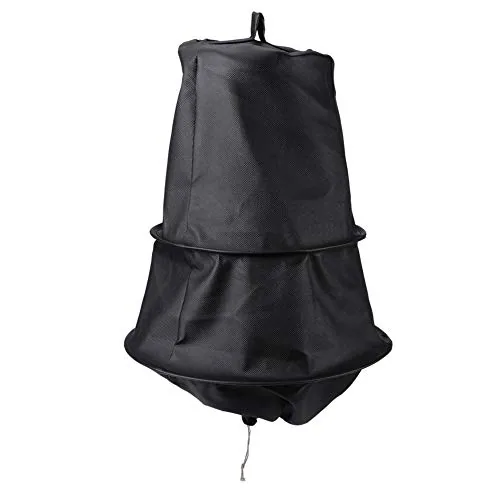
Haosie Bee Swarm Catching Cage
- Material
- PU leather, cloth, 3-layer steel wire
- Use
- Pole-mounted swarm catcher
- Closure
- Tie-closed bottom
Haosie's swarm cage is a PU leather and cloth bag reinforced with three layers of steel wire, with a soft loop to attach a pole and a bottom that ties closed. It is for collecting a swarm that has already clustered on a branch within pole reach, not for trapping scouts. Shake or scoop the cluster in, close the bottom, then transfer the bees into a box.
Best for: collecting clustered swarms from branches
Skip if: you only want passive traps
- Pole loop for reaching branches
- Steel wire frame keeps shape
- Tie-closed bottom
- Pole not included
- Not a trap: you must be there
- Never climb ladders alone with a swarm
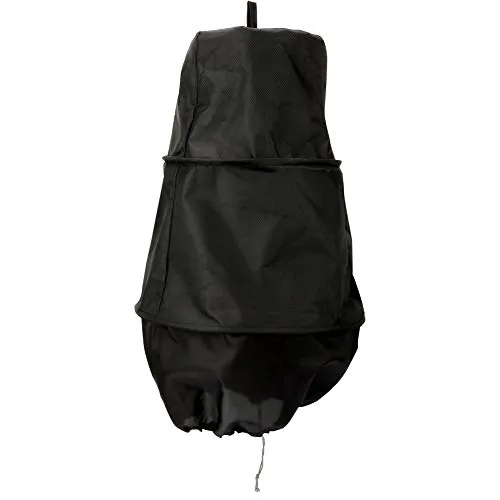
Hilitand Bee Swarm Catching Cage
- Material
- Fabric with 3-layer steel wire
- Use
- Pole-mounted swarm catcher
- Closure
- Tie-closed bottom
Hilitand's swarm catcher is a similar pole-mounted cage with three layers of steel wire and a bottom that ties closed. The listing is thin on materials, but the design matches the Haosie: a soft loop for a pole and a closeable base for moving bees into a hive.
Best for: a backup catcher in the swarm kit
Skip if: you want detailed material specs
- Three-layer steel wire
- Tie-closed bottom
- Pole loop
- Fabric not specified
- Pole not included
- Listing details are thin
What makes a good swarm trap?
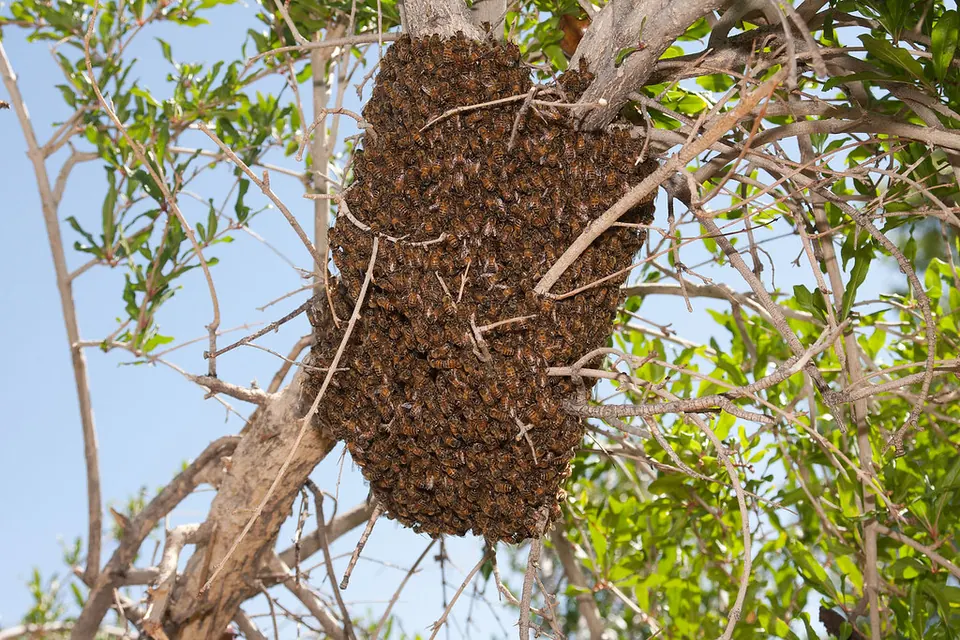
Scouts look for a dry, dark cavity with a small entrance, and they are drawn by scent. You can stack the odds by matching those cues.
Swarm trap checklist
| Feature | What to do | Gear here |
|---|---|---|
| Cavity | Use a full deep or a large nuc, closed top and bottom | Hoover deep, Apimaye nuc |
| Scent | Add one old, dark comb from a healthy hive and a lure | Swarm Commander, Swarm Science, Swarm Sauce, Bee Bait |
| Entrance | Small opening, near the bottom | Entrance reducer or a drilled hole |
| Location | Visible, shaded, raised off the ground where it is safe to retrieve | Stand, platform or sturdy branch |
| Timing | Before your local swarm season starts | See the seasonal checklist |
Source: Hive & Frame summary; lure details from maker listings
Lure bottle size
Volume as listed; application counts and shelf life are maker claims.
Do swarm lures work?
All four lures here are built around synthetic Nasonov pheromone, the scent worker bees release to mark a good cavity and guide others to it. A lure makes a trap easier for scouts to find; it does not make a bad spot good. Old comb adds a second, strong "bees lived here" cue.
Lure claims such as application counts and shelf life come from the makers. Store lures cool and closed, and refresh traps every few weeks during swarm season.
How to set up a swarm trap
- Prepare the box
Close the bottom and top, add one old comb and a few frames, and reduce the entrance to a small hole.
- Add the lure
Apply inside, near the entrance and at the back of the box, as the lure's directions say.
- Place it before swarm season
Put traps out before your local swarm season. Use the seasonal checklist to see when that is for your region.
- Check weekly
Watch for steady traffic at the entrance. Scouts come first; a swarm arrives in a rush.
- Move the swarm into a hive
Close the entrance at dusk, move the box, and transfer frames into your hive within a week or two before comb gets built in odd places.
For collecting a swarm that has already clustered, see how to catch a swarm.
Swarm trap mistakes to avoid
- Hanging traps too late. Scouts start looking before swarms issue.
- Placing traps where you can't retrieve them safely. A full trap is heavy. Avoid ladders you can't use with both hands free.
- Trapping on land you don't own without permission. Ask first.
- Using comb from a colony you are unsure about. Disease can travel with comb.
- Forgetting your own hives. Swarm traps catch swarms; preventing them is better. See how to prevent swarms.
Which swarm trap gear should you buy?
- One trap near your own hives: Hoover 10-frame deep with 5 frames + Bountiful Bees Bee Bait.
- Several traps: spare deeps or nucs + Swarm Science or Swarm Commander.
- Precise lure placement: Swarm Sauce dropper.
- Swarm calls from neighbors: Haosie or Hilitand pole catcher, plus a spare box.
Once you catch a swarm, you need somewhere for it to grow: see best nuc boxes. More gear on the swarm season page and in the hives category.
A swarm trap is only as good as its box, scent and placement. A Hoover 10-frame deep with 5 frames, one old comb from a healthy hive and Swarm Commander lure is the simplest setup that lets you keep the swarm in place. Use Swarm Science if you run many traps, and keep a Haosie pole catcher for swarms that cluster within reach.
We looked for dedicated swarm trap boxes in our catalogue and found none, so we compared standard boxes used as bait hives, four swarm lures and two pole catchers, each labeled by role. Lure application counts and shelf life are the makers' claims. We did not hang traps or test lures. Swarm management guidance comes from UF/IFAS and Michigan State University extension publications; AFB guidance from state apiary programs.