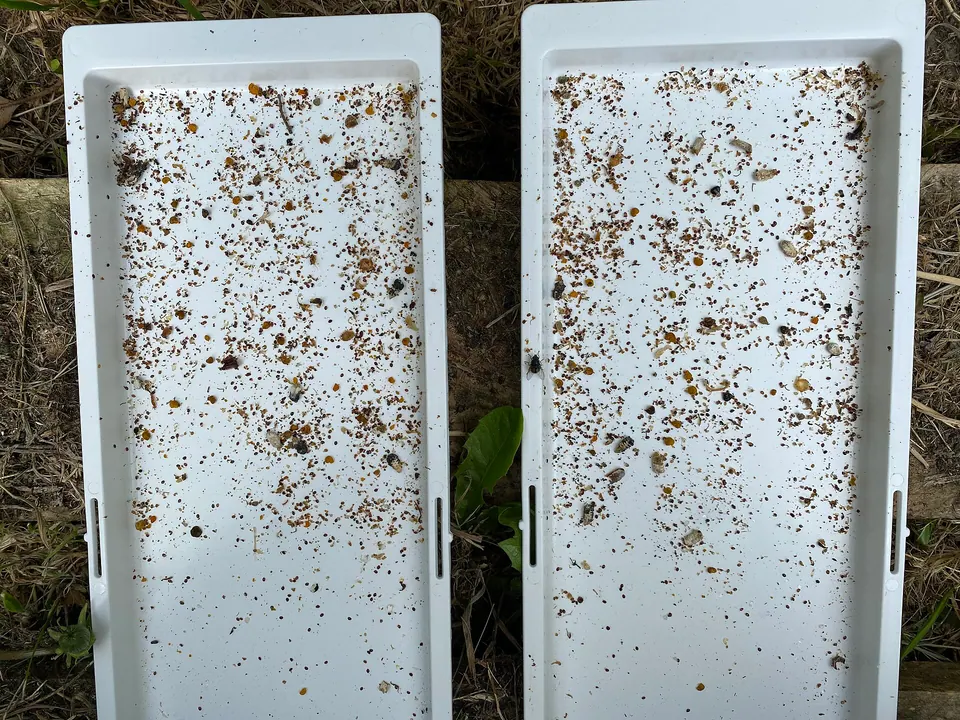
- An alcohol wash dislodges varroa mites from a sample of adult bees so you can count them. HBHC lists the alcohol or soap wash as the recommended method.
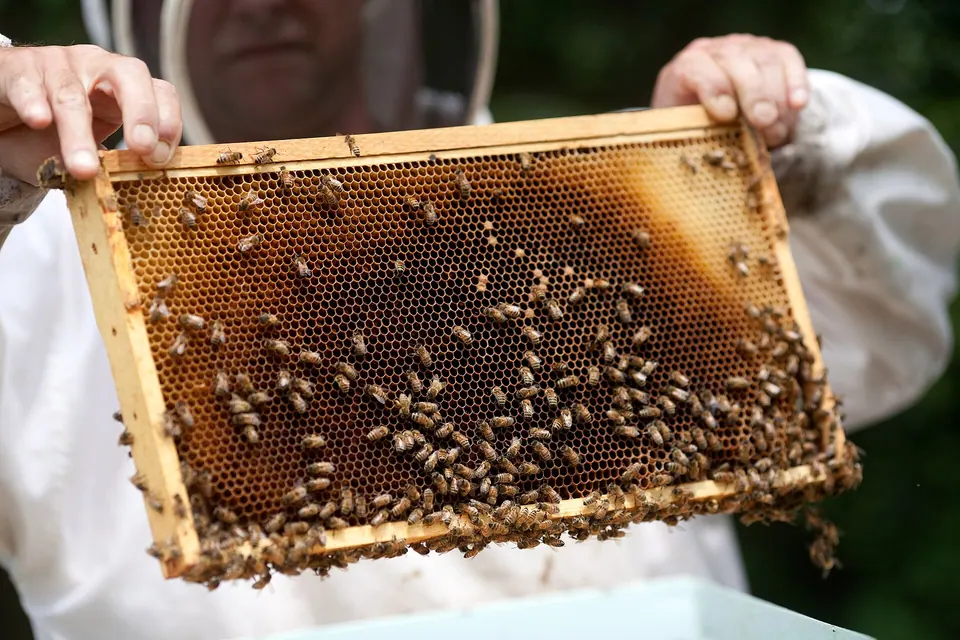
- Take about 300 bees (½ cup, lightly packed) from one to three brood-nest frames, and make sure the queen is not on them.
- Shake the bees in alcohol (Mississippi State uses 70%) for the time your kit says, pour off, count every mite, and repeat until no more come off.
- Mites ÷ bees × 100 = mites per 100 bees. Under HBHC’s 9th edition, 3 mites in 300 bees (1%) is the action level in spring and winter; 6 mites (2%) at peak and in fall.
- The wash kills the sample. If you prefer to return the bees, a powdered-sugar roll is the alternative, and you can confirm a borderline result with a wash.
If you only learn one bee-health skill in your first year, make it how to do an alcohol wash. Varroa mites ride on adult bees, especially the young nurse bees in the brood nest, and a wash knocks them loose so you can count them. That count, divided by the number of bees, tells you whether the colony is above or below the Honey Bee Health Coalition threshold for this time of year, and so whether to treat.
The method below follows HBHC’s Tools for Varroa Management, 9th edition (June 11, 2026), and Mississippi State University Extension Publication P4049, with notes from Virginia Tech and UF/IFAS extension procedures. Once you have a number, put it into the mite threshold calculator, and log it in the hive inspection log so you can watch the trend.
What do you need for an alcohol wash?
- A mite wash jar or shaker with a mesh insert, or a wide-mouth jar with a mesh lid.
- A ½-cup measure, marked so you can fill it with about 300 lightly packed bees.
- Alcohol to cover the bees. Mississippi State uses 70% alcohol; HBHC also describes a soapy-water wash.
- A white tray or the jar’s clear base, so mites show up against a light background.
- A tub or a sheet of plywood to shake bees onto, plus your usual smoker, hive tool and veil.
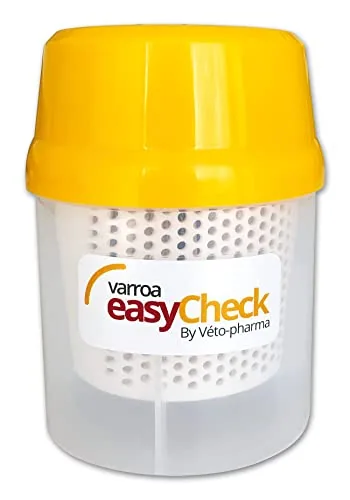
Foxhound Varroa Easy Check Mite Tester
- Type
- Mite tester
- Methods
- Alcohol wash, soapy water, sugar shake
Best for Regular mite counts
VarroCheck Leak-Proof Varroa Mite Tester
- Type
- Mite tester
- Methods
- Sugar shake or alcohol wash
Best for Regular mite counts
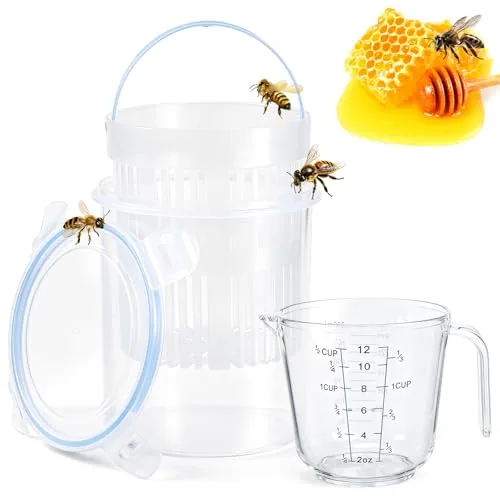
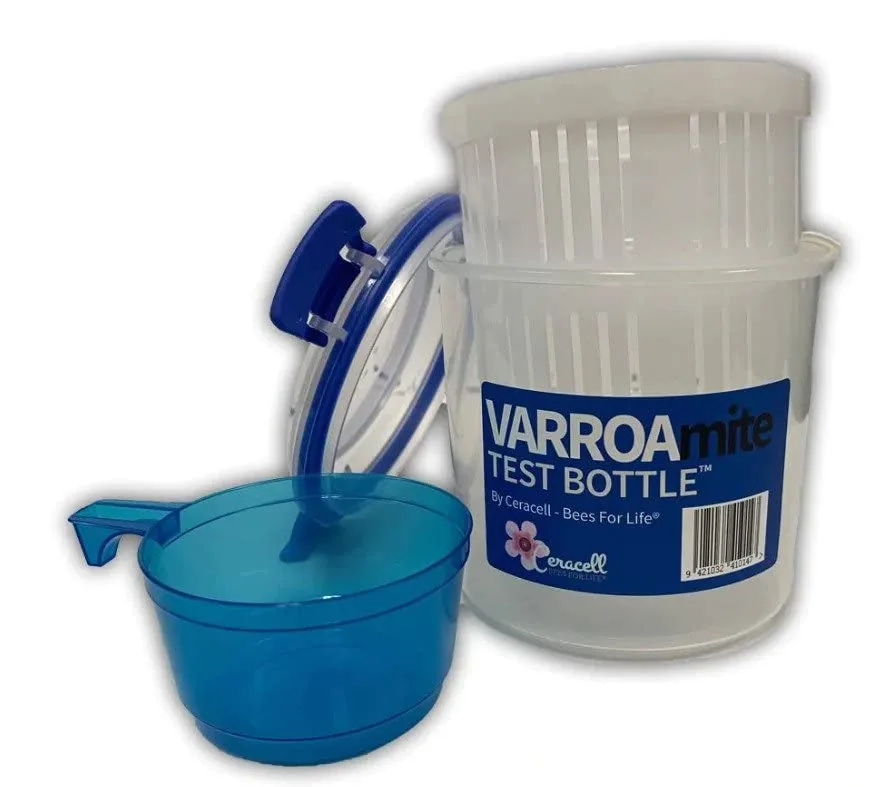
Qualirey Large Varroa Mite Test Jar with Cup
- Type
- Mite tester
- Size
- 5.12 x 5.91 in jar
- Cup capacity
- 10 oz / 300 ml
Best for Regular mite counts
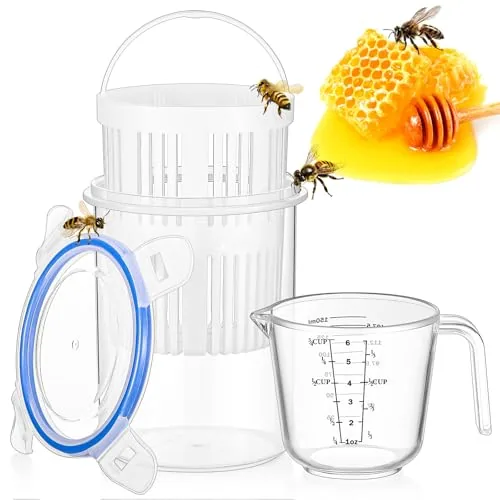
Qualirey Varroa Mite Test Jar with Cup, Small
- Type
- Mite tester
- Size
- 4.33 x 5.31 in jar
- Cup capacity
- 5.1 oz
Best for Regular mite counts
The jars above are compared by listed method and size; our catalogue currently has stand-alone testers from three makers. Some testers also come bundled with an EPA-registered treatment, such as Apivar strips with a Varroa Easy Check or Apiguard trays with a VarroCheck jar. A test jar alone is all you need to count, and you should only buy the treatment once a count says you need it.
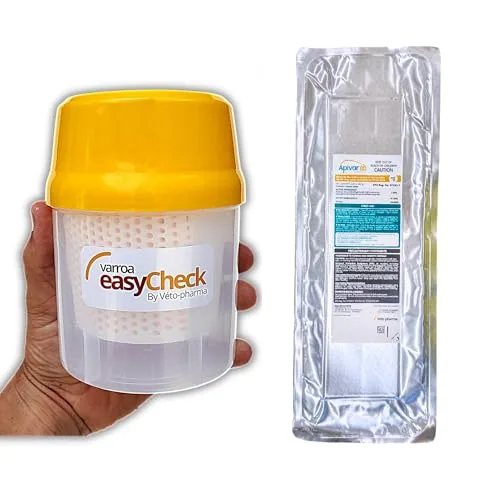
Apivar 2.0 Strips (4) + Varroa Easy Check
- Active ingredient
- Amitraz
- Doses
- 4 strips
- Includes
- Varroa Easy Check tester
Best for One or two backyard hives
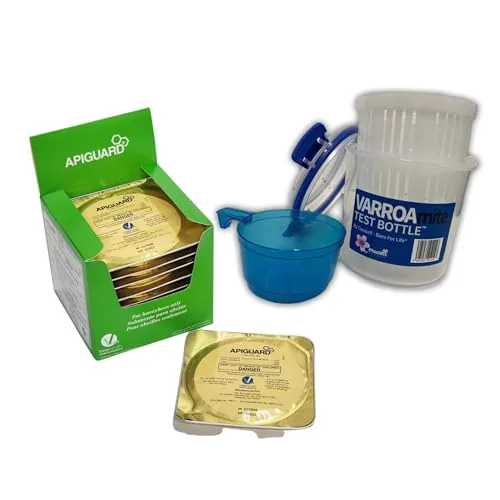
VarroCheck Tester + Apiguard Thymol Trays, 10
- Active ingredient
- Thymol (gel)
- Doses
- 10 Apiguard trays
- Includes
- VarroCheck mite test jar
Best for Testing and treating in one order
How to do an alcohol wash, step by step
- Find the queen, or make sure she isn’t on your frames
Mississippi State suggests finding the queen first and setting her frame aside or in a nuc box. At minimum, check every frame you shake. Losing the queen in a wash costs far more than a few minutes of looking.
- Pick one to three brood-nest frames
HBHC says to sample from frames in the brood nest, where nurse bees carry the most mites. Frames with open (uncapped) larvae are ideal.
- Shake the bees into a tub
Hold the frame over a tub or box and give it one sharp downward shake. Tap the tub to gather the bees in a corner. Some beekeepers shake two frames together and mix, as Mississippi State describes.
- Scoop about 300 bees
Fill a ½-cup measure, lightly packed. HBHC equates this to about 300 bees. Fewer than 300 is not accurate; Mississippi State uses ½ cup as about 400 bees, so note which figure you use.
- Add alcohol and shake
Pour the bees into the jar with enough alcohol to cover them, close it and swirl or shake. Mississippi State agitates for 3–5 minutes. Follow your jar’s instructions if they differ.
- Pour off and count
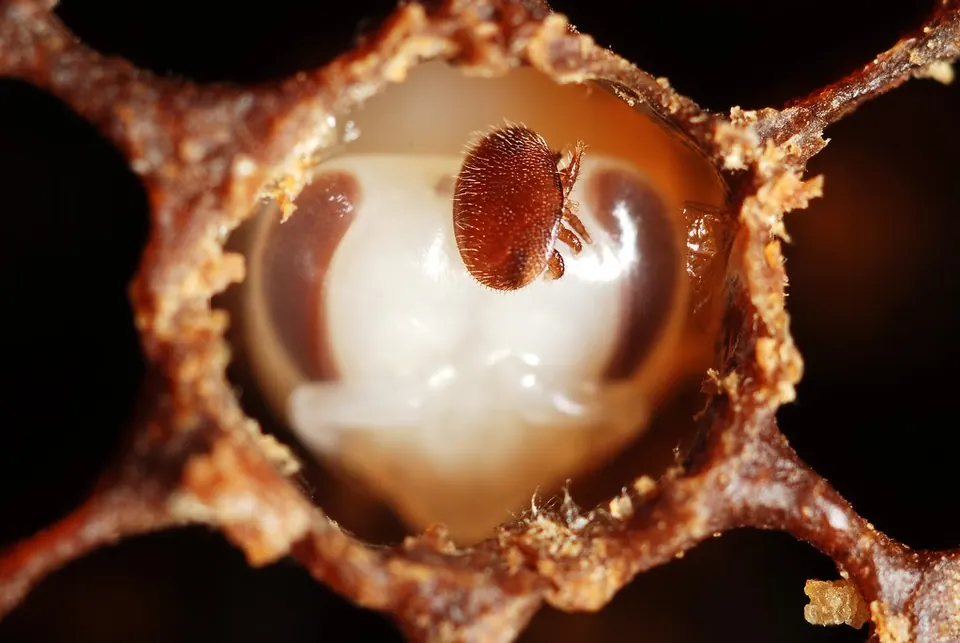
Strain the liquid through the mesh into a white tray, or let the mites settle in the clear base, and count every mite. Mites are reddish-brown ovals about the size of a pinhead.
- Repeat until no more mites come off
Mississippi State repeats the wash until no more mites wash out, then adds the counts together. The second wash often adds a few.
- Work out mites per 100 bees
Divide total mites by the number of bees and multiply by 100. With 300 bees, each mite is about 0.33%; 6 mites is 2%. Enter the count in the calculator to compare with the threshold for this season.
- Record it and act
Write the date, hive, bees, mites and result in your log. If you’re at or over threshold, pick an EPA-registered product that fits the season and supers. See the varroa mite treatment guide.
How many mites is too many in an alcohol wash?
HBHC’s 9th edition sets the threshold by colony phase. In a 300-bee sample, that translates directly into a mite count you can hold in your head.
Mites in a wash that reach the HBHC 9th-edition threshold
Number of mites, by sample size and phase
300-bee wash: mites counted vs. result
| Mites counted | Mites per 100 bees | Dormant / increase (1%) | Peak / decrease (2%) |
|---|---|---|---|
| 0–2 | 0–0.7 | ✓ below | ✓ below |
| 3–5 | 1.0–1.7 | ✗ promptly control | ✓ below |
| 6–8 | 2.0–2.7 | ✗ promptly control | ✗ promptly control |
| 9 or more | 3.0+ | ✗ promptly control | ✗ promptly control |
Source: HBHC 9th ed., Table 1 (computed)
Varroa thresholds by colony phase (mites per 100 adult bees), HBHC 9th edition
| Colony phase | Immediate control not needed | Promptly control |
|---|---|---|
| Dormant Little or no brood; winter cluster (sample just before clustering) | ✓ below 1% | ✗ 1% or more |
| Population increase Late winter to spring build-up, brood expanding | ✓ below 1% | ✗ 1% or more |
| Peak population Summer, colony at full size, supers often on | ✓ below 2% | ✗ 2% or more |
| Population decrease Late summer to fall, brood rearing slowing | ✓ below 2% | ✗ 2% or more |
Source: Honey Bee Health Coalition, Tools for Varroa Management, 9th edition (June 11, 2026), Table 1. Thresholds can vary by region; ask your state apiarist.
Mississippi State’s P4049 still uses 3 mites per 100 bees from May through October, which matches older guidance including the 8th edition’s peak level. We use the 9th edition’s lower numbers, which HBHC published in June 2026.
Alcohol wash vs sugar roll vs sticky board
Three ways to monitor varroa
| Alcohol or soap wash | Powdered-sugar roll | Sticky board under a screened bottom | |
|---|---|---|---|
| Bees survive | ✗ no (about 300 bees) | ✓ yes | ✓ yes |
| Comparable to HBHC thresholds | ✓ yes (recommended) | ~ yes, less consistent | ✗ no direct conversion |
| Affected by humidity | ✓ no | ✗ sugar clumps when damp | ~ debris and ants |
| Time at the hive | ~ 10 minutes | ~ 10 minutes | ✓ minutes to place, count later |
| Best use | Treatment decisions | When you don’t want to kill bees | Trends, and checking treatment drop |
Source: Hive & Frame summary of HBHC 9th ed. sampling guidance
Killing 300 bees sounds harsh, but a strong summer colony has tens of thousands of bees, so the sample is a small fraction of it. A missed mite problem can cost the whole colony. If you use a sugar roll and the result is close to the threshold, confirm with a wash before you decide.
How often should you do a mite wash?
HBHC advises monitoring monthly from the population-increase phase, or at least four times between peak population and decline, and more often during population decrease. Sample just before the colony clusters for winter. Our seasonal calendar marks a wash in the right months for each region; the most important ones are right after the honey comes off and in late summer, before winter bees are raised. Always re-test two to three weeks after a treatment.
Alcohol wash mistakes to avoid
- Washing the queen. Check every frame you shake.
- Sampling from honey frames. Foragers on the edges carry fewer mites; take bees from the brood nest.
- Too few bees. Under 300 bees, a single mite swings the result a lot.
- Not shaking long enough. Follow the time in your jar’s instructions, and wash a second time.
- Counting debris. Mites are reddish-brown and oval; wax bits and pollen are not.
- Using the old 8th-edition 3% rule. Under the 9th edition, the action level is 1–2% depending on the season.
- Not writing it down. The trend over months matters as much as one count.
Which mite test setup suits you?
- One or two hives: any leak-proof wash jar with a ½-cup line works. See bee health and feeding.
- Several hives: a larger jar with a measuring cup speeds things up, and the inspection log keeps counts by hive.
- First-year beekeepers: learn the wash alongside a mentor once, then do it monthly. Start at your first hive.
Over threshold? Compare registered options in the best varroa mite treatments, Apivar vs Formic Pro and oxalic acid vaporization vs dribble.
An alcohol wash is the most reliable way to know whether your bees need mite control. Take about 300 bees from the brood nest (never the queen), shake them in alcohol, count every mite, divide by bees and multiply by 100. Compare with HBHC’s 9th-edition thresholds: 3 mites in 300 bees (1%) in winter and spring, 6 mites (2%) at peak and in fall. Do it monthly in season and always after a treatment.
Questions
How many bees do you need for an alcohol wash?
What alcohol do you use for a mite wash?
How long do you shake an alcohol wash?
What is a good mite count?
Is a sugar roll as accurate as an alcohol wash?
Can I do an alcohol wash with honey supers on?
Sources
- Honey Bee Health Coalition: Tools for Varroa Management, 9th edition (June 11, 2026)
- Mississippi State University Extension P4049: Sampling for varroa mites using an alcohol wash
- Virginia Cooperative Extension ENTO-332: varroa mite sampling
- UF/IFAS EDIS IN1257: varroa monitoring
- Honey Bee Health Coalition: Tools for Varroa Management, 8th edition (2022)
- EPA: Registered pesticide products approved for use against varroa mites in bee hives