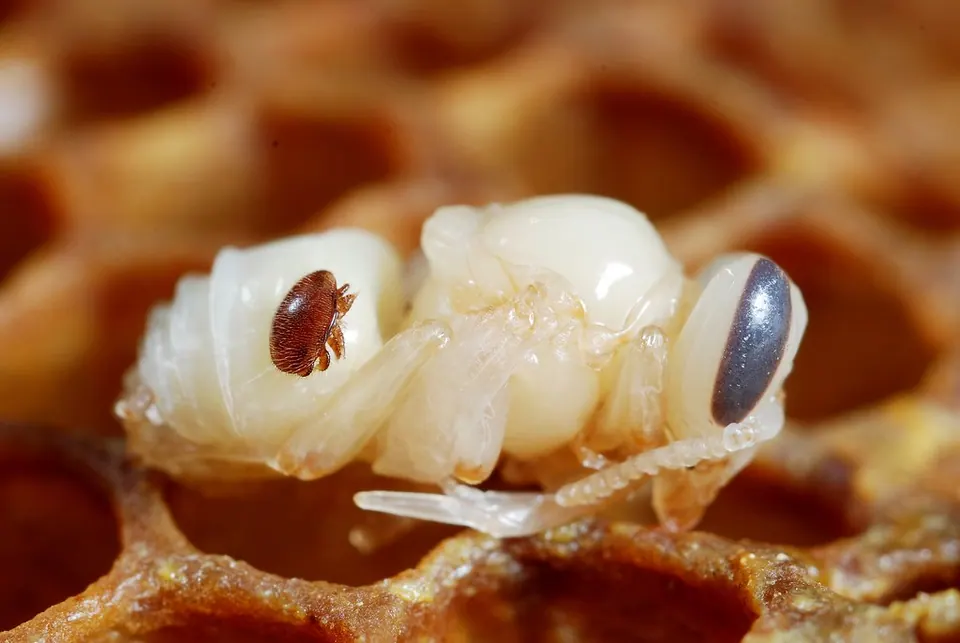
- There is no single best varroa mite treatment. The right one is EPA-registered, allowed for your colony's current phase, legal with or without honey supers, and within its label temperature range.
- Count before you treat. The HBHC 9th edition (2026) says promptly control at 1% (1 mite per 100 bees) in the Dormant and Population Increase phases and 2% at Peak and Decrease.
- Read and follow the label exactly. The label is the law, and it sets dose, timing, supers rules and protective equipment.
- Never use wood-bleach or industrial oxalic acid. Only registered oxalic acid products, such as Api-Bioxal or VarroxSan, may be used in hives.
The best varroa mite treatment for your hive depends on the time of year, whether honey supers are on, the temperature forecast and, above all, how many mites you actually have. Varroa is the main threat to backyard colonies, and the mistakes that kill hives are usually timing mistakes: treating too late in summer, or treating with a product the label does not allow with supers on. This guide covers only EPA-registered products and explains when each fits, using the Honey Bee Health Coalition's Tools for Varroa Management, 9th edition (2026).
Everything here is a summary. Before you use any product, read its current label and follow it exactly: the label is the law. You can look up any label by its EPA Registration Number in the EPA pesticide label database, and the EPA keeps a list of products registered against varroa.
Our picks
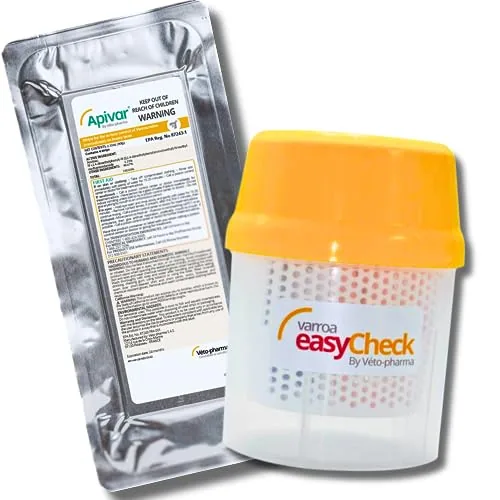
Apivar Strips (4) + Varroa Easy Check
- Active ingredient
- Amitraz
- Doses
- 4 strips
- EPA Reg. No.
- 87243-1
- Use season
- Up to two times a year
Apivar strips (amitraz) hang in the brood nest and release slowly; the listing gives a 6 to 8 week treatment period and EPA Reg. No. 87243-1, and says they can be used up to two times a year. HBHC lists Apivar only for periods with no honey supers. This pack adds a Varroa Easy Check mite tester.
Best for: Late summer and fall treatment after honey is off, on one or two hives
Skip if: Honey supers are on, or your counts show amitraz is no longer working well in your area
- EPA Reg. No. 87243-1 listed
- Long, steady release
- Not limited by a temperature window per the listing
- Mite tester included
- No honey supers during treatment
- 6 to 8 weeks in the hive
- Single active ingredient; rotate to slow resistance
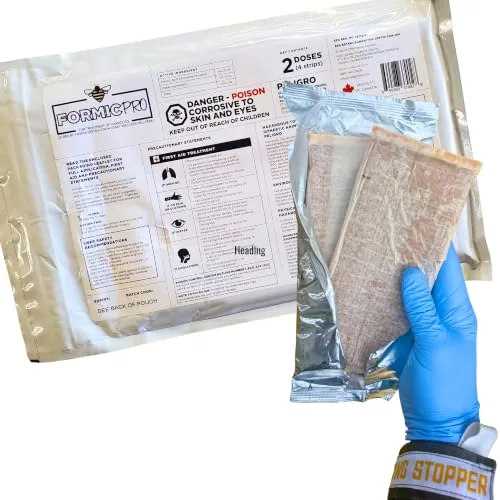
Formic Pro Formic Acid Varroa Strips, 2 Doses
- Active ingredient
- Formic acid
- Doses
- 2 doses
- Use season
- 50–85°F; supers allowed per label
Formic Pro is a formic acid strip that the label allows with honey supers on, when daytime highs are 50 to 85°F on the day of application, per the EPA-stamped label (the listing prints 84°F). The listing describes two labeled options: a 14-day treatment with two strips at once, or a 20-day treatment with one strip and a replacement on day 10. Formic acid vapor reaches mites under brood cappings.
Best for: Peak season, when mites climb and supers are on
Skip if: The forecast is above the label's temperature limit, or the colony is small and weak
- Supers allowed per label
- Reaches mites in capped brood
- Short 14- or 20-day options
- Two-dose pack suits one hive
- Narrow 50–85°F label window (listing shows 84°F)
- Can stress colonies or queens if misapplied
- EPA Reg. No. 75710-3 is on the label, not the listing
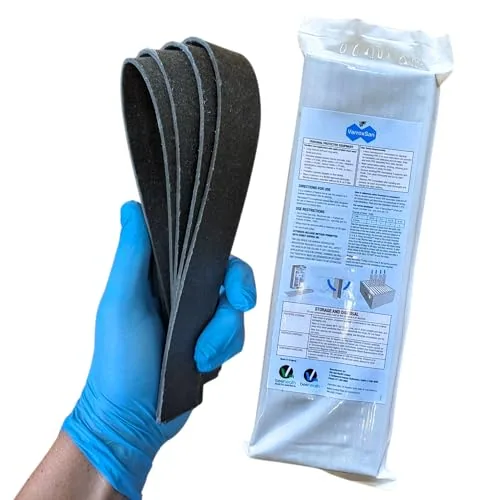
VarroxSan Oxalic Acid Varroa Strips, 60 Strips
- Active ingredient
- Oxalic acid dihydrate
- Doses
- 60 strips
- Use season
- Spring, summer and fall; 42–56 days
VarroxSan strips release oxalic acid dihydrate from a cardboard matrix over 42 to 56 days. They are EPA-registered (EPA Reg. No. 94413-3). HBHC lists VarroxSan for use with supers on when separated from them by one chamber. The listing says 60 strips cover 15 to 30 hives.
Best for: Beekeepers who want a registered oxalic acid product without a vaporizer
Skip if: You have one hive; 60 strips is more than you need
- EPA Reg. No. 94413-3 (label)
- Long release, no mixing
- HBHC lists it for supers-on use with one-chamber separation
- No temperature window per the listing
- Large pack for a backyard apiary
- 6 to 8 weeks in the hive
- Read the label for exact strip count per box
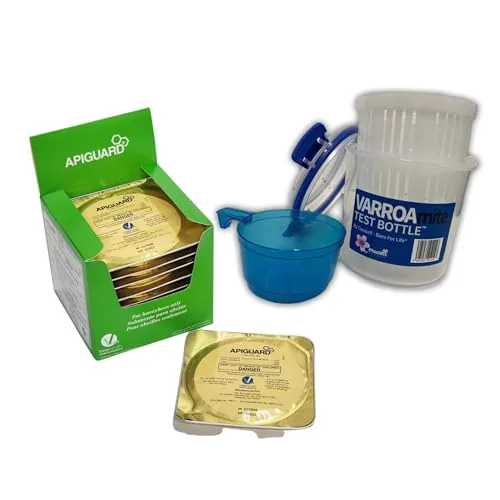
VarroCheck Tester + Apiguard Thymol Trays, 10
- Active ingredient
- Thymol (gel)
- Doses
- 10 Apiguard trays
- Includes
- VarroCheck mite test jar
This bundle pairs a leak-proof VarroCheck mite test jar with ten Apiguard thymol gel trays, listed at two trays per hive. Thymol is a plant-derived active ingredient that offers a different mode of action from amitraz. HBHC lists Apiguard only with no honey supers.
Best for: Beginners who need a tester and a treatment in one order
Skip if: Your weather will be outside the label's temperature range during treatment
- Mite tester included
- Different mode of action from amitraz
- Simple peel-and-place trays
- No supers during treatment
- Temperature-dependent; check the label
- EPA Reg. No. not shown in the listing
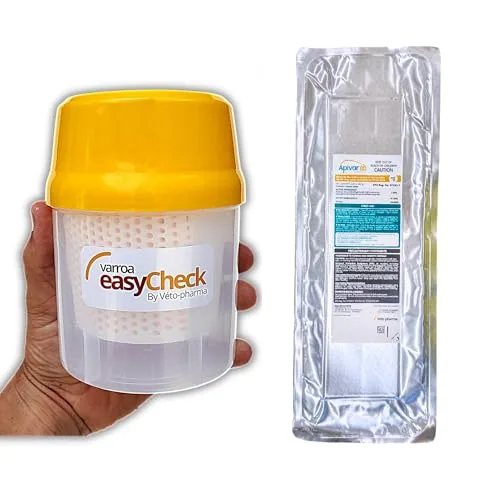
Apivar 2.0 Strips (4) + Varroa Easy Check
- Active ingredient
- Amitraz
- Doses
- 4 strips
- Includes
- Varroa Easy Check tester
A four-strip pack of Apivar 2.0 amitraz strips with a Varroa Easy Check tester. The listing does not show an EPA Reg. No., so confirm the label and registration before you buy and use it only as that label directs, which means no honey supers if it follows Apivar's rules.
Best for: One or two hives already using amitraz in rotation
Skip if: You cannot confirm the registration number on the package
- Small backyard pack
- Mite tester included
- EPA Reg. No. not listed on the listing
- Same active ingredient as Apivar
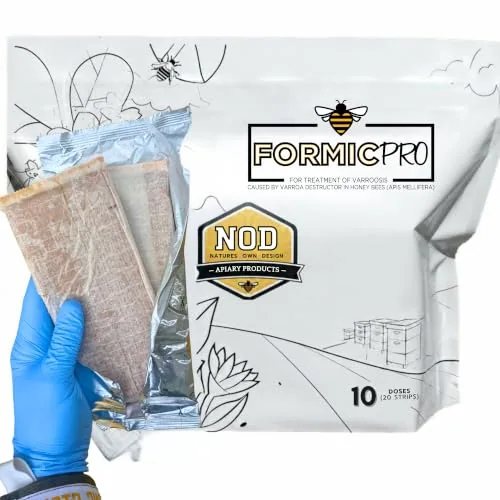
Formic Pro Formic Acid Varroa Strips, 10 Doses
- Active ingredient
- Formic acid
- Doses
- 10 doses
- Use season
- 50–85°F; supers allowed per label
The ten-dose pack carries the same label as the two-dose pack: supers allowed, daytime highs of 50 to 85°F per the label, and 14-day or 20-day options. Formic acid strips have a shelf life, so buy for the hives you will treat this season.
Best for: Three or more hives treated at the same time
Skip if: You have one hive; the two-dose pack is enough
- Supers allowed per label
- Ten doses
- Reaches mites in capped brood
- Same temperature limits
- Check the expiry date when it arrives
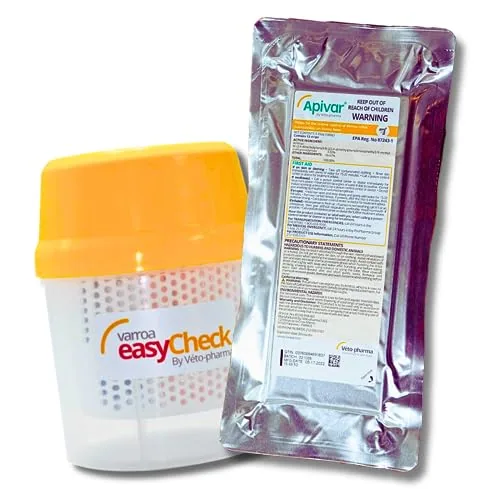
Apivar Strips (12) + Varroa Easy Check
- Active ingredient
- Amitraz
- Doses
- 12 strips
- EPA Reg. No.
- 87243-1
- Use season
- Up to two times a year
Twelve Apivar strips (EPA Reg. No. 87243-1) with a Varroa Easy Check, sold for up to six hives. The same label limits apply: no honey supers, 6 to 8 week treatment.
Best for: Three to six hives treated after the honey harvest
Skip if: You only have one hive
- EPA Reg. No. listed
- Twelve strips
- Mite tester included
- No supers
- Amitraz only; rotate with other actives
Count first: varroa mite treatment thresholds (HBHC 9th edition)
Treat on numbers, not the calendar. Take about 300 adult bees (roughly half a cup, lightly packed) from one to three brood-nest frames, avoiding the queen, and count the mites with an alcohol or soapy-water wash or a sugar roll. Divide mites by bees and multiply by 100. Fewer than 300 bees gives an unreliable number.
Varroa thresholds by colony phase (mites per 100 adult bees), HBHC 9th edition
| Colony phase | Immediate control not needed | Promptly control |
|---|---|---|
| Dormant Little or no brood; winter cluster (sample just before clustering) | ✓ below 1% | ✗ 1% or more |
| Population increase Late winter to spring build-up, brood expanding | ✓ below 1% | ✗ 1% or more |
| Peak population Summer, colony at full size, supers often on | ✓ below 2% | ✗ 2% or more |
| Population decrease Late summer to fall, brood rearing slowing | ✓ below 2% | ✗ 2% or more |
Source: Honey Bee Health Coalition, Tools for Varroa Management, 9th edition (June 11, 2026), Table 1. Thresholds can vary by region; ask your state apiarist.
Worked example: 9 mites in a 300-bee wash is 9 ÷ 300 × 100 = 3%. In the Peak Population phase the threshold is 2%, so this colony needs prompt control. Likewise, 3 mites in 300 bees (1%) in spring, during Population Increase, also means promptly control, because the 9th edition lowered that threshold to 1%.
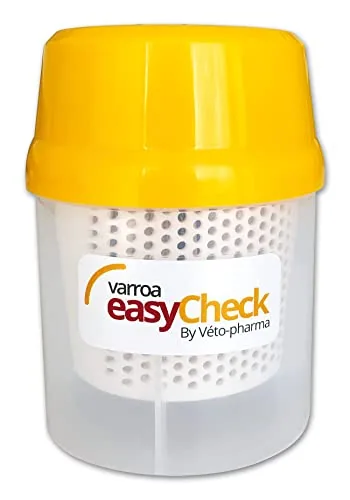
Foxhound Varroa Easy Check Mite Tester
- Type
- Mite tester
- Methods
- Alcohol wash, soapy water, sugar shake
Best for Regular mite counts
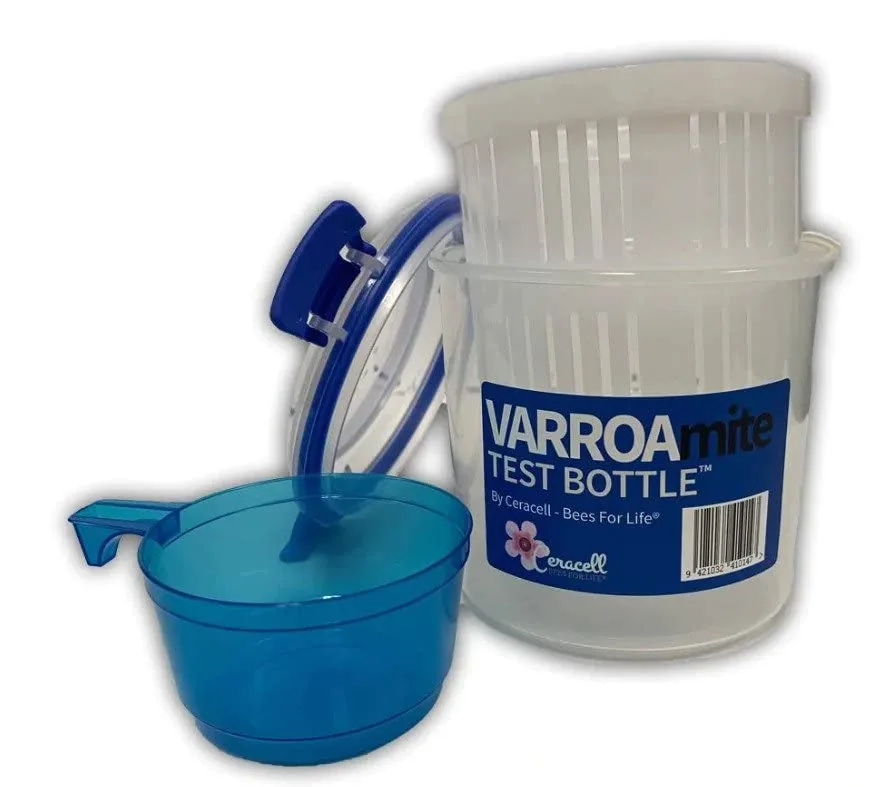
VarroCheck Leak-Proof Varroa Mite Tester
- Type
- Mite tester
- Methods
- Sugar shake or alcohol wash
Best for Regular mite counts
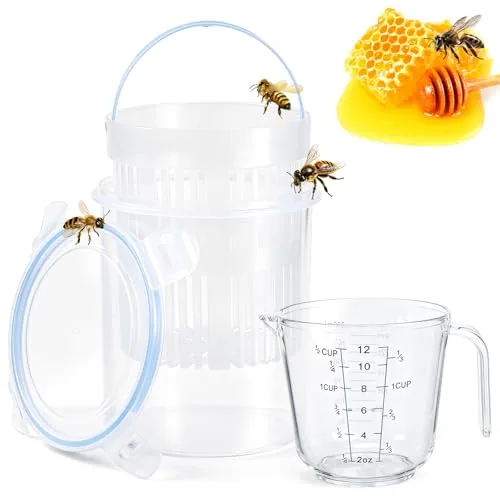
Qualirey Large Varroa Mite Test Jar with Cup
- Type
- Mite tester
- Size
- 5.12 x 5.91 in jar
- Cup capacity
- 10 oz / 300 ml
Best for Regular mite counts
Which treatment fits each colony phase?
HBHC organizes treatments by colony phase because brood, supers and temperature change through the year. This summary uses the 9th-edition product tables and the product labels; the guide itself lists more products and detail.
Treatment timing by colony phase
| Phase | Typical timing | Promptly control at | Registered options HBHC lists (examples) | Supers |
|---|---|---|---|---|
| Dormant | Winter, little or no brood | 1% | Oxalic acid dribble or vapor (Api-Bioxal, EZ-OX), VarroxSan, HopGuard 3 | Usually off |
| Population Increase | Late winter to spring build-up | 1% | Choose by supers and temperature; see HBHC tables | Often going on |
| Peak Population | Main flow, early to mid summer | 2% | Formic Pro, VarroxSan (one chamber from supers), HopGuard 3 | ✓ Supers on |
| Population Decrease | Late summer to fall | 2% | After supers come off: Apivar, Apiguard and others, per label | Off for Apivar and Apiguard |
Source: HBHC Tools for Varroa Management, 9th edition (2026)
Two timing rules matter most. First, the late-summer treatment protects the bees that will overwinter, so do not wait for fall if counts are high in August. Second, oxalic acid only reaches mites on adult bees, not under brood cappings, which is why it shines in broodless periods such as winter or right after a package install.
Go deeper with the varroa mite treatment guide, how to do an alcohol wash, Apivar vs Formic Pro and oxalic acid vaporization vs dribble.
EPA-registered varroa treatments compared
Label basics for products in this list
| Product | Active ingredient | EPA Reg. No. | Honey supers | Temperature | Treatment period |
|---|---|---|---|---|---|
| Apivar | Amitraz | 87243-1 (listing) | ✗ No supers | Not limited per listing | 6–8 weeks |
| Apivar 2.0 | Amitraz | Not listed; check label | ~ Check label | Check label | Check label |
| Formic Pro | Formic acid | 75710-3 (label) | ✓ Allowed per label | 50–85°F (label; listing shows 84°F) | 14 or 20 days |
| Apiguard | Thymol gel | Check label / EPA list | ✗ No supers (HBHC) | Check label | Per label |
| VarroxSan | Oxalic acid dihydrate | 94413-3 | ~ One chamber from supers (HBHC) | Not limited per listing | 42–56 days |
Source: Product listings and labels; EPA registered varroa products list
Longest listed treatment period
Days a treatment stays in the hive, from the listing
Rotate active ingredients from treatment to treatment. HBHC recommends rotating products with different modes of action to slow resistance, and a post-treatment mite count is the only way to know a product worked in your hive.
What about oxalic acid?
Oxalic acid is widely used by beekeepers, and registered products exist for dribble, vapor and slow-release strips. Of the registered oxalic acid products, only VarroxSan is in our catalogue. Api-Bioxal and EZ-OX are sold through bee-supply dealers. If you plan to vaporize, read our oxalic acid vaporizer guide, and follow the product label's directions for dose, method and protective equipment: goggles or a face shield and a respirator are required for oxalic acid methods.
How to treat safely and check it worked
- Test and record
Do a 300-bee wash, run the numbers in the mite threshold calculator and log the result in the inspection log.
- Match the product to the phase
Check whether supers are on, the 10-day forecast against the label's temperature range, and how much brood is present.
- Read the whole label
Dose, placement, duration, supers rules, re-entry and storage are all on the label. Follow it exactly.
- Wear what the label requires
Some products require chemical-resistant gloves, eye protection or a respirator. Beekeeping gloves are not chemical gloves.
- Remove on time
Take strips out when the label says. Leaving strips in longer exposes mites to low doses and speeds resistance.
- Retest after treatment
Wash another 300 bees after the treatment period. If the count is still above threshold, treat again with a different active ingredient as labels allow.
Our seasonal checklist reminds you when mite checks are due in your region, and the seasonal calendar shows the whole year.
Mistakes to avoid
- Treating by the calendar without counting. You may treat a colony that does not need it, or miss one that does.
- Waiting until fall. Mite populations peak in late summer, just as the colony raises its winter bees.
- Using the old 3% rule from the 8th edition. The 9th-edition HBHC thresholds (June 11, 2026) are 1% (dormant, population increase) and 2% (peak, population decrease).
- Treating with supers on when the label says no. Apivar and Apiguard need supers off.
- Using one product forever. Rotate active ingredients.
- Unregistered oxalic acid. Never. Use a product with an EPA Reg. No.
Browse registered treatments and testers in bee health and feeding, or see the gear list for your first hive. Thresholds can vary by region; your state apiarist can tell you what works locally.
Start with a mite tester and a count. For the main summer flow with supers on, Formic Pro is the registered option in our catalogue that the label allows with supers, within its 50–85°F label window. After the honey comes off, Apivar (EPA Reg. No. 87243-1) is a long, steady treatment, and Apiguard gives you a different active ingredient to rotate. VarroxSan is the registered oxalic acid choice if you do not want to vaporize. Whatever you choose, follow the label exactly and retest afterward.
We compared EPA-registered varroa products in our catalogue by active ingredient, label limits (honey supers, temperature, treatment period) and the colony phases in which the Honey Bee Health Coalition's 9th-edition guide lists them. Registration numbers are given only where the listing or label shows them; check the EPA label database for the rest. We do not keep test colonies and did not apply these products. We never publish doses beyond pointing you to the label.
Questions
What is the best varroa mite treatment?
When should you treat for varroa mites?
How many mites is too many?
Can you treat for mites with honey supers on?
Sugar roll or alcohol wash?
Is oxalic acid safe to use in a hive?
Do you need to treat a first-year hive?
Sources
- Honey Bee Health Coalition, Tools for Varroa Management, 9th edition (2026)
- Honey Bee Health Coalition, Tools for Varroa Management, 8th edition (2022)
- EPA, Registered pesticide products approved for use against varroa mites
- EPA advisory on FIFRA and FFDCA for substances used to control varroa
- EPA pesticide product label search (PPLS)
- VarroxSan label, EPA Reg. No. 94413-3
- Mississippi State Extension P4049, Sampling for varroa mites using an alcohol wash