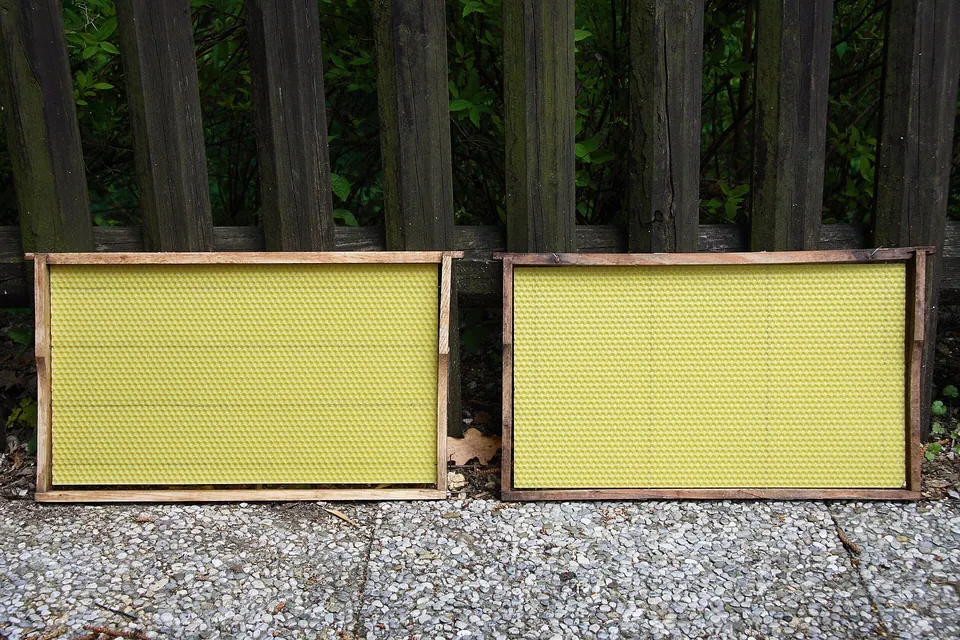
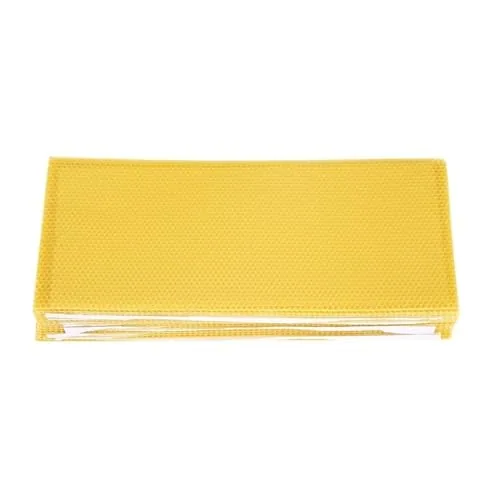
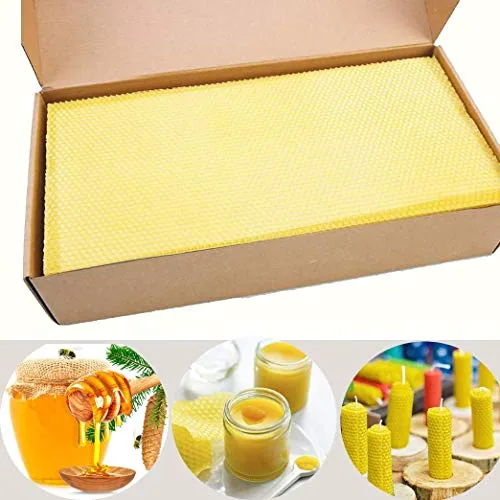
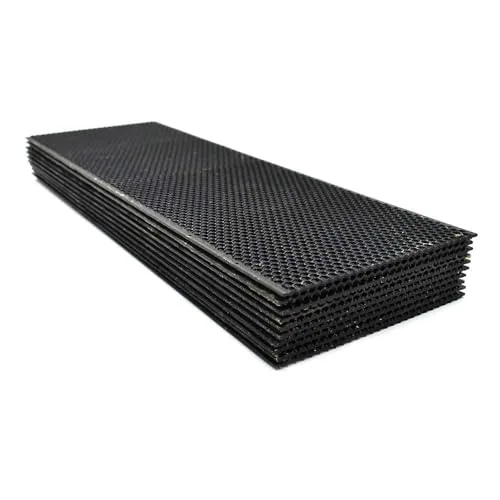
- Bees draw pure wax foundation more readily; in one SARE farmer study, plastic scored from 10 to 100 against wax's 100 depending on where it sat in the hive.
- Plastic needs no wiring, stands up to the extractor and resists wax moths better once drawn.
- Most "plastic" sold for hives is beeswax-coated; it is still plastic. Mann Lake Rite-Cell is one example.
- Of 23 foundation listings in our catalogue, 20 are plastic and 3 are pure wax.
Plastic vs wax foundation is a choice between what bees prefer and what is easiest to handle. Pure beeswax sheets are natural and readily accepted, but they need support in the frame and can blow out in an extractor. Plastic sheets drop into grooved frames, survive heavy spinning and last for years, but bees can be slow to build on them.
This page compares the two using a SARE-funded field project, listing specs from our frames and foundation category and extractor guidance. If you are planning a harvest, also read radial vs tangential extractors.
Picks from each side
Plastic foundation
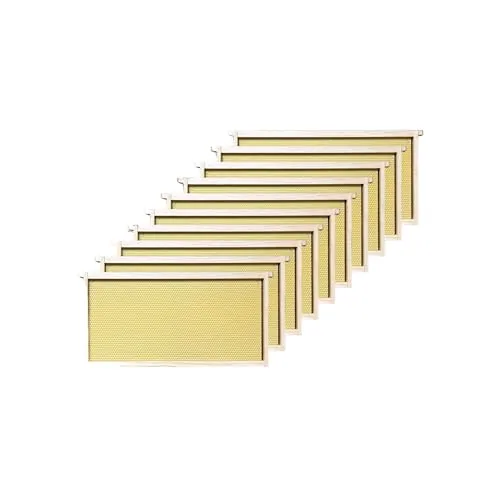
Mann Lake WW906 Deep Rite-Cell Frames, Natural, 10 Pack
- Size
- Deep, 9-1/8 in
- Foundation
- Rite-Cell plastic, beeswax-coated
- Material
- Wood, glued and stapled
Best for Ready-to-use deep frames
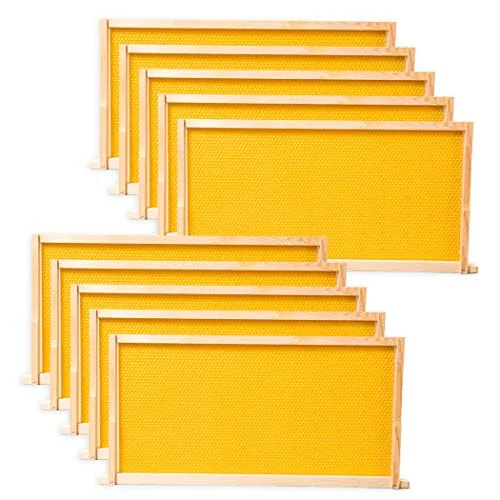
BeeCastle Deep Frames with Waxed Foundation, 10 Pack
- Size
- Deep, 9-1/8 in
- Foundation
- Beeswax-coated food-grade plastic, yellow
- Material
- Pine frames
Best for Filling a deep brood box
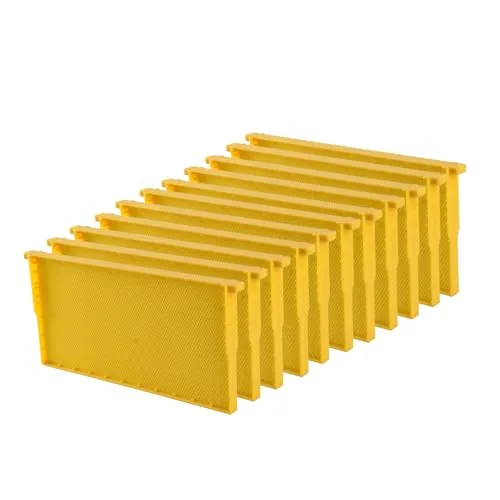
Benefitbee One-Piece Plastic Deep Frames, 10 Pack
- Size
- Deep, 9-1/8 in
- Foundation
- Integrated, yellow
- Material
- One-piece plastic
Best for Skipping frame assembly
Wax foundation
Anu Limen Pure Beeswax Foundation Sheets, 30 Pack
- Size
- 16.34 x 7.68 in
- Foundation
- Pure wax sheet
- Material
- Purified beeswax
Best for Beekeepers avoiding plastic foundation
Varybeaty Natural Beeswax Foundation Sheets, 30 Pack
- Size
- 16.34 x 7.68 in (deep)
- Foundation
- Pure wax sheet
- Material
- Unbleached beeswax
Best for All-wax deep foundation
Goodland Natural Beeswax Medium Foundation, 10 Pack
- Size
- Medium/super, for 6-1/4" frames
- Foundation
- Pure wax sheet
- Material
- 100% natural beeswax
Best for Wax foundation in honey supers
Plastic vs wax foundation side by side
How the two foundation types differ
| Plastic (waxed) | Pure beeswax | |
|---|---|---|
| Bee acceptance | ~ Slower; improves with extra wax and good placement | ✓ Readily drawn |
| Needs wiring or pins | ✓ No; slips into grooved bars | ✗ Usually, for brood and extracting |
| Extractor durability | ✓ Mann Lake lists Rite-Cell to withstand heavy extracting | ~ New comb can blow out at speed |
| Heat sag | ✓ Rigid | ~ Can sag in hot hives |
| Wax moth damage | ✓ Midrib survives; scrape and re-wax | ✗ Comb can be destroyed |
| Comb honey and crush and strain | ✗ No | ✓ Yes, with thin foundation |
| Reuse | ✓ Scrape and re-coat | ~ Replace with new sheets |
| Assembly time | ✓ Fast; one-piece frames need none | ✗ Slower |
Source: SARE FNC06-595; listing specs; Countryside extractor guide
Do bees accept plastic foundation?
More slowly than wax, but placement and extra wax make a big difference. A SARE-funded Missouri project led by beekeeper Grant Gillard in 2006–07 compared bee acceptance of plastic and wax foundation in packages, swarms and honey supers across dozens of colonies, scoring wax at 100 on a relative scale.
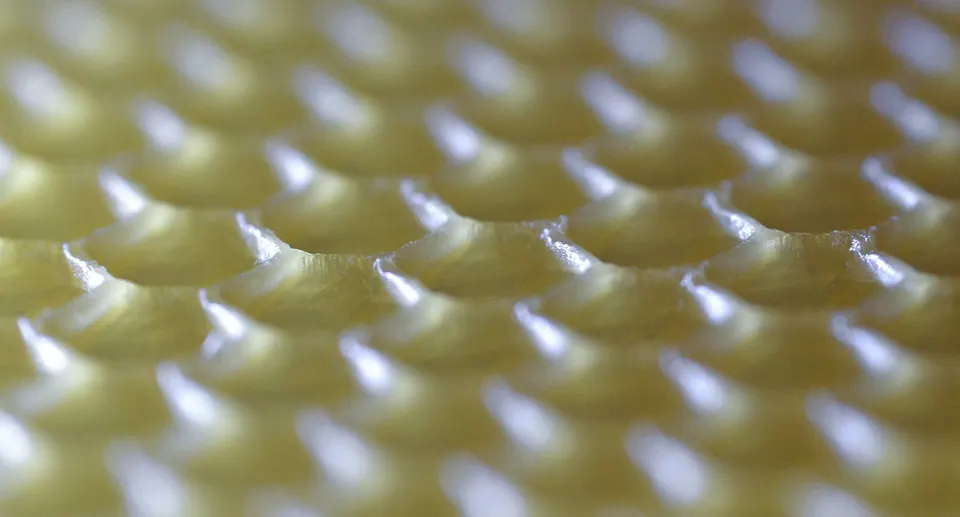
Bee acceptance of plastic foundation by placement
Wax foundation = 100 on the project's relative scale
The project found bees were "quite reluctant" to move up into a box of plastic on top of the brood nest, while plastic placed between brood frames was accepted as readily as wax. Brushing extra melted beeswax onto plastic frames attracted bees to them, and putting a new super underneath drawn comb raised acceptance. It also found bees strongly favored wax when the two were mixed in one box, and recommended not mixing.
- Roll on extra wax. The project used about 48 g per medium frame and 72 g per brood frame, applied with a foam roller.
- Move outer frames in. Place undrawn plastic between drawn frames or in the middle of the box.
- Bottom-super. Put a new plastic super under a drawn one during a flow.
- Feed in a dearth. Bees draw comb when nectar or syrup is coming in.
Which foundation holds up better in an extractor?
Plastic. Mann Lake lists its Rite-Cell foundation as needing no reinforcement and withstanding heavy extracting. Pure wax comb, especially new comb, can break out of the frame if you spin too fast. Countryside's extractor guide notes that some frames, especially wax foundation frames, do better at lower speeds, and recommends speed control on electric extractors.
If you use wax in supers you plan to extract, wire the frames or use support pins, let the bees draw and fill the comb fully, and start every spin slowly. Our VEVOR honey extractor review covers an adjustable-speed model, and manual vs electric extractors explains the speed trade-off.
What is in our foundation catalogue?
Most frame and foundation packs sold for hobby hives are plastic with a beeswax coating. Pure wax sheets are a small minority.
| Product | Size | Material | Foundation | Count |
|---|---|---|---|---|
| Mann Lake WW906 Deep Rite-Cell Frames, Natural, 10 Pack | Deep, 9-1/8 in | Wood, glued and stapled | Rite-Cell plastic, beeswax-coated | 10 (assembled) |
| BeeCastle Deep Frames with Waxed Foundation, 10 Pack | Deep, 9-1/8 in | Pine frames | Beeswax-coated food-grade plastic, yellow | 10 |
| Benefitbee One-Piece Plastic Deep Frames, 10 Pack | Deep, 9-1/8 in | One-piece plastic | Integrated, yellow | 10 |
| Anu Limen Pure Beeswax Foundation Sheets, 30 Pack | 16.34 x 7.68 in | Purified beeswax | Pure wax sheet | 30 |
| Varybeaty Natural Beeswax Foundation Sheets, 30 Pack | 16.34 x 7.68 in (deep) | Unbleached beeswax | Pure wax sheet | 30 |
| Goodland Natural Beeswax Medium Foundation, 10 Pack | Medium/super, for 6-1/4" frames | 100% natural beeswax | Pure wax sheet | 10 |
Specs as listed by the maker or seller; check the listing before you buy.
One point is worth repeating: Rite-Cell is listed as beeswax-coated plastic, not pure wax. If you want wax, look for "pure beeswax" or "100% beeswax" in the listing, as on the Anu Limen, Varybeaty and Goodland sheets.
Brood boxes vs honey supers
You do not have to choose one for the whole hive. Many beekeepers use different foundation in different boxes.
- Brood boxes: plastic is durable and easy to inspect. Black foundation makes eggs easier to spot. Wired wax also works if you prefer it.
- Extracted honey supers: plastic survives the extractor; wired wax works if you spin gently.
- Comb honey or crush and strain: pure, thin wax or foundationless frames only.
- Swarms and packages: wax or well-waxed plastic gets drawn fastest, per the SARE results.
Track which frames you installed and when in the hive inspection log, and plan supers for your honey sales season.
What about foundationless frames?
A third option is no foundation at all: an empty frame with a comb guide along the top bar, or a starter strip of wax. Bees build natural comb with cell sizes of their own choosing, as they do in a top bar hive. You get pure wax comb with no plastic and no sheets to buy.
The trade-offs are the same as with pure wax, only stronger. Unsupported comb is fragile until it is attached on all sides, it can be built crooked if the hive is not level, and it should be spun gently or not at all. Alternating foundationless frames between drawn or foundation frames helps the bees keep comb straight.
Foundationless frames are popular for comb honey and with beekeepers moving toward natural comb. If that appeals to you, also read Langstroth vs top bar hive, since top bar hives work this way by design.
Mistakes to avoid
- Putting a full box of bare plastic on top of the brood nest and waiting. Bees may ignore it; add wax or move frames in.
- Mixing wax and plastic in one box. The SARE project found bees favored the wax.
- Spinning new wax comb at full speed. Start slow.
- Assuming "waxed" means wax. Read the foundation material line.
- Storing drawn wax comb unprotected. Wax moths can destroy it; freeze or store it carefully.
Who should choose plastic, and who should choose wax?
Choose plastic foundation if you…
- want frames that assemble fast and survive the extractor
- are happy to roll on extra wax to speed acceptance
- want reusable frames you can scrape and re-coat
- are setting up brood boxes for your first hive
Choose wax foundation if you…
- want the fastest comb building for packages and swarms
- plan comb honey or crush and strain
- prefer a plastic-free hive
- can wire frames and spin gently
Other options worth a look
Ready-made frame packs with beeswax-coated foundation from other brands, in yellow or black, are an easy way to fill a box.
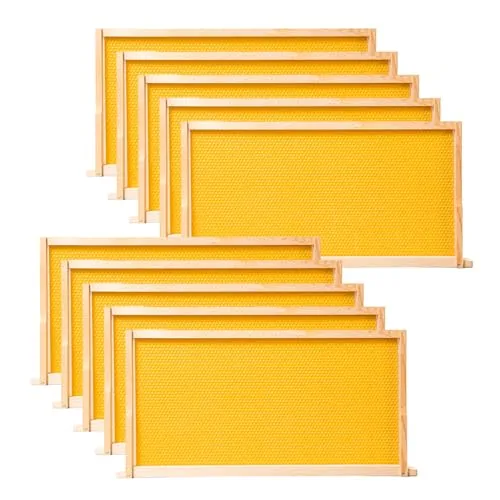
POLLIBEE Deep Frames with Waxed Foundation, Yellow, 10
- Size
- Deep, 19 x 1-3/8 x 9-1/8 in
- Foundation
- Beeswax-coated plastic, yellow
- Material
- Pine frames
Best for Filling a deep box
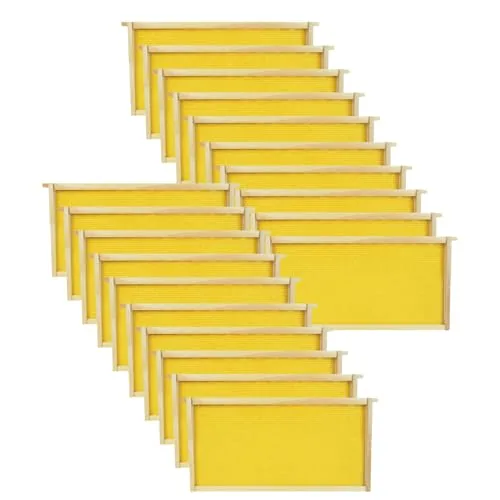
HiveSweet Deep Frames with Waxed Foundation, 20 Pack
- Size
- Deep, 9-1/8 in
- Foundation
- Beeswax-coated food-grade plastic
- Material
- NZ pine frames
Best for Stocking two deep boxes
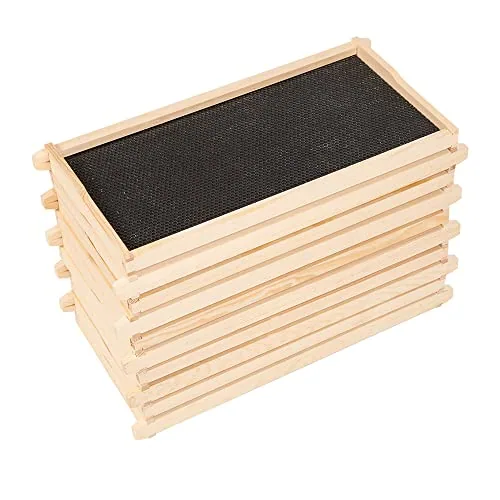
BeeTech Deep Frames with Beeswax-Dipped Foundation, 10
- Size
- Deep, 9-1/8 x 19 x 1-3/8 in
- Foundation
- Black plastic dipped in beeswax
- Material
- Pine frames
Best for Stocking deep boxes
See also the best Langstroth hives and Mann Lake vs Hoover Hives.
Choose plastic for durable, extractor-ready frames, and coat it with extra beeswax or place it between drawn comb so bees build on it. Choose pure wax for packages, swarms, comb honey and crush and strain, and support it with wire if you will extract. Do not mix the two in the same box.
Built from the SARE FNC06-595 final results (acceptance scores and methods), listing specs and counts from the Hive & Frame catalogue, and Countryside extractor guidance. The SARE work is one farmer-led project, not a controlled university trial. Hive & Frame keeps no test colonies.