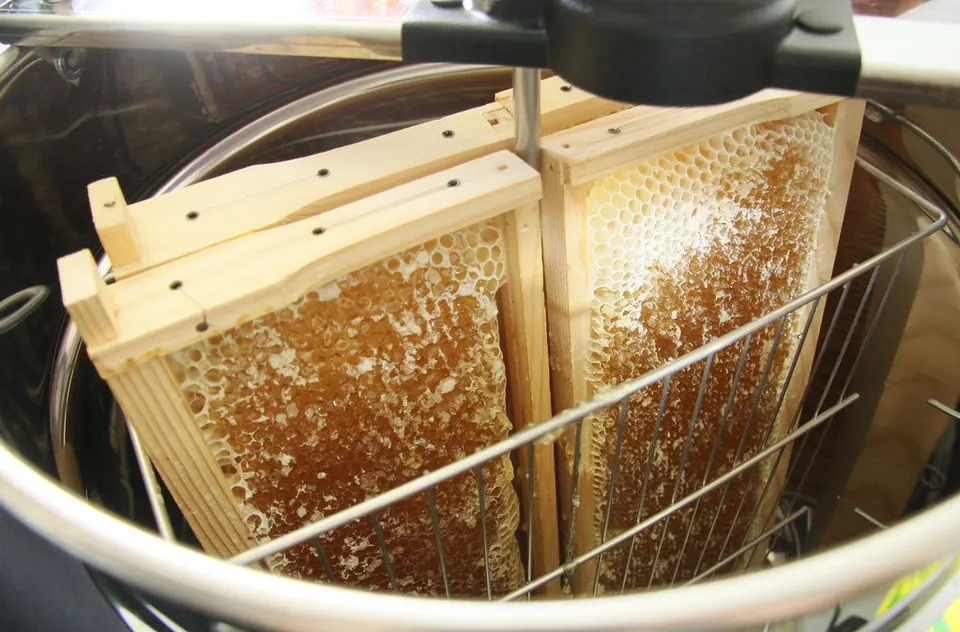
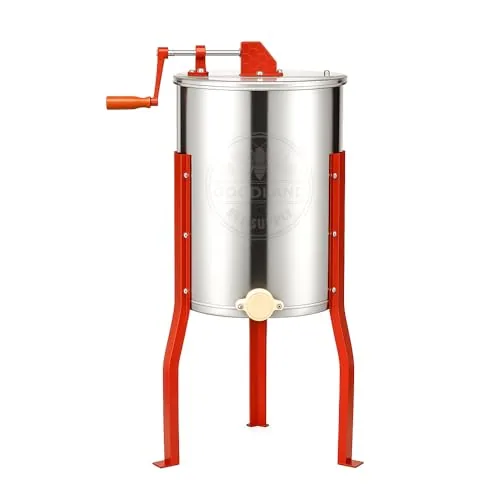
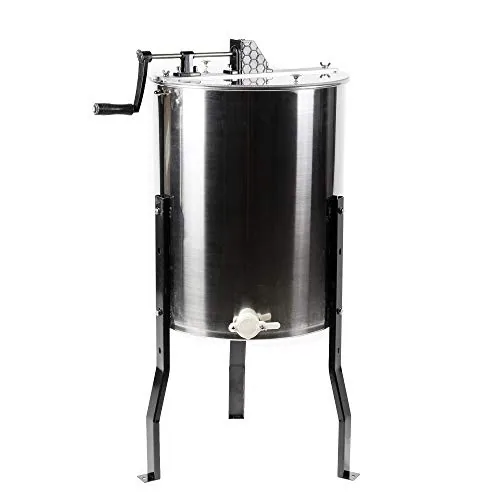
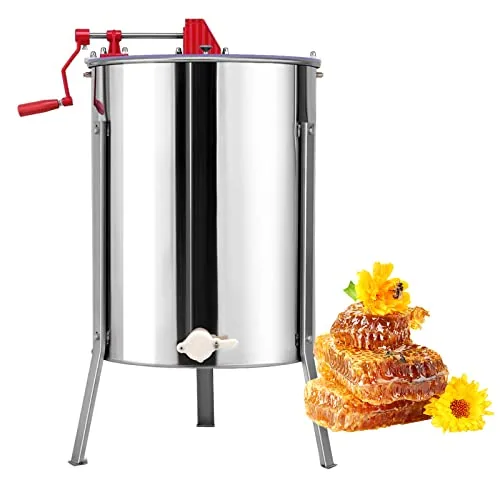
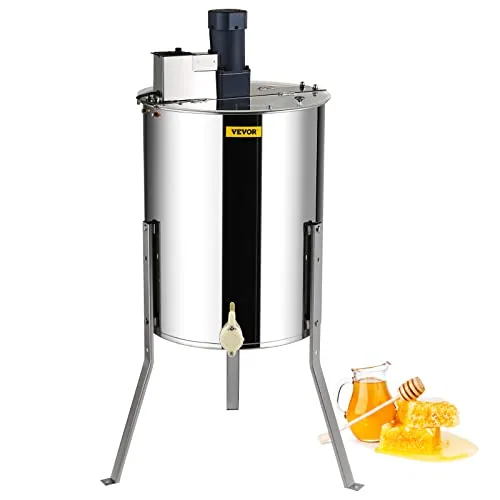
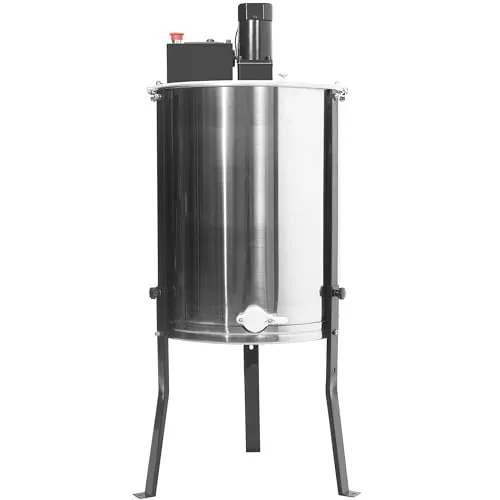
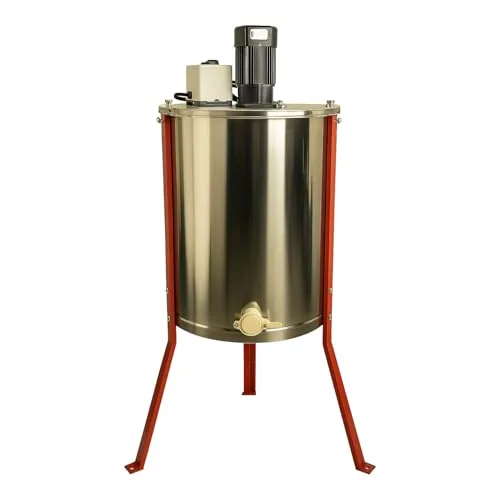
- Hand-crank extractors use gears to turn a crank into basket speed; electric units use a motor, ideally with speed control.
- In our catalogue, 11 of 17 standalone extractors are manual and 6 electric.
- Capacity, not drive, decides time: a 4-deep manual and a 4-deep electric hold the same frames per load.
- Listed motors range from about 370 rpm (TsoLay) to an adjustable maximum of 1300 rpm (VEVOR), both 140W.
Manual vs electric honey extractor is mostly a question of arm time. Both types spin frames in a stainless drum and both come in 2-frame to 4- or 8-frame sizes. A motor does not let you load more frames; it lets you walk away, keep a steady speed and avoid hours of cranking.
This comparison uses listing specs from the honey harvest category, an extractor guide from Countryside and simple arithmetic. If you have not decided on basket type, read radial vs tangential extractors too.
Picks from each side
Manual (hand-crank)
Goodland Hardin Professional 2-Frame Manual Extractor
- Frames
- 2
- Drive
- Manual crank
- Gate
- Clear Plexiglas top; optional legs included
Best for First extractor for 1-3 hives
VIVO BEE-V004B Manual 4/8-Frame Extractor
- Frames
- 4 deep or 8 small/medium
- Drive
- Manual crank
- Gate
- 15.4 in from floor, 0.5 in above drum bottom
Best for Manual extraction for several hives
AIZYR 4-Frame Manual Honey Extractor with Stands
- Frames
- 4 (deep, medium or shallow)
- Drive
- Manual crank
- Gate
- Honey gate; clear perspex lids
Best for Hobbyists with a few hives
Electric (motorized)
VEVOR 4/8-Frame Electric Extractor, Adjustable Stand
- Frames
- 4 deep or 8 medium/shallow
- Drive
- Electric
- Gate
- Clear lid, adjustable stand
Best for Growing backyard apiaries
VIVO BEE-V004E Electric 4/8-Frame Extractor
- Frames
- 4 deep or 8 small/medium
- Drive
- Electric, 120V AC
- Gate
- 17.2 in from floor, 0.5 in above drum bottom
Best for Extracting several supers per session
Goodland HE2MOT 2-Frame Motorized Extractor with Stand
- Frames
- 2 (deep, medium or shallow)
- Drive
- Electric motor
- Gate
- Clear plexiglass lid; stand
Best for Small harvests without cranking
Manual vs electric extractors side by side
How the two drive types differ
| Manual | Electric | |
|---|---|---|
| Power | ✓ None needed | ✗ Outlet near the work area (110–120V listed) |
| Effort | ✗ Cranking every load | ✓ Motor does it |
| Speed control | ✓ Your hand, turn by turn | ~ Only if the listing says adjustable |
| Steady speed | ~ Varies as you tire | ✓ Constant |
| Common capacities | 2, 3, 4, 4/8, 6 frames | 2, 2/4, 4, 4/8, 12 frames |
| Parts that can fail | ✓ Gears and bearings | ~ Gears, bearings, motor, controller |
| Off-grid or outdoor use | ✓ Yes | ✗ Needs power |
Source: Hive & Frame catalogue; Countryside extractor guide
What do the listings say about capacity and motors?
The chart lines up listed frames per load for manual and electric models in our catalogue. Where a listing gives two numbers (such as 4 deep or 8 medium), we show the deep figure.
Frames per load, manual vs electric
E = electric, M = manual; deep frames where the listing gives a split
The VIVO pair is the cleanest like-for-like comparison: the same 4 deep or 8 small/medium capacity, a 120V motor on one and a crank on the other, and gates at 17.2 and 15.4 inches. Check that a 5-gallon bucket fits under the gate of whichever you choose.
How long does extraction take by hand?
Countryside's example is a useful reality check: four colonies with two supers each gives 72 to 80 frames, which it estimates at three and a half to four hours of spinning in a 2-frame extractor that empties one side at a time. Doubling capacity roughly halves the number of loads, whether you crank or plug in.
- 1–2 hives, one harvest a year: a 2- or 3-frame manual is usually enough, or borrow from a club.
- 3–6 hives: a 4-frame or 4/8-frame unit saves the most time. Electric earns its place here.
- Selling honey or 6+ hives: electric with speed control, and consider a larger drum.
Estimate your crop with the honey yield calculator, which shows the USDA NASS 2025 average of 48.0 lb per colony for reference, then size the extractor to the frames you expect in a good year.
Speed control and comb safety
Countryside notes that some frames, especially wax foundation, do better at lower speeds, and recommends manual speed control on any motorized extractor. A crank gives you that by default. An electric unit without adjustable speed can spin new comb too hard.
- Start slow and raise speed as the frames lighten.
- Tangential baskets: spin the first side partway, flip, empty the second, then finish the first.
- Balance the load so the drum does not walk, and set the extractor on a non-slip surface or bolt it to a board.
- Drain often so honey stays below the basket.
Foundation matters as much as the drive. Plastic foundation handles heavy spinning better than pure wax; see plastic vs wax foundation.
Noise, storage and clean-up
An extractor lives in storage for most of the year. Manual units have no electrical parts to protect from damp. Electric units need a dry spot for the motor and controller. Both clean the same way: rinse with warm water, dry fully and store covered. Listings for both types usually include a clear lid, which keeps dust out between uses.
Electric motors add some noise and vibration, which matters if you extract in a kitchen or an apartment. A crank is quiet but you hear the gears.
What else you need on extraction day
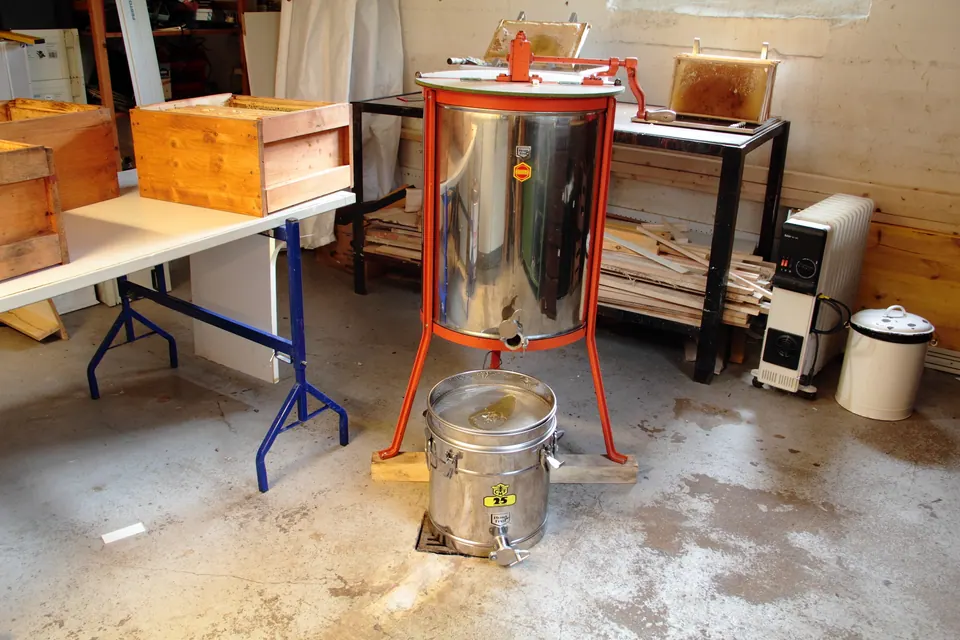
Whichever drive you pick, the extractor is only one station in the line. Plan the rest before the supers come off, so honey goes from frame to bucket without a mess.
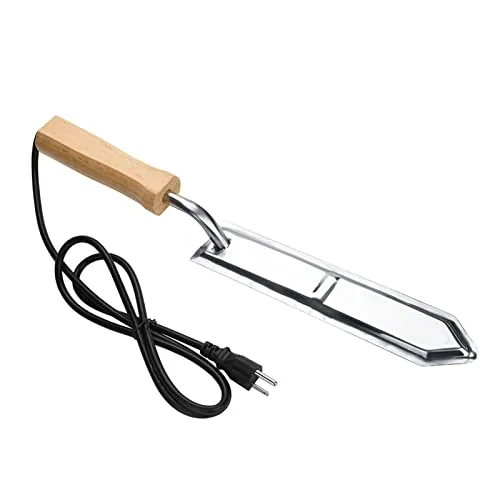
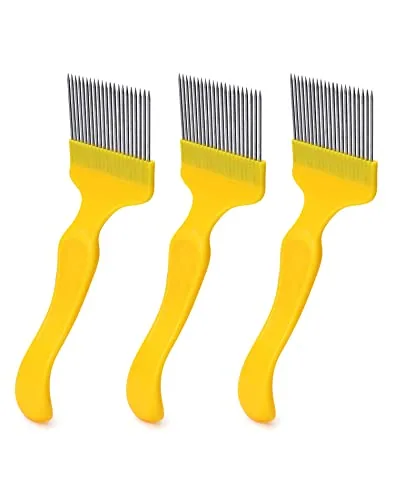
- Uncap
An uncapping knife (cold or heated), fork or roller opens the cells. An uncapping tray or a frame rest over a bucket catches the cappings.
- Spin
Load balanced frames, start slowly and drain the extractor before honey reaches the basket.
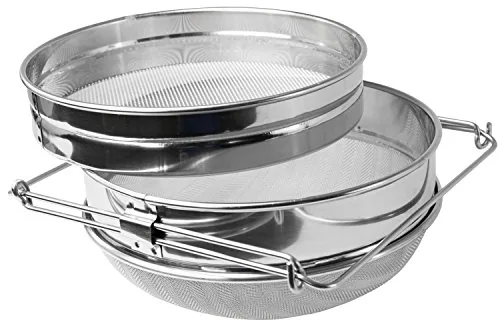
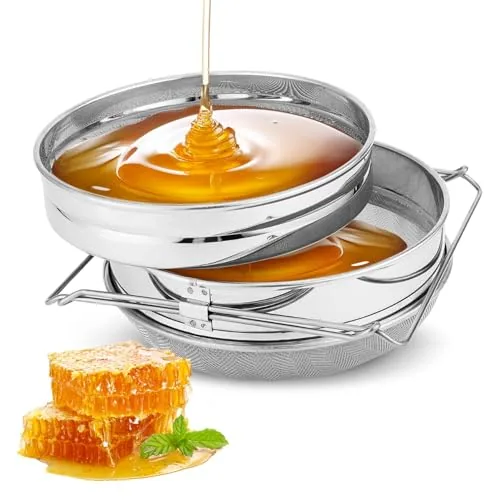
- Strain
A double sieve over a bucket removes wax bits. Let the honey settle a day or two so air bubbles rise.
- Bottle
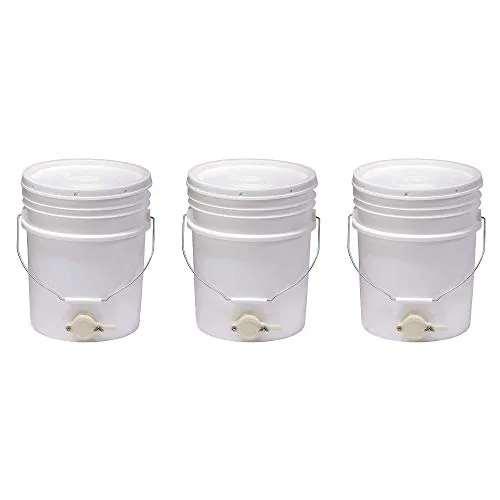
A bucket with a honey gate fills jars cleanly. Check FDA labeling guidance and your state rules before selling.
Mistakes to avoid
- Buying electric for one hive. A small manual, a club loaner or crush and strain is often enough.
- Buying a 2-frame unit when you already run five hives. Capacity saves more time than a motor.
- Ignoring gate height. Measure your bucket and check the listing; VIVO states its gate heights, many listings do not.
- Running new comb at full speed. Use the lowest setting first.
- Skipping the label work. If you sell, check FDA honey labeling guidance and your state rules first.
Who should choose manual, and who should choose electric?
Choose a manual extractor if you…
- have one to three hives
- extract once or twice a year
- want no power cords in the honey room, or extract outdoors
- like controlling every turn on new comb
Choose an electric extractor if you…
- have four or more hives or several supers per harvest
- sell honey and value steady, repeatable spins
- have shoulder, wrist or back limits
- can confirm the model has adjustable speed
For one electric model in detail, read the VEVOR honey extractor review. Selling? The selling honey page has the strainers, buckets and jars that come next.
Other options worth a look
From brands not on either side above: a 4-frame electric with a stated drum size, a compact 2-frame metal extractor with a honey gate, and a 6-frame hand-crank for bigger manual batches.
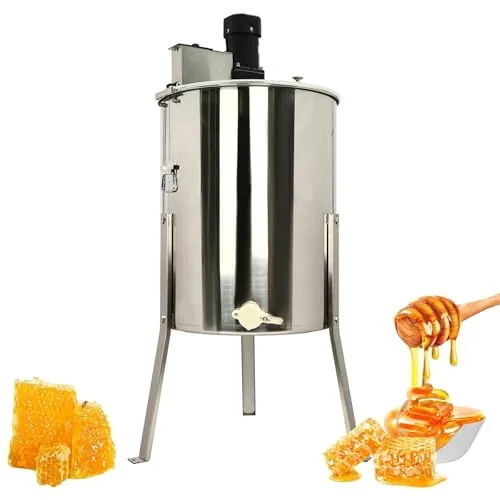
TsoLay 4-Frame Electric Honey Extractor, 140W
- Frames
- 4
- Drive
- Electric
- Gate
- Clear lid; drum 18.5 x 23.6 in
Best for Hobbyists moving to electric
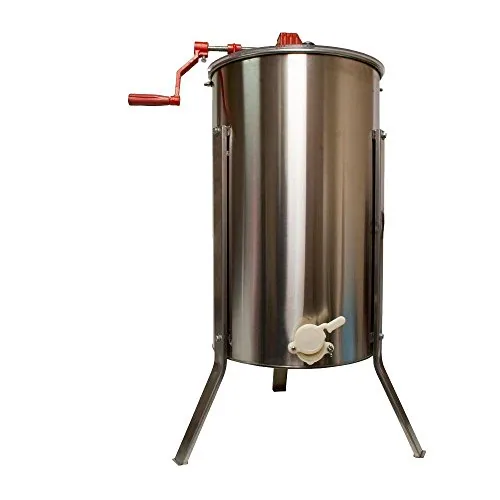
Harvest Lane Honey 2-Frame Metal Extractor
- Frames
- 2 (deep and medium)
- Drive
- Manual
- Gate
- Honey gate
Best for Hobby beekeepers starting extraction
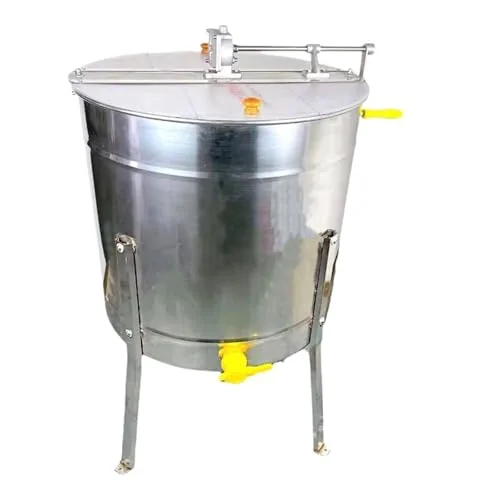
CHYLMAPHEN 6-Frame Manual Honey Extractor
- Frames
- 6
- Drive
- Manual crank
- Gate
- Honey outlet
Best for Growing hobby apiaries
See also the best honey extractors and how to extract honey.
Choose a manual extractor for one to three hives and occasional harvests; it is simple, quiet and needs no power. Choose an electric extractor once you have four or more hives or sell honey, and pick a model with adjustable speed. In both cases, buy the capacity your best year needs: it saves more time than the motor does.
Built from listing specs in the Hive & Frame catalogue (capacity, motor, rpm, gate height), Countryside extractor guidance, USDA NASS yield data and FDA labeling guidance. Hive & Frame did not spin frames in these units.