- Best for most backyard beekeepers: VIVO BEE-V004B manual, 4 deep or 8 medium frames, honey gate 15.4 in off the floor so a 5-gallon bucket fits under it.
- Best electric: VIVO BEE-V004E, same drum with a 120V motor and a 17.2 in gate height.
- Best small manual: Goodland Hardin 2-frame with a 16-gauge stainless tank.
- Most hobby extractors are tangential: you spin, flip each frame and spin again. Only one listing here states its type, so check before you buy.
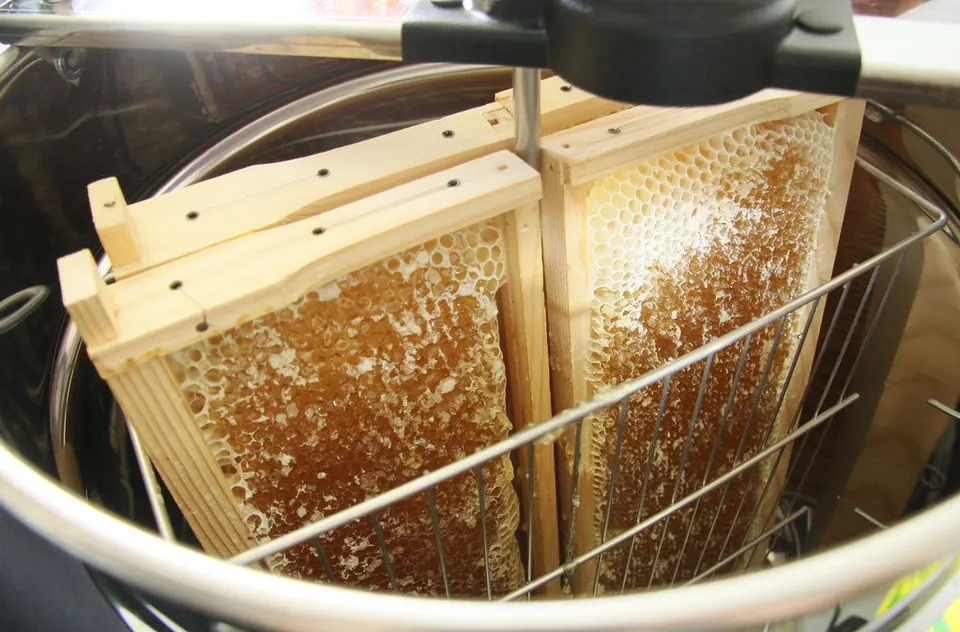
A honey extractor spins uncapped frames so centrifugal force throws honey out of the comb while the comb stays intact for the bees to refill. Choosing the best honey extractor comes down to four specs: how many frames it spins per load, whether a crank or a motor turns it, what steel the drum is made of, and how high the honey gate sits above the floor.
We compared nine extractors from six brands using those specs as listed by each maker. If you have one or two hives, also read how to extract honey with or without an extractor; crush and strain or a borrowed club extractor may be all you need.
Our picks
VIVO BEE-V004B Manual 4/8-Frame Extractor
- Frames
- 4 deep or 8 small/medium
- Drive
- Manual crank
- Gate
- 15.4 in from floor, 0.5 in above drum bottom
- Material
- Stainless steel drum, 25.2 x 18.5 in
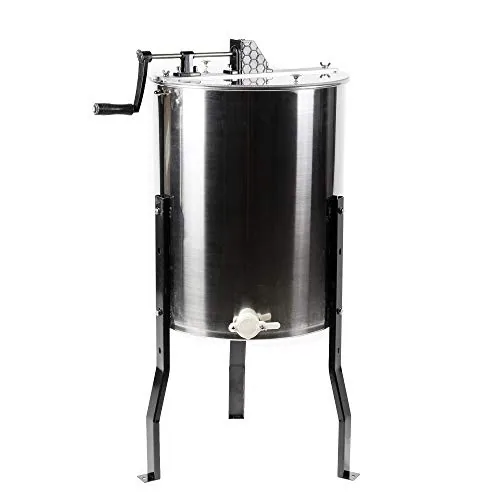
VIVO's BEE-V004B manual extractor has a 25.2 x 18.5 in stainless drum that holds 4 deep frames or 8 small and medium frames. The honey gate sits 15.4 in above the floor, high enough for a 5-gallon bucket, and only 0.5 in above the drum bottom, so most honey drains without tipping. A clear Plexiglas lid lets you watch. Goodland pitches even its 3-frame model at hobbyists with up to 10 hives, so a 4-deep drum is a comfortable size for a backyard apiary.
Best for: backyard beekeepers with a few hives
Skip if: you want a motor or have more than about 10 hives
- 4 deep or 8 medium frames per load
- Gate 15.4 in from floor, 0.5 in above drum bottom
- Clear lid
- Stainless grade not stated in listing bullets
- Radial or tangential not stated
- Hand cranking takes effort
VIVO BEE-V004E Electric 4/8-Frame Extractor
- Frames
- 4 deep or 8 small/medium
- Drive
- Electric, 120V AC
- Gate
- 17.2 in from floor, 0.5 in above drum bottom
- Material
- Stainless steel drum, 25.5 x 18.5 in
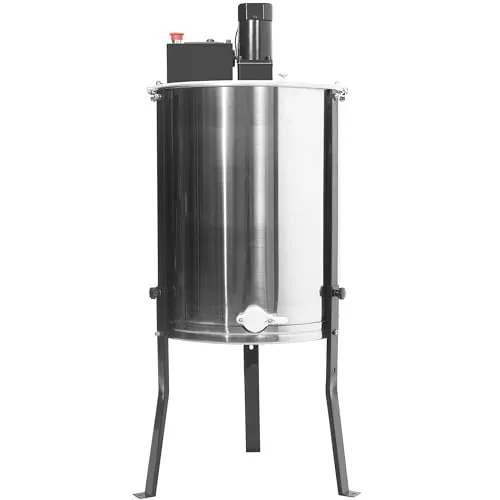
The VIVO BEE-V004E is the motorized version: a 120V AC motor, a 25.5 x 18.5 in stainless drum, 4 deep or 8 small and medium frames, enclosed gears, and a honey gate 17.2 in from the floor and 0.5 in above the drum bottom. Same capacity as the manual, without the cranking.
Best for: beekeepers who want hands-free spinning at hobby scale
Skip if: you don't have a power outlet where you extract
- 120V motor
- Gate 17.2 in from floor
- Enclosed gears
- Speed and wattage not stated
- Stainless grade not stated in listing bullets
- Heavier and costlier than manual
Goodland Hardin Professional 2-Frame Manual Extractor
- Frames
- 2
- Drive
- Manual crank
- Gate
- Clear Plexiglas top; optional legs included
- Material
- 16-gauge stainless tank
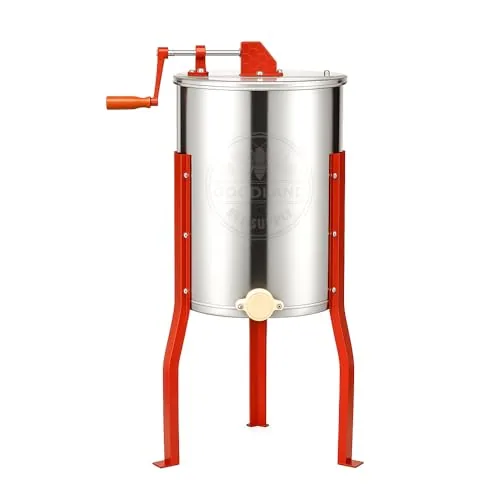
The Goodland Hardin Professional 2-frame has a 16-gauge stainless steel tank (thicker than the 22-gauge drums listed on several others), steel gears with sealed bearings, a clear Plexiglas top and an optional leg stand. Two frames per load is slow, but for one or two hives it is plenty.
Best for: one or two hives and limited storage space
Skip if: you plan to extract more than a few supers at a time
- 16-gauge stainless tank
- Steel gears, sealed bearings
- Stand included
- Only 2 frames per load
- Gate details not listed
- Steel grade (304 or other) not stated
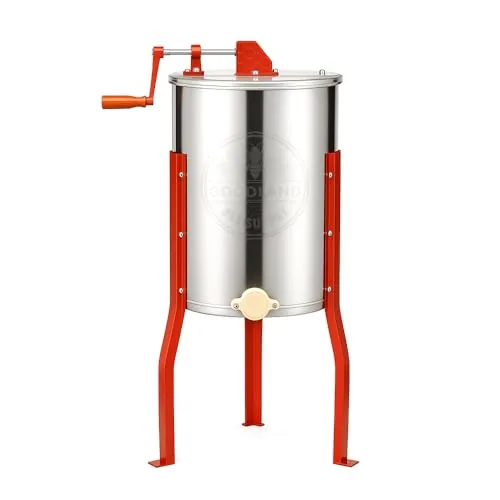
Goodland HE4MAN 4-Frame Manual Extractor with Stand
- Frames
- 4 (deep, medium or shallow)
- Drive
- Manual crank
- Gate
- Clear plexiglass lid; 3-leg stand
- Material
- 22-gauge food-grade stainless
Goodland's HE4MAN holds four deep, medium or shallow Langstroth frames in a 22-gauge food-grade stainless drum (the title says 304), with a hand crank on sealed bearings and steel gears, a clear plexiglass lid and a three-piece leg stand. Replacement lids, legs and cranks are listed by part number, which helps long-term.
Best for: growing hobby apiaries
Skip if: you want a motor
- 4 frames, any Langstroth depth
- 22-gauge 304 stainless per title
- Parts listed by number
- Thinner 22-gauge drum vs Hardin
- Listing spec line oddly says 110V for a manual unit
- Gate height not listed
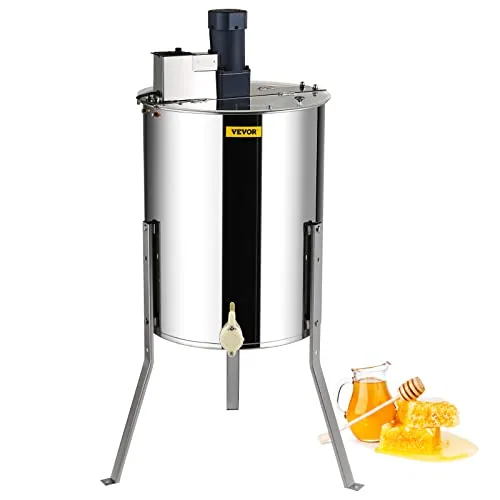
VEVOR 4/8-Frame Electric Extractor, Adjustable Stand
- Frames
- 4 deep or 8 medium/shallow
- Drive
- Electric
- Gate
- Clear lid, adjustable stand
- Material
- Stainless steel
VEVOR's 4/8-frame electric extractor lists a 140W motor with adjustable speed up to 1300 rpm, a polished stainless drum, clear lid and height-adjustable stand. The title says 4 deep or 8 medium frames, but one bullet says 4 deep and 4 medium or shallow, so confirm capacity with the seller. Deep frames up to 18.9 x 9 in fit, per the listing.
Best for: beekeepers who want a motor and a stand at a lower spend
Skip if: you want clear, consistent specs
- 140W motor, adjustable speed
- Adjustable stand
- Frame sizes listed
- Capacity wording inconsistent
- Steel grade not stated
- Very high rpm can break new comb: start slow
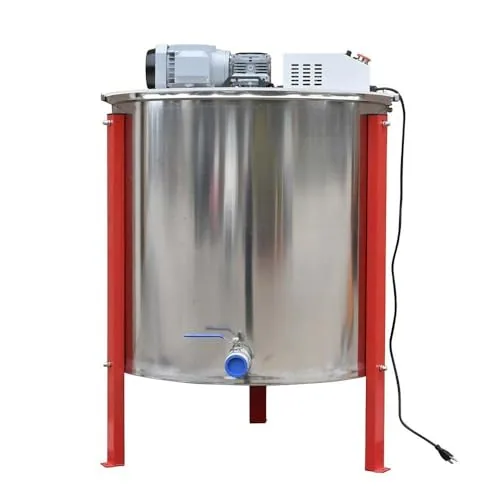
Goodland HE12MOT 12-Frame Electric Extractor, 110V
- Frames
- 12
- Drive
- Electric, 110V
- Gate
- Clear plexiglass lid; stand included
- Material
- 22-gauge 304 stainless drum
Goodland's HE12MOT is a 12-frame, 110V motorized extractor with a 22-gauge 304 stainless drum, steel gears and sealed bearings, a clear plexiglass lid and a 3-leg stand. Goodland says 12 frames is 3 to 4 times a small extractor's batch. It is big, but if you pull many supers it cuts the number of cycles sharply.
Best for: sideline beekeepers with many supers
Skip if: you have only a few hives or little floor space
- 12 frames per load
- 22-gauge 304 stainless
- Replacement parts listed
- Large footprint
- Radial or tangential not stated
- Overkill for 1 to 5 hives
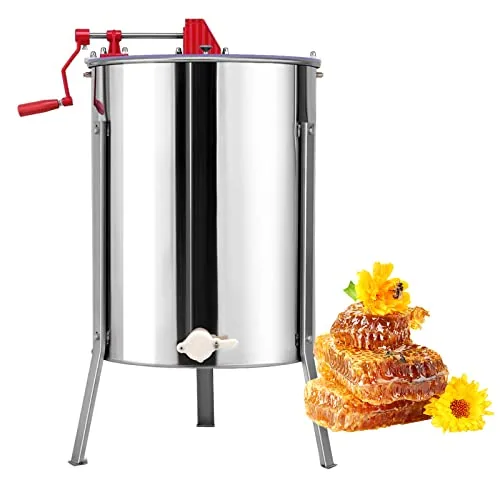
AIZYR 4-Frame Manual Honey Extractor with Stands
- Frames
- 4 (deep, medium or shallow)
- Drive
- Manual crank
- Gate
- Honey gate; clear perspex lids
- Material
- Polished stainless steel (listed food grade)
AIZYR's 4-frame manual extractor is the only listing here that names its type: tangential. Its basket holds four deep, medium or shallow frames and is slightly rounded inward to support comb. It has two clear perspex lids, enclosed gears above the frames and three adjustable stainless legs that can be bolted down.
Best for: beekeepers who want a clearly stated tangential design
Skip if: you don't want to flip frames mid-spin
- Type stated: tangential
- Rounded basket supports comb
- Adjustable, boltable legs
- Flip frames to empty the second side
- Steel grade not stated
- Gate details not listed
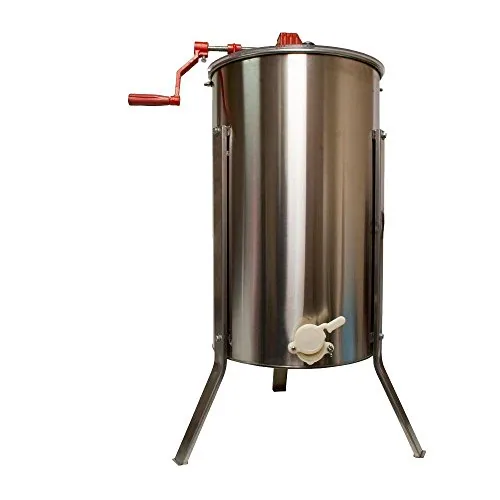
Harvest Lane Honey 2-Frame Metal Extractor
- Frames
- 2 (deep and medium)
- Drive
- Manual
- Gate
- Honey gate
- Material
- Food-grade stainless steel (listed)
Harvest Lane Honey's 2-frame metal extractor lists food-grade stainless steel, a honey gate and fit for deep and medium frames. It is a no-frills small extractor for a hobbyist who wants their own rather than borrowing.
Best for: a basic personal extractor for one or two hives
Skip if: you want detailed specs
- Fits deep and medium frames
- Honey gate
- Food-grade stainless listed
- Thin listing details
- 2 frames per load
- Stand not listed
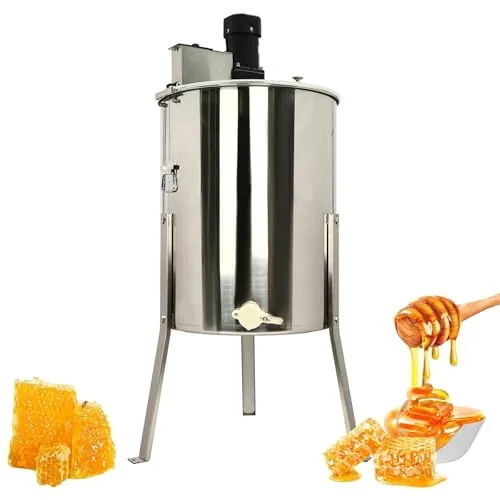
TsoLay 4-Frame Electric Honey Extractor, 140W
- Frames
- 4
- Drive
- Electric
- Gate
- Clear lid; drum 18.5 x 23.6 in
- Material
- Stainless steel
TsoLay's 4-frame electric extractor lists a 140W vertical motor at about 370 rpm with adjustable speed, an 18.5 x 23.6 in stainless barrel with seamless welding, a three-legged stand, handles on lid and barrel, and a sliding honey outlet. A lower listed top speed is gentler on fresh comb.
Best for: beekeepers who want a motor with a gentler listed speed
Skip if: you want a well-known brand with parts support
- 140W, about 370 rpm, adjustable
- Seamless welded stainless barrel
- Three-legged stand
- Steel grade not stated
- Type not stated
- Newer brand
Honey extractor specs side by side
Extractor specs as listed
| Extractor | Frames per load | Drive | Steel (as listed) | Gate height |
|---|---|---|---|---|
| VIVO BEE-V004B | 4 deep / 8 medium | Manual | Stainless, grade not stated | 15.4 in |
| VIVO BEE-V004E | 4 deep / 8 medium | Electric, 120V | Stainless, grade not stated | 17.2 in |
| Goodland Hardin 2-frame | 2 | Manual | 16-gauge stainless tank | not listed |
| Goodland HE4MAN | 4 | Manual | 22-gauge food-grade (304 per title) | not listed |
| VEVOR 4/8 electric | 4 deep / 4 or 8 medium | Electric, 140W | Polished stainless | not listed |
| Goodland HE12MOT | 12 | Electric, 110V | 22-gauge 304 | not listed |
| AIZYR 4-frame | 4 (tangential) | Manual | Polished stainless (food grade listed) | not listed |
| Harvest Lane 2-frame | 2 | Manual | Food-grade stainless (listed) | not listed |
| TsoLay 4-frame | 4 | Electric, 140W | Stainless | not listed |
Source: Hive & Frame catalogue (maker listings, November 2026)
Deep frames per load
Medium and shallow capacity can be higher on 4/8-frame models.
Radial vs tangential: which honey extractor type do you need?
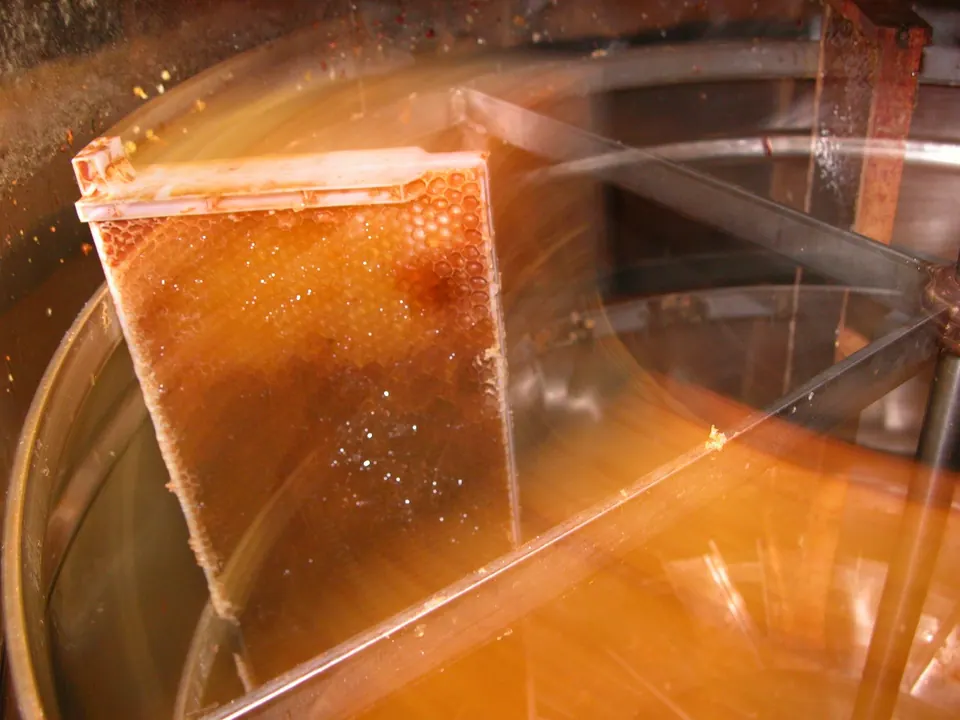
In a tangential extractor, frames sit flat against the basket like pages around a drum, one face pointing out. Honey is thrown from the outer face only, so you spin, flip each frame and spin again. Most 2- to 4-frame hobby extractors work this way. Tangential models empty comb well but take more handling.
In a radial extractor, frames sit like wheel spokes with the top bars facing out. Both sides empty at once, so there is no flipping. Radial baskets fit more frames in the same drum, which is why larger motorized extractors are often radial.
Tangential vs radial
| Tangential | Radial | |
|---|---|---|
| Flip frames mid-cycle | ✓ yes | ✗ no |
| Frames per drum size | ~ fewer | ✓ more |
| Typical size | 2 to 4 frames | Larger, often motorized |
| Handling time | ~ more | ✓ less |
Source: Hive & Frame summary
Only the AIZYR listing names its type (tangential). If the type matters to you, ask the seller before ordering. The longer comparison is in radial vs tangential extractors.
Manual or electric?
A hand crank is cheaper, quieter and works anywhere. A motor saves your arm and lets you uncap the next load while the current one spins. For one to five hives, manual is usually fine; past that, many beekeepers switch to electric. See manual vs electric honey extractors, and our picks in best electric and best manual extractors.
Brand-level detail: the VEVOR honey extractor review and VEVOR vs Goodland.
How to use a honey extractor
- Pull capped frames
Harvest frames that are mostly capped. Uncapped nectar can be too wet and may ferment; a honey refractometer tells you for sure.
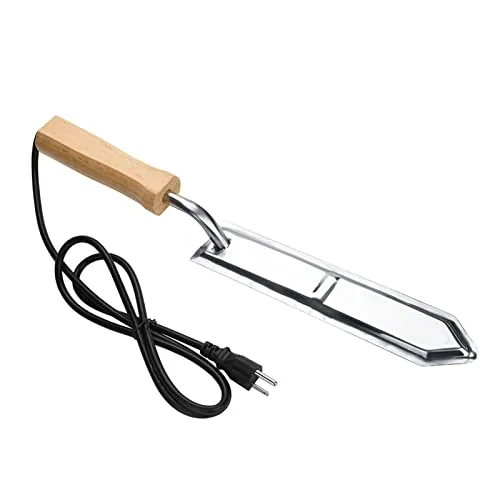
- Uncap
Slice cappings off with a hot or cold knife, or scratch them open with a fork or roller.
- Balance the load
Load frames of similar weight opposite each other so the drum doesn't walk across the floor.
- Start slow
Spin gently first, especially with new comb, then speed up. In a tangential extractor, flip and repeat.
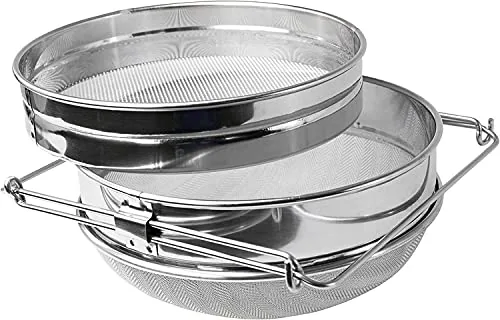
- Drain and strain
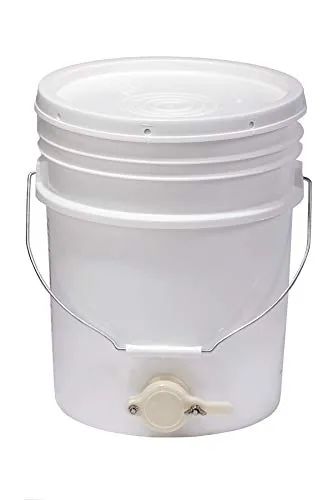
Open the gate into a strainer over a bucket.

Mistakes to avoid
- Buying before you need it. First-year colonies often keep their honey. Borrow or rent from a club until you know your volume.
- Spinning too fast too soon. New, soft comb can blow out.
- Ignoring gate height. If the gate is low, you need a stand or a short bucket.
- Extracting brood frames. Only extract honey supers.
All extractors are in the honey harvest category; if you sell honey, see the honey sellers page.
For most backyard beekeepers, the VIVO BEE-V004B manual extractor hits the sweet spot: 4 deep or 8 medium frames, a gate high enough for a bucket and a drain only 0.5 in above the drum floor. Choose the VIVO BEE-V004E for the same drum with a motor, the Goodland Hardin 2-frame for a small apiary, or the Goodland HE12MOT if you are extracting for sale.
We compared honey extractor listings by frames per load (deep and medium), drive type, motor details, drum steel and gauge as listed, gate height and included stand. Where a maker does not state a spec, such as stainless grade or radial/tangential type, we say so. We did not spin frames in these extractors. Honey moisture guidance follows the USDA grade standards for extracted honey.