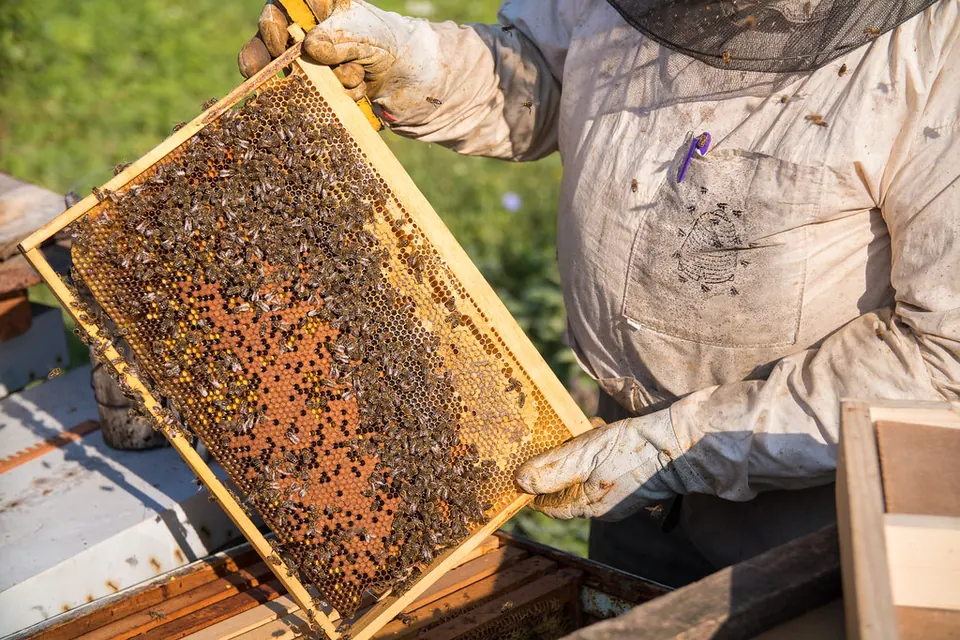
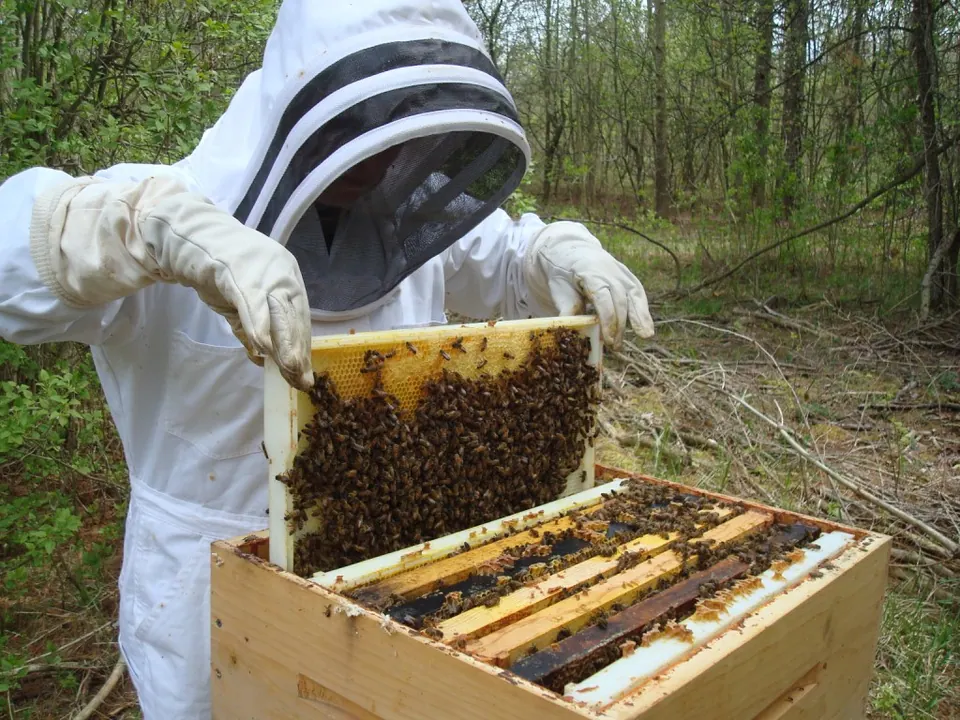
- Goatskin is the usual choice for beekeeping gloves: thin and flexible enough to lift frames and mark queens, thick enough to stop most stings.
- Cowhide is tougher and stiffer; good for heavy lifting and defensive colonies, less good for fine work.
- Sleeves matter as much as leather. Long canvas or mesh gauntlets should pull over your suit cuffs.
- Gloves that are too big cost you dexterity and make you clumsy, and clumsy hands upset bees. Measure your palm.
Beekeeping gloves are where protection and control pull hardest against each other. Thick leather stops stings but makes it hard to feel a frame's lug or pick up a queen cage; thin leather gives you feel but less margin. This guide compares the leather gloves in the Hive & Frame catalogue by what makers list: leather type, sleeve material, ventilation, sizes and warranty.
One honest caveat up front: no glove is impossible to sting through, and gloves get stung most where leather stretches tight over the knuckles. A good fit, slow hands and a lit smoker matter as much as the hide.
Our picks
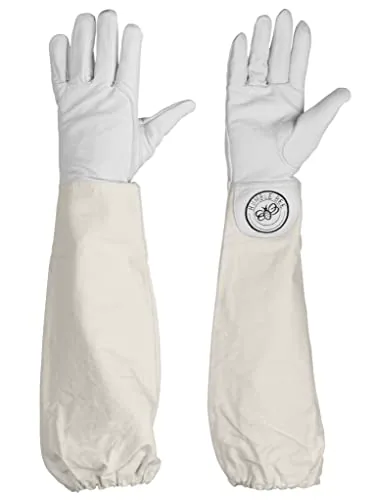
Humble Bee 110 Goatskin Gloves, Extended Sleeves
- Sizes
- XL (listed variant)
- Material
- 60% cotton canvas / 40% goat leather
- Sleeve
- Full-length canvas, elastic cuffs
- Warranty
- 2-year manufacturer
Humble Bee's 110 uses goat leather hands with heavy canvas full-length sleeves and elastic cuffs, in a 60/40 canvas-to-leather build, and carries a 2-year manufacturer warranty. The full sleeve reaches well up the forearm and over a suit cuff.
Best for: Everyday inspections from your first season on
Skip if: You inspect in high heat; the solid canvas sleeve is warm
- Goat leather hands
- Full-length canvas sleeves
- Materials split stated
- 2-year warranty
- No ventilation
- Listed variant is XL; check the size chart
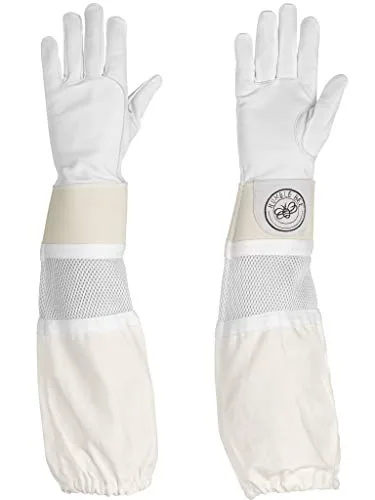
Humble Bee 114 Goatskin Gloves, Ventilated Cuffs
- Sizes
- XL (listed variant)
- Ventilation
- Reinforced, ventilated wrists
- Material
- 50% cotton canvas / 50% goat leather
- Warranty
- 2-year manufacturer
The Humble Bee 114 adds reinforced, ventilated wrists to goat leather hands and canvas sleeves, in a 50/50 canvas-to-leather build, with the same 2-year warranty. Ventilation at the wrist is where sweat builds up first.
Best for: Warm-weather inspections
Skip if: You want the longest possible sleeve
- Ventilated, reinforced wrists
- Goat leather hands
- 2-year warranty
- Mesh at the wrist is a lighter barrier than canvas
- Listed variant is XL
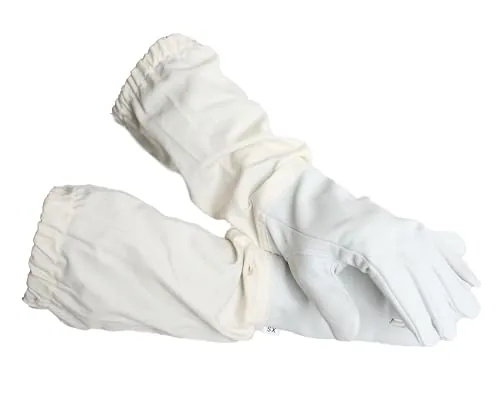
Forest Beekeeping Goatskin Gloves, Canvas Sleeve, L
- Sizes
- L (listed variant)
- Material
- Goatskin leather
- Sleeve
- Long canvas with elastic cuff
Forest Beekeeping's gloves are goatskin with long canvas sleeves and elastic cuffs, covering fingers and forearms. They are plain and practical, without vents or extras.
Best for: A reliable everyday pair or a spare in the toolbox
Skip if: You want a warranty stated on the listing
- Goatskin leather
- Long canvas sleeve
- Elastic cuff
- No ventilation
- Warranty not listed
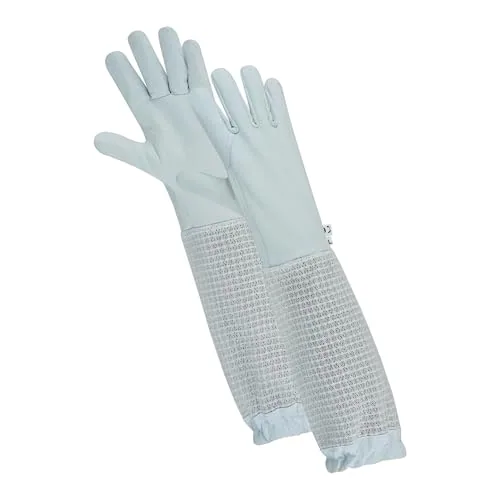
OZ ARMOUR Cowhide Leather Gloves, 3-Layer Mesh, M
- Sizes
- M (listed variant)
- Ventilation
- 3-layer mesh arms
- Material
- Cowhide leather
OZ ARMOUR's cowhide gloves pair tough leather hands with three-layer mesh fabric on the arms for airflow. Cowhide is thicker and stiffer than goatskin, so you trade some feel for durability.
Best for: Heavy lifting, defensive colonies and hot summers
Skip if: You mark queens or do fine work often
- Cowhide leather hands
- 3-layer mesh arms
- Lightweight overall
- Stiffer than goatskin
- Check the OZ ARMOUR size chart before ordering
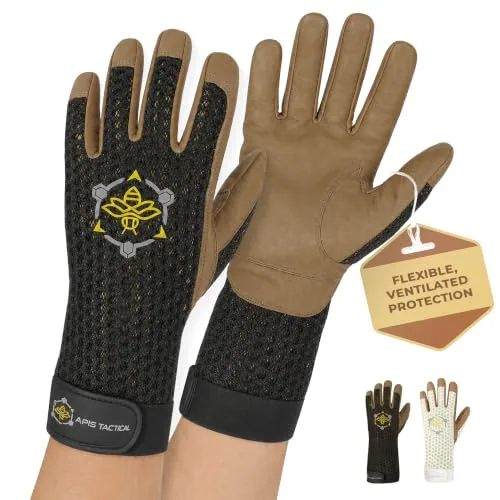
Apis Tactical Cowhide Beekeeping Gloves, Ventilated, L
- Sizes
- L (listed variant)
- Ventilation
- Mesh back
- Material
- Top-grain cowhide palm and fingers
- Fit
- Mechanic-style cut, forearm coverage
Apis Tactical cuts its top-grain cowhide gloves like mechanic's gloves, with a ventilated mesh back and forearm coverage. The fitted cut is aimed at lifting frames and marking queens without fumbling.
Best for: Experienced beekeepers who want feel without bare hands
Skip if: Your colonies are defensive; a mesh back is a lighter barrier
- Fitted, mechanic-style cut
- Top-grain cowhide palm and fingers
- Mesh back for airflow
- Mesh back offers less protection than leather
- Shorter forearm coverage than full gauntlets
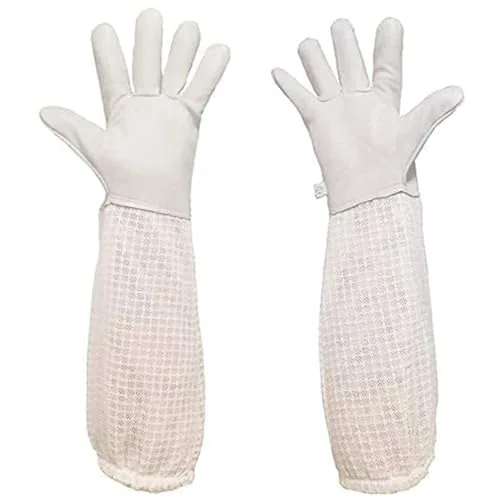
Luwint Goatskin Gloves with 3-Layer Mesh Sleeve, Small
- Sizes
- S (palm 8-8.75 in, 18.8 in long)
- Ventilation
- 3-layer mesh sleeve
- Material
- Goatskin leather
Luwint lists real measurements: the Small fits an 8 to 8.75 inch palm and is 18.8 inches long. Goatskin hands meet a 3-layer ventilated mesh sleeve with elastic cuffs.
Best for: Smaller hands that swim in standard sizes
Skip if: You need a large size; check the other listings
- Palm size and length listed
- Goatskin hands
- 3-layer mesh sleeve
- Mesh sleeve is a lighter barrier than canvas
- Warranty not listed
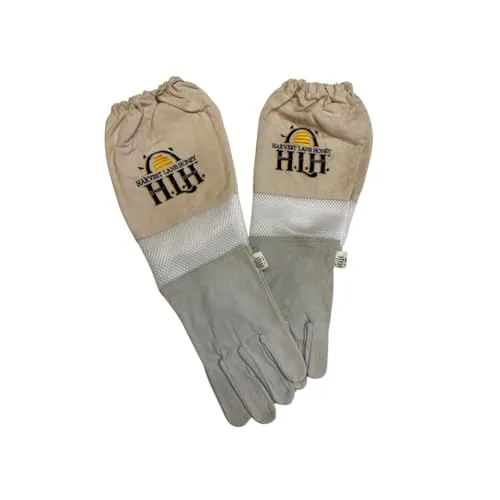
Harvest Lane Honey Goatskin Beekeeping Gloves, M
- Sizes
- M (listed variant)
- Ventilation
- Vented wrist inserts
- Material
- Goatskin, cotton
Harvest Lane Honey's gloves are soft goatskin with ventilation fabric inserts at the wrists. The listing describes them as pliable for frame work.
Best for: Beginners who want feel and a little airflow
Skip if: You want long gauntlets
- Pliable goatskin
- Vented wrist inserts
- Sleeve length not listed
- Warranty not listed
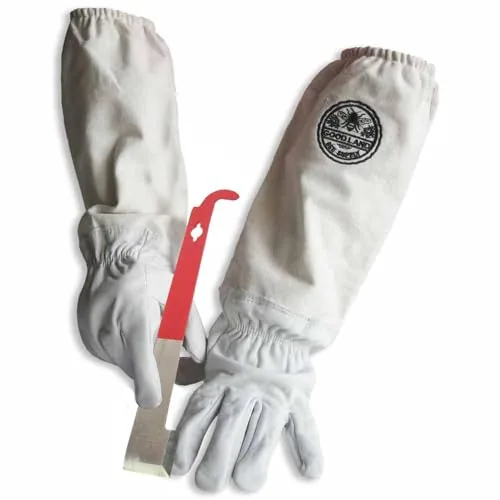
Goodland Cotton & Sheepskin Gloves with J-Hook Tool, M
- Sizes
- M (listed variant)
- Material
- Canvas sleeves, sheepskin leather hands
- Includes
- J-hook hive tool
Goodland bundles sheepskin leather gloves with long canvas sleeves and a J-hook hive tool. Sheepskin is soft and comfortable; the bundle gives a new beekeeper two essentials in one order.
Best for: First-year beekeepers who still need a hive tool
Skip if: You already have a hive tool and want ventilation
- J-hook hive tool included
- Full arm coverage
- Soft sheepskin hands
- No ventilation
- Sheepskin is less abrasion-resistant than goat or cowhide
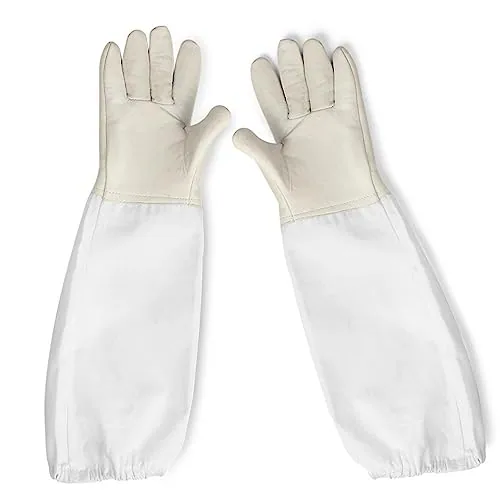
Flexzion Goatskin Beekeeping Gloves, Canvas Sleeves
- Sizes
- Fits most adults
- Ventilation
- Vent mesh at wrist
- Material
- Goatskin leather
Flexzion's goatskin gloves have extended canvas arm guards and vent mesh at the wrist, in one adult fit. They cover the basics for a spare or visitor pair.
Best for: A spare pair for helpers
Skip if: Your hands are very small or very large; there is one size
- Goatskin palms
- Canvas arm guards
- Vented wrist
- One size only
- Warranty not listed
How to choose beekeeping gloves
Leather type
- Goatskin: the most common choice. Thin, soft and flexible, with good feel for lifting frames by the lugs. Six of the ten adult glove listings in our catalogue are goatskin.
- Cowhide: thicker and tougher. Better against heavy wear and defensive colonies, stiffer for fine work. Apis Tactical's fitted cut narrows the gap.
- Sheepskin: very soft and comfortable, less durable. Goodland's starter gloves use it.
- Nitrile or other thin gloves: some experienced beekeepers use them for feel and to keep propolis off their hands. They offer little sting protection, and none are in our catalogue.
Sleeves and ventilation
Canvas gauntlets are the traditional sleeve: tough and warm. Mesh sleeves, like the Luwint and OZ ARMOUR designs, are cooler but a lighter barrier. Either way, the sleeve should be long enough to pull over your suit or jacket cuff with elastic at the top.
Fit
Gloves that are too big catch on frames and make you clumsy; gloves that are too tight stretch the leather thin over your knuckles, where stings get through. Measure around your palm and compare it to the maker's chart. Luwint is one of the few that lists palm size in the spec.
Leather used in 10 adult glove listings
Hand material as listed
Beekeeping gloves compared
Specs as listed for the catalogue variant; a dash means not listed.
| Product | Material | Ventilation | Sleeve | Sizes |
|---|---|---|---|---|
| Humble Bee 110 Goatskin Gloves, Extended Sleeves | 60% cotton canvas / 40% goat leather | — | Full-length canvas, elastic cuffs | XL (listed variant) |
| Humble Bee 114 Goatskin Gloves, Ventilated Cuffs | 50% cotton canvas / 50% goat leather | Reinforced, ventilated wrists | — | XL (listed variant) |
| Forest Beekeeping Goatskin Gloves, Canvas Sleeve, L | Goatskin leather | — | Long canvas with elastic cuff | L (listed variant) |
| OZ ARMOUR Cowhide Leather Gloves, 3-Layer Mesh, M | Cowhide leather | 3-layer mesh arms | — | M (listed variant) |
| Apis Tactical Cowhide Beekeeping Gloves, Ventilated, L | Top-grain cowhide palm and fingers | Mesh back | — | L (listed variant) |
| Luwint Goatskin Gloves with 3-Layer Mesh Sleeve, Small | Goatskin leather | 3-layer mesh sleeve | — | S (palm 8-8.75 in, 18.8 in long) |
| Harvest Lane Honey Goatskin Beekeeping Gloves, M | Goatskin, cotton | Vented wrist inserts | — | M (listed variant) |
| Goodland Cotton & Sheepskin Gloves with J-Hook Tool, M | Canvas sleeves, sheepskin leather hands | — | — | M (listed variant) |
| Flexzion Goatskin Beekeeping Gloves, Canvas Sleeves | Goatskin leather | Vent mesh at wrist | — | Fits most adults |
Specs as listed by the maker or seller; check the listing before you buy.
Goatskin vs cowhide at a glance
| Need | Goatskin | Cowhide |
|---|---|---|
| Feel for frames and queen cages | ✓ Better | ~ Stiffer |
| Durability | ~ Good | ✓ Better |
| Comfort out of the box | ✓ Soft | ~ Needs breaking in |
| Defensive colonies | ~ Good | ✓ Thicker |
| Hot weather | ~ Depends on sleeve | ~ Depends on sleeve |
Source: Hive & Frame summary of maker listings
Which gloves suit which beekeeper?
Matching the glove to the job is easier than finding one glove that does everything. Use this as a starting point, then adjust as your handling improves.
- First season, one or two hives: goatskin with full canvas sleeves, such as the Humble Bee 110 or Forest Beekeeping pair. They forgive mistakes while you learn to lift frames slowly.
- Hot, humid summers: ventilated wrists or mesh sleeves, such as the Humble Bee 114, Luwint or OZ ARMOUR cowhide gloves. Sweaty hands inside solid gloves are slippery hands.
- Defensive colonies or harvest day: thicker cowhide and long sleeves. Bees are often more defensive when you remove honey supers, so this is the day for your toughest pair.
- Queen marking and fine work: a fitted cut like Apis Tactical, or thin gloves on calm colonies once you are experienced.
- Helpers and visitors: a budget pair in a common size, such as the Flexzion, kept clean in the toolbox.
Whatever you choose, buy two pairs if you can. Leather that gets wet from rain or syrup takes time to dry, and a dry spare keeps you working instead of postponing an inspection.
How to wear and care for gloves
- Gloves go over the cuffs
Put on your suit or jacket first, hook thumb loops, then pull glove sleeves over the cuffs so bees cannot walk inside. Our beekeeping suit picks list which suits have thumb loops.
- Smoke your gloves
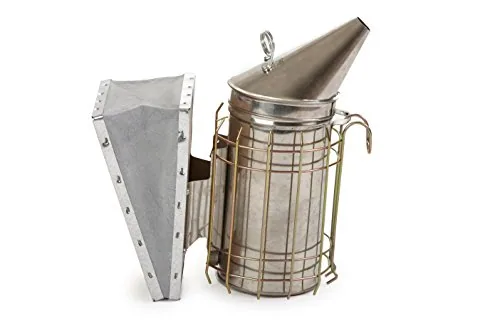
A puff of smoke over your gloves helps mask the alarm scent left by any sting. Keep a lit bee smoker close.
- Use tools, not fingertips
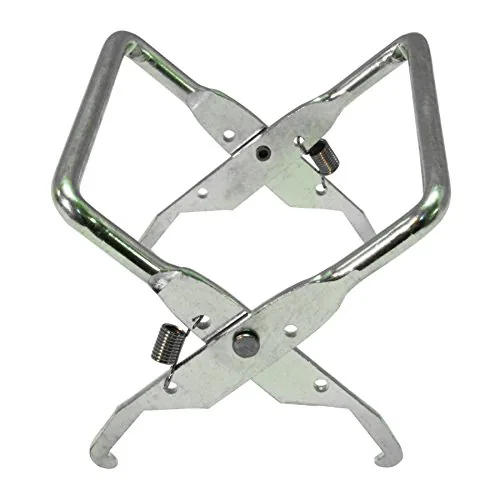
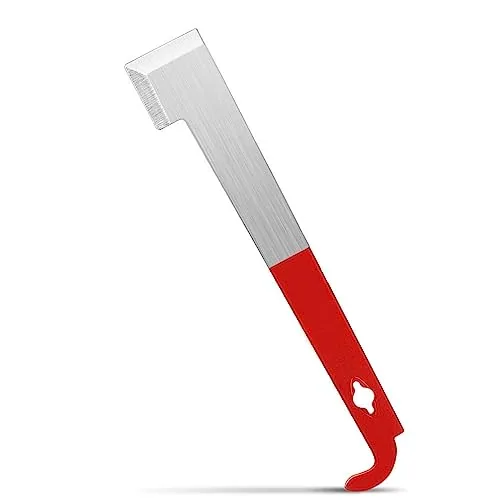
A frame grip and a J-hook hive tool let you lift frames without squeezing comb, which is easier in thick gloves.
- Clean them gently
Wipe propolis off with a damp cloth and let gloves air dry away from heat, which can stiffen leather. Wash or replace gloves that smell strongly of venom.
- Keep a spare pair
Wet or stung gloves can make bees more defensive. A spare pair in the toolbox lets you swap mid-inspection.
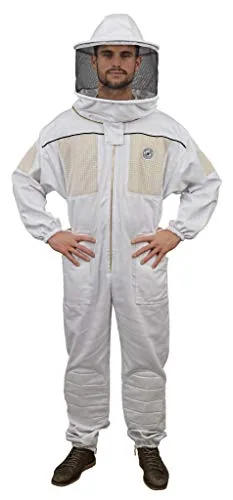
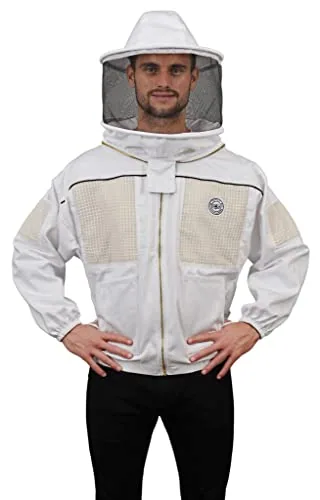
More on gear and handling: bee sting safety and bee suit vs jacket.
Mistakes to avoid with beekeeping gloves
- Buying one size up for comfort. Baggy fingertips catch on frames and crush bees.
- Tucking sleeves under the suit cuff. Bees crawl into the gap.
- Wearing thick gloves forever. Many beekeepers move to thinner gloves as their handling gets calmer. Do it gradually, with gentle colonies.
- Ignoring kids' sizes. Adult gloves on small hands are a hazard. See our kids' beekeeping suit guide for child-sized gloves.
The first-hive shopping list builder adds a pair of gloves for every person you plan to bring to the hive. Browse all gloves in protective gear or start from first hive.
The Humble Bee 110 is the best beekeeping glove for most people: goat leather, full canvas sleeves and a 2-year warranty. In hot weather, choose the ventilated Humble Bee 114 or the cowhide OZ ARMOUR mesh-arm gloves. For dexterity, the fitted Apis Tactical cowhide gloves stand out, and Luwint is the pick for smaller hands because it lists real measurements.
We compare manufacturer specs and listing data (frame count, wood species and thickness, assembled or not, foundation type, suit fabric and mesh layers, veil style, motor and drum material, gate size, what is included) and what the maker says each product is for, alongside extension, HBHC, EPA and FDA guidance. We did not install colonies in, spin, wear or lab-test these products, and we never show invented scores, ratings or prices.