Apivar
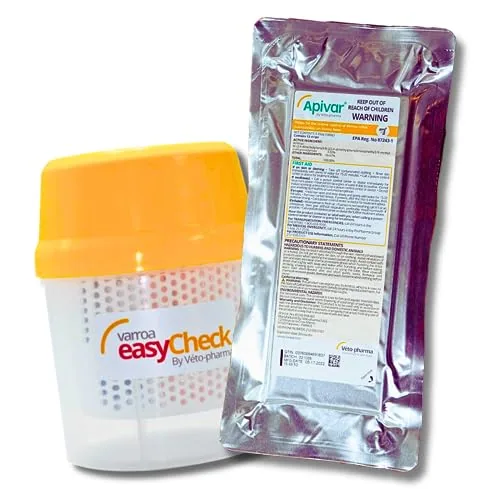
Apivar 2.0 Strips (12) + Varroa Easy Check
- Active ingredient
- Amitraz
- Doses
- 12 strips
- Includes
- Varroa Easy Check tester
Best for Counting and treating mites
Apivar sells EPA-registered amitraz strips for varroa mites, in 4- and 12-strip packs and as Apivar 2.0, some bundled with a Varroa Easy Check tester.
See Apivar on Amazon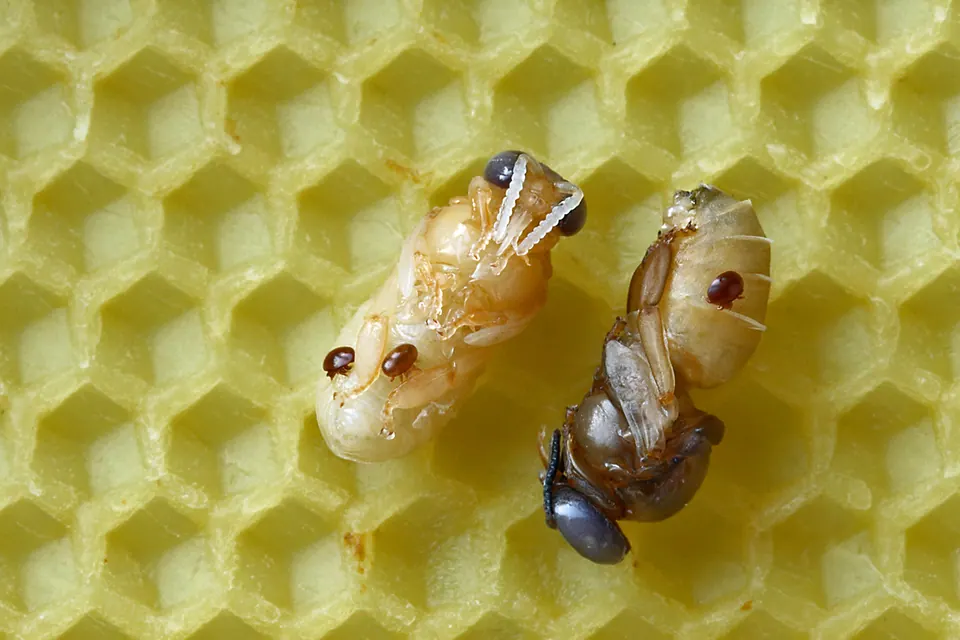
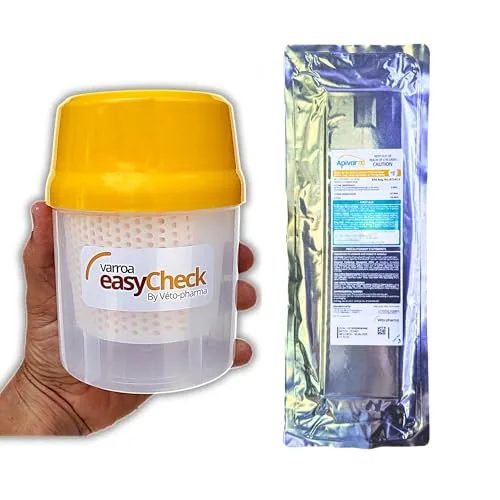
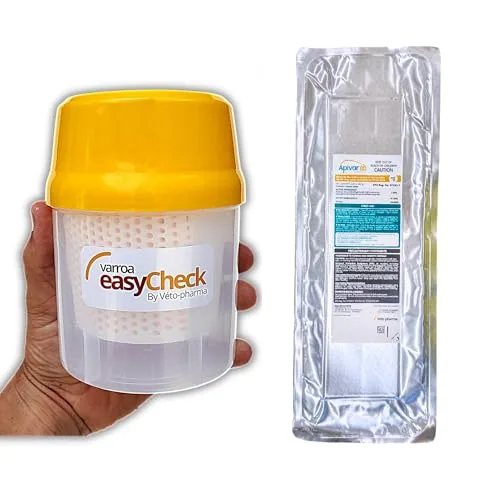
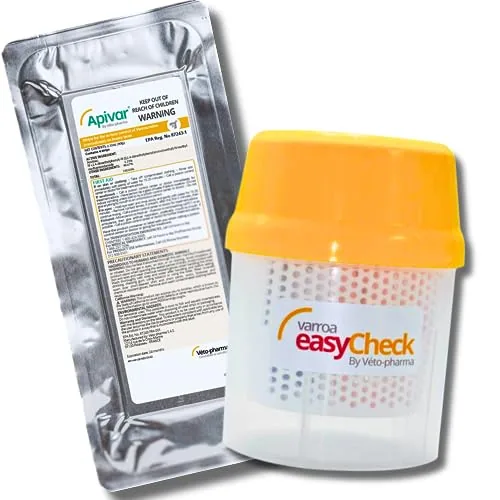
Best for Counting and treating mites
Best for One or two backyard hives
Best for Treating several colonies
Best for Starting mite control on 1–2 hives
Best for Treating a small apiary
No product matches every filter.
Apivar is an EPA-registered varroa treatment: plastic strips that release amitraz and hang between brood frames. Our catalogue lists the original Apivar with EPA Reg. No. 87243-1 and the newer Apivar 2.0. The label is the law, so read it in full before you buy: it sets strips per colony, placement, treatment period and when honey supers may be on.
| Product | Active ingredient | EPA Reg. No. | Doses | Includes |
|---|---|---|---|---|
| Apivar Strips (4) + Varroa Easy Check | Amitraz | 87243-1 | 4 strips | — |
| Apivar Strips (12) + Varroa Easy Check | Amitraz | 87243-1 | 12 strips | — |
| Apivar 2.0 Strips (4) + Varroa Easy Check | Amitraz | — | 4 strips | Varroa Easy Check tester |
| Apivar 2.0 Strips (12) + Varroa Easy Check | Amitraz | — | 12 strips | Varroa Easy Check tester |
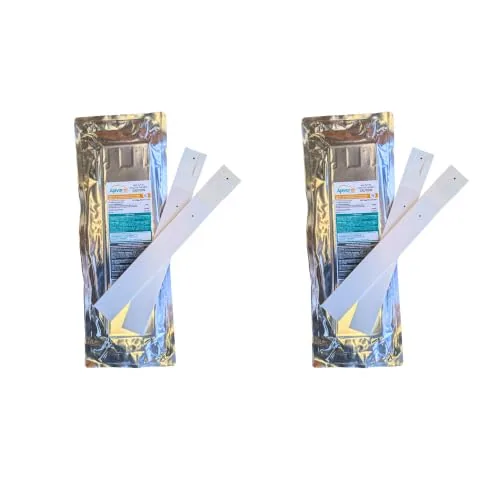
| Apivar 2.0 Amitraz Varroa Strips, 12 Strips x 2 | Amitraz | — | 2 packs of 12 strips | — |
Specs as listed by the maker or seller; check the listing before you buy.
HBHC's 9th edition (June 2026) says to promptly control mites at 1% or more (1 mite per 100 bees) in the dormant and population-increase phases, and at 2% or more at peak population and during population decrease. Measure with an alcohol or soap wash of about 300 bees, then check the result in our mite threshold calculator.
Varroa thresholds by colony phase (mites per 100 adult bees), HBHC 9th edition
| Colony phase | Immediate control not needed | Promptly control |
|---|---|---|
| Dormant Little or no brood; winter cluster (sample just before clustering) | ✓ below 1% | ✗ 1% or more |
| Population increase Late winter to spring build-up, brood expanding | ✓ below 1% | ✗ 1% or more |
| Peak population Summer, colony at full size, supers often on | ✓ below 2% | ✗ 2% or more |
| Population decrease Late summer to fall, brood rearing slowing | ✓ below 2% | ✗ 2% or more |
Source: Honey Bee Health Coalition, Tools for Varroa Management, 9th edition (June 11, 2026), Table 1. Thresholds can vary by region; ask your state apiarist.
HBHC also recommends rotating between products with different modes of action so mites are less likely to become resistant to any one of them.
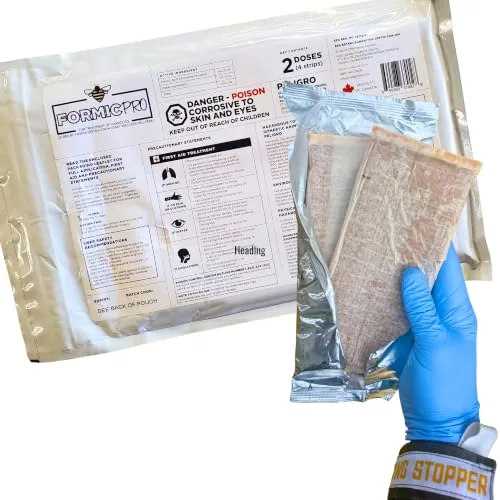
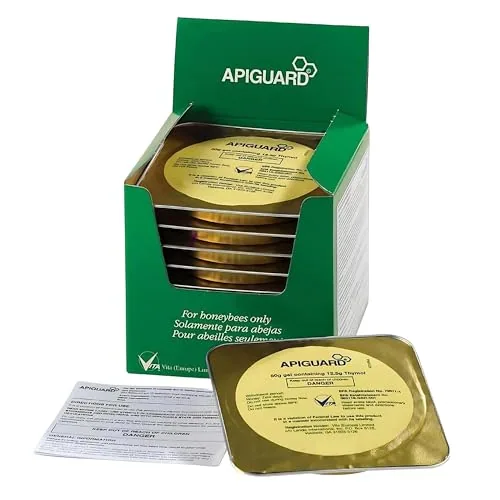
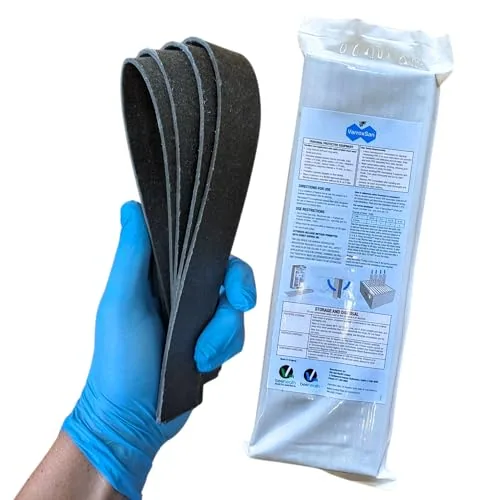
Formic Pro (formic acid, EPA Reg. No. 75710-3) allows supers on, and its label calls for daytime highs of 50 to 85°F on the day of application (some listings print 84°F). Apiguard (thymol gel) is temperature-dependent and, like Apivar, a no-supers product in HBHC's tables. VarroxSan (oxalic acid strips, EPA Reg. No. 94413-3) lists spring, summer and fall use, and its label permits the extended-release method with honey supers on. Check each label and the EPA list of registered varroa products.
Best for One backyard colony
Best for Thymol-based varroa treatment
Best for Long-release oxalic acid strips