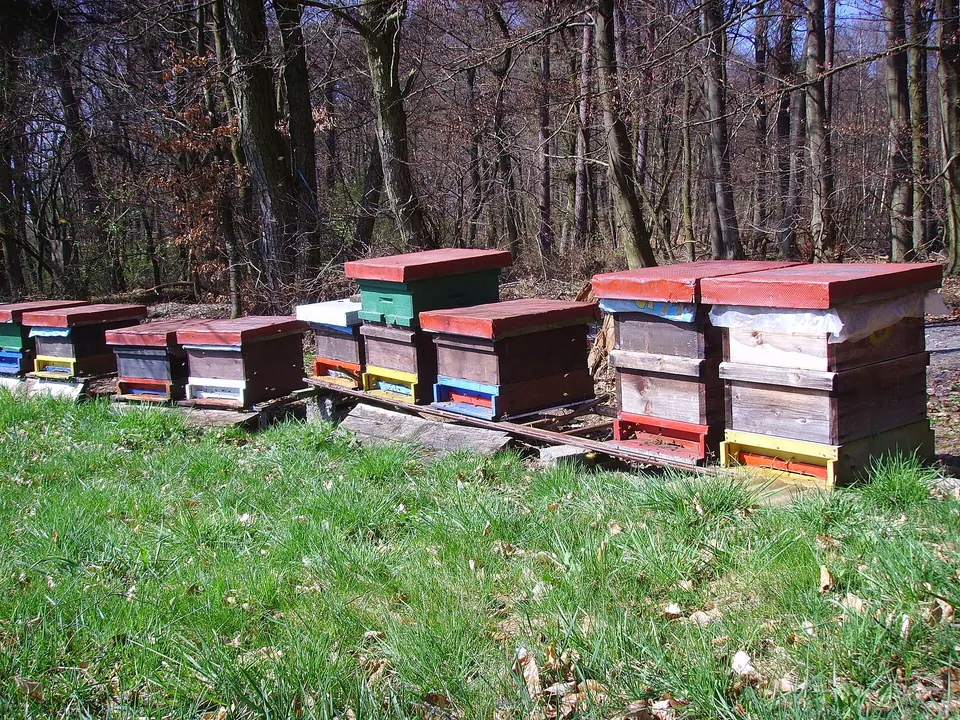
- Purpose-built hive monitoring systems such as BroodMinder hardware are sold through their makers and bee-supply dealers, not in our catalogue. We found none we could list.
- General wireless temperature and humidity sensors can sit under the hive lid and show trends, especially winter condensation and cluster activity. They are not designed for hives.
- A hanging scale lets you weigh each side of a hive and track stores over time. Treat the numbers as estimates and compare like with like.
- The most important hive monitoring tool is still a mite tester and a monthly count.
Hive monitoring means knowing what is happening in a colony without opening it every few days: is it heavy enough for winter, is it damp inside, is the cluster still warm, are mites climbing? Dedicated systems with in-hive scales and sensors exist, but they are sold by their makers and bee-supply dealers. None was available for our catalogue, so this page does not pretend otherwise.
What you can do is borrow from other hobbies. Weather-station sensors, kitchen-to-crawlspace hygrometers and hanging crane scales are cheap, widely sold and good enough to show trends. This guide compares the general-purpose sensors and scales in the Hive & Frame catalogue and the mite testers that matter more than either, and explains how beekeepers use them and where the workarounds fall short.
Our picks
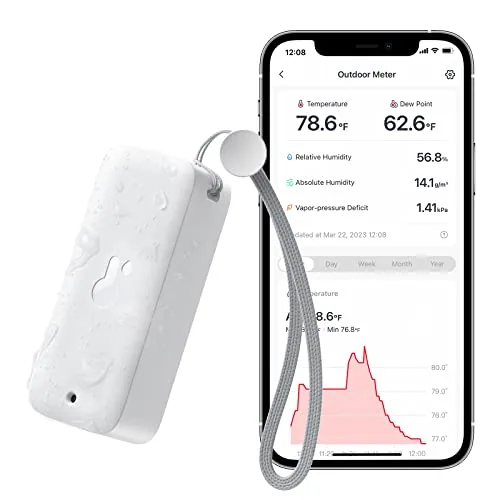
SwitchBot IP65 Indoor/Outdoor Thermo-Hygrometer
- Measures
- Temperature, humidity, dew point
- Range
- Up to 394 ft Bluetooth
- Connectivity
- Bluetooth (app)
SwitchBot's IP65 thermo-hygrometer is small, weather-rated and logs temperature, humidity and dew point to an app over Bluetooth, with data export. The maker lists ±0.36°F and ±1.8% RH accuracy and up to 394 ft range in the open. It is not a beekeeping product; it is just small enough to sit above the inner cover.
Best for: One or two hives near the house, tracked from your phone
Skip if: Your hives are out of Bluetooth range; you will need a hub or a different sensor
- IP65 dust- and water-resistant
- Data export for trends
- Accuracy figures listed
- Dew point shown, useful for condensation
- Not made for hives; bees may propolize it
- Bluetooth range drops through walls and boxes
- Remote access needs a separate hub
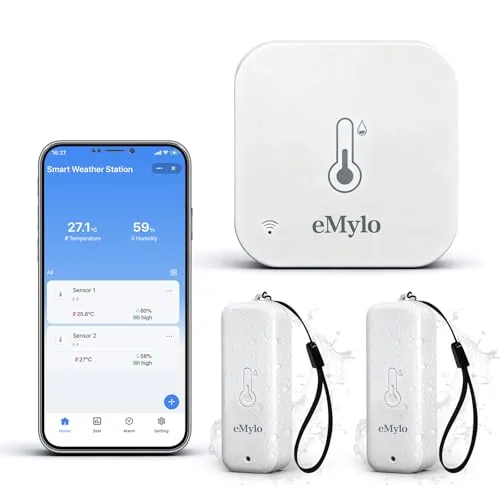
eMylo WiFi Hygrometer with 2 IP65 Remote Sensors
- Measures
- Temperature, humidity
- Range
- Up to 492 ft
- Connectivity
- Wi-Fi hub with app alerts
eMylo's kit has a Wi-Fi base station and two IP65 remote temperature and humidity sensors, expandable to nine, with app alerts. Remote sensors transmit up to 492 ft in open areas per the maker, and the base must sit within about 33 ft of your router on 2.4 GHz Wi-Fi.
Best for: Watching two or more hives from anywhere, with alerts
Skip if: You do not want another app or Wi-Fi device
- Two IP65 sensors included, expandable to nine
- Wi-Fi app with alerts
- Long listed range
- Not made for hives
- 2.4 GHz Wi-Fi only
- Range claims are for open areas
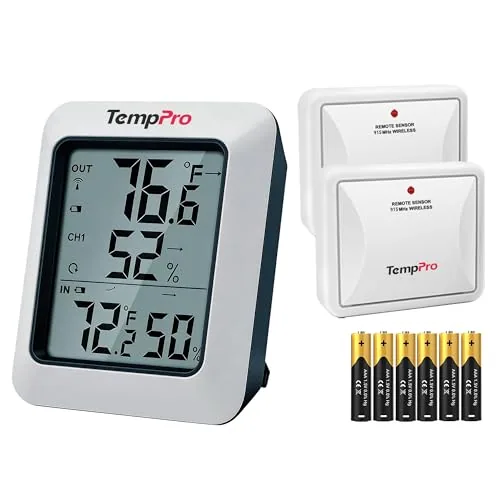
TempPro TempAir Wireless Thermometer, 2 Sensors
- Measures
- Temperature, humidity
- Range
- Up to 500 ft
- Connectivity
- RF to LCD base, no app
TempPro's TempAir has two cold-resistant remote sensors and an LCD base that records max and min temperature and humidity, with no hub or app. The listed range is up to 500 ft, and the sensors read -4 to 158°F.
Best for: Beekeepers who want a kitchen-counter display, not a phone app
Skip if: You want history beyond max and min, or remote alerts
- No app or Wi-Fi needed
- Max and min records
- Two sensors
- Batteries included per listing
- No data export
- Not made for hives
- Sensor not listed as IP65
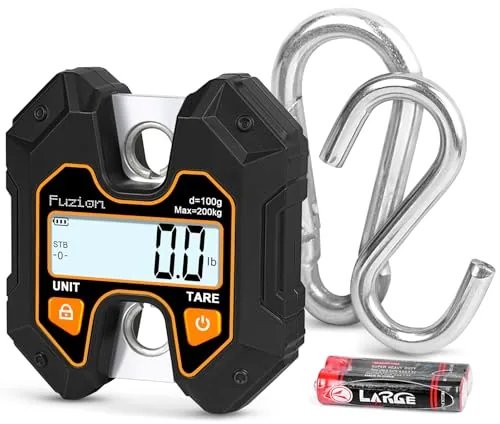
Fuzion 440 lb Digital Hanging Crane Scale
- Measures
- Weight
- Range
- Up to 440 lb, 0.2 lb resolution
- Features
- Hold and tare
Fuzion's digital crane scale weighs up to 440 lb with 0.2 lb resolution, a hold function and tare. Hold matters: you lift, the reading freezes, and you read it after setting the hive back down. It is a general-purpose scale, not a hive scale.
Best for: Tracking fall and late-winter stores by lifting each side of the hive
Skip if: You want continuous weight data; that needs a dedicated hive scale
- 440 lb capacity
- 0.2 lb resolution
- Hold and tare
- Backlit display
- Manual readings only
- Side-lift weights are estimates
- Needs batteries
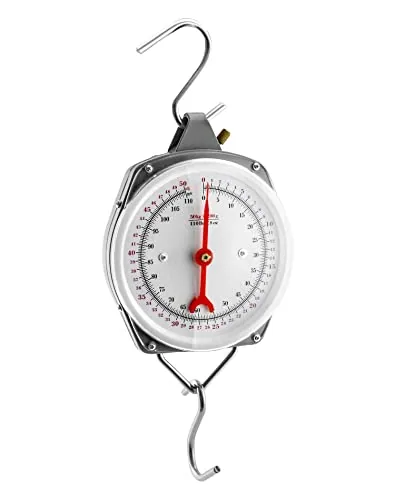
QWORK 110 lb Mechanical Hanging Scale
- Measures
- Weight
- Range
- 10–110 lb, ±2%
- Display
- Dial, lb and kg
QWORK's mechanical hanging scale reads 10 to 110 lb with ±2% tolerance on a lb and kg dial, in a metal body. No batteries to die in the cold. Check that one side of your heaviest hive stays under 110 lb.
Best for: Single-deep or nuc hives, and cold-weather checks
Skip if: Your hives are tall and heavy; one side may exceed 110 lb
- No batteries
- ±2% tolerance listed
- lb and kg dial
- 110 lb maximum
- Dial is harder to read than a held digital value
- Not made for hives
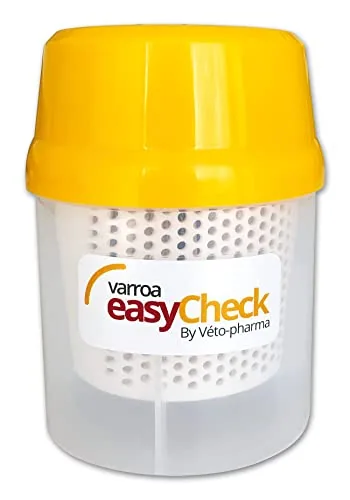
Foxhound Varroa Easy Check Mite Tester
- Type
- Mite tester
- Methods
- Alcohol wash, soapy water, sugar shake
The Varroa Easy Check is a Veto-Pharma-designed test jar with a measuring basket marked for your bee sample. It works with an alcohol wash, soapy water or powdered sugar. Monthly mite counts are the single most useful piece of hive monitoring you can do.
Best for: Every beekeeper, from the first spring
Skip if: You already own a mite tester
- Three test methods
- Measuring basket for the sample
- Reusable
- Alcohol and soapy-water washes kill the sample
- Measure the sample carefully for a 300-bee count
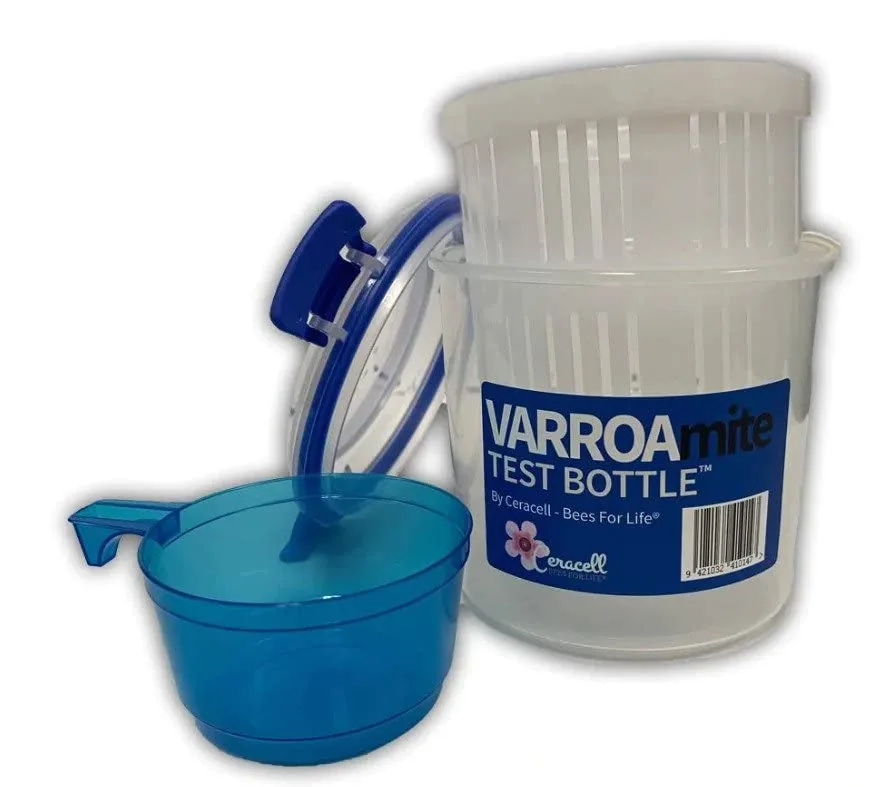
VarroCheck Leak-Proof Varroa Mite Tester
- Type
- Mite tester
- Methods
- Sugar shake or alcohol wash
VarroCheck is a reusable test jar with locking clips that keep it sealed while you shake, for sugar shake or alcohol wash counts. Clear walls make mites easy to see.
Best for: Beekeepers who found other jars leaked
Skip if: You want a built-in measuring basket
- Locking clips
- Reusable
- Two methods
- Sample measuring is up to you
- Two methods, not three
What hive monitoring can tell you
Signals, tools and limits
| Question | Budget tool | What it shows | Limits |
|---|---|---|---|
| Enough food for winter? | Hanging scale | Estimated weight trend | ~ Estimate; compare with your own past readings |
| Damp inside the hive? | Humidity sensor under the lid | Humidity and dew point above the inner cover | ~ Not the cluster itself |
| Is the cluster alive in winter? | Temperature sensor near the cluster | Warmer readings than outside air | ~ Placement changes readings |
| Mites climbing? | Mite tester | Mites per 100 bees | ✓ The only reliable way |
| Swarming or nectar flow? | Dedicated hive scale | Sudden weight drops or gains | ✗ Not possible with manual lifts |
| Queen status, brood? | Inspection | Eggs, larvae, pattern | ✗ No sensor replaces this |
Source: Hive & Frame summary
In short, budget hive monitoring is good for trends you check every week or two. It cannot catch an afternoon swarm or replace opening the hive to look for eggs.
Hive monitoring sensors and scales compared
Specs as listed. None of these products is designed or marketed for beehives, so the makers do not cover hive use.
| Product | Measures | Range | Connectivity | Display |
|---|---|---|---|---|
| SwitchBot IP65 Indoor/Outdoor Thermo-Hygrometer | Temperature, humidity, dew point | Up to 394 ft Bluetooth | Bluetooth (app) | — |
| eMylo WiFi Hygrometer with 2 IP65 Remote Sensors | Temperature, humidity | Up to 492 ft | Wi-Fi hub with app alerts | — |
| TempPro TempAir Wireless Thermometer, 2 Sensors | Temperature, humidity | Up to 500 ft | RF to LCD base, no app | — |
| Fuzion 440 lb Digital Hanging Crane Scale | Weight | Up to 440 lb, 0.2 lb resolution | — | — |
| QWORK 110 lb Mechanical Hanging Scale | Weight | 10–110 lb, ±2% | — | Dial, lb and kg |
Specs as listed by the maker or seller; check the listing before you buy.
Listed wireless range
Feet in open areas, per the maker
Real range is shorter. Wooden boxes, bees, propolis, walls and trees all absorb signal, so test the connection at the hive before you rely on it.
How to weigh a hive with a hanging scale
A common approach is to lift one side of the hive just off its stand with the scale, read the weight, do the same on the other side and add the two readings. This gives an estimate, not a lab measurement, but it is consistent if you repeat it the same way.
- Make a lifting point
Use a strap or hook under the box's handhold or the bottom board edge. Keep the hook from crushing bees at the entrance.
- Lift slowly and just clear
Lift until the side barely leaves the stand. Use the hold function on a digital scale so you can set the hive down before reading.
- Repeat on the other side and add
Lift the opposite side the same way and add the two readings for an estimated total.
- Weigh empty equipment once
Weigh an empty box, frames, lid and bottom board when you have them apart, so you can estimate how much of the total is stores and bees.
- Record and compare
Log each reading with the date in the hive inspection log. The trend from fall into late winter matters more than any single number.
For how much a hive should weigh going into winter in your area, ask your local beekeeping association or extension office; targets vary widely by region. Our seasonal checklist flags when to check stores, and if a hive is light, see our beehive feeder picks.
Where to put a temperature and humidity sensor
- Above the inner cover, under the outer lid: the easiest spot. You will see humidity and dew point near the top of the hive, where winter condensation forms and drips onto the cluster.
- Above the cluster, on the top bars: closer to the bees and more useful for knowing whether the cluster is active, but bees will propolize anything they can reach. A small mesh pouch helps.
- Not in the brood nest: bees will glue or wax it in, and you will disturb them retrieving it.
- A second sensor outside, in shade: lets you compare hive readings with outside air.
Readings depend heavily on placement, so keep the sensor in the same spot for the whole season and look at changes rather than absolute values.
Mite counts: the hive monitoring that matters most
No sensor tells you how many varroa mites are in a colony. A 300-bee sample does. Count at least monthly from spring build-up, compare it with the Honey Bee Health Coalition's 9th-edition thresholds, and act when the threshold is reached.
Varroa thresholds by colony phase (mites per 100 adult bees), HBHC 9th edition
| Colony phase | Immediate control not needed | Promptly control |
|---|---|---|
| Dormant Little or no brood; winter cluster (sample just before clustering) | ✓ below 1% | ✗ 1% or more |
| Population increase Late winter to spring build-up, brood expanding | ✓ below 1% | ✗ 1% or more |
| Peak population Summer, colony at full size, supers often on | ✓ below 2% | ✗ 2% or more |
| Population decrease Late summer to fall, brood rearing slowing | ✓ below 2% | ✗ 2% or more |
Source: Honey Bee Health Coalition, Tools for Varroa Management, 9th edition (June 11, 2026), Table 1. Thresholds can vary by region; ask your state apiarist.
Varroa mite threshold calculatorEnter mites and bees counted to see the HBHC 9th-edition verdict for your colony's phase.If counts are high, our varroa mite treatment guide covers EPA-registered options by season.
Step by step: how to do an alcohol wash and the varroa mite treatment guide.
Mistakes to avoid
- Expecting a crawlspace sensor to act like a hive monitor. It reports what is around it, nothing more.
- Reading too much into one weight. Side-lift numbers are estimates. Trends tell the story.
- Skipping inspections because the numbers look fine. Queen problems, disease and swarm cells only show when you open the hive.
- Leaving electronics in the brood nest. Bees will entomb them.
- Ignoring the mite tester. It is the cheapest and most important monitoring tool here.
Browse mite testers, mouse guards and feeders in bee health and feeding, and winter gear in winter prep.
Start with a Varroa Easy Check and monthly mite counts, the most valuable hive monitoring you can do. Add a Fuzion 440 lb digital hanging scale with hold to track winter stores, or the battery-free QWORK for lighter hives. For temperature and humidity under the lid, the SwitchBot IP65 sensor exports data, and the eMylo kit adds Wi-Fi alerts for several hives. If you want continuous hive weight or in-hive data, look at dedicated systems sold by their makers and bee-supply dealers.
We looked for beekeeping-specific hive scales and monitors and found none available for our catalogue, so this page compares general-purpose sensors and scales by listed range, accuracy, capacity and connectivity, plus mite testers. We did not install these in hives. Placement and weighing advice describes common beekeeper practice; no product here is designed for hives, and makers do not support that use.