- Best overall: BEEXTM double sieve, food-grade 304 stainless, 1875 + 650 micron, 9.8 in bowl, arms 9 to 16 in.
- Also consider: VIVO BEE-V101H, same 1875 + 650 micron meshes but 201 stainless.
- Finest straining: Luwint 400-micron nylon bags with a stainless ring, 2-pack.
- Under USDA grade standards, strained honey still contains pollen and fine particles; filtered honey has most of them removed. A kitchen double sieve gives you strained honey.
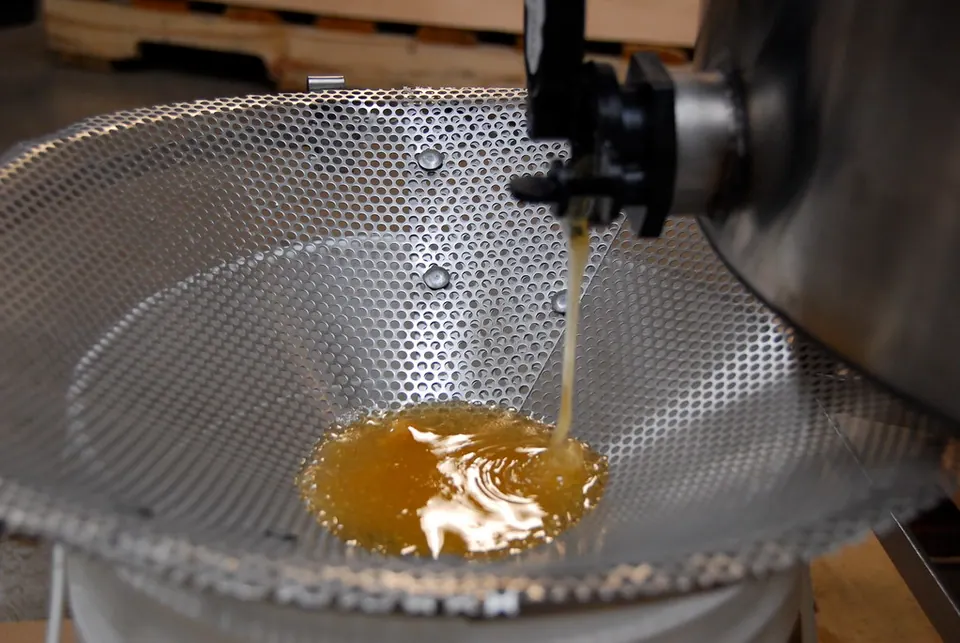
A honey strainer catches wax, bee parts and bits of comb as honey flows from the extractor into a bucket. The best honey strainer for most backyard beekeepers is a stainless double sieve that rests on a 5-gallon bucket: a coarse upper mesh catches the big pieces, and a finer lower mesh catches the rest. A fine nylon bag adds a third, finer stage if you want clearer honey.
We compared eight strainers, bags and kits from eight brands by mesh size in microns, stainless grade, bowl size and arm span, and what's included. We also explain how the USDA grade standards define strained vs filtered honey, so you can describe your honey accurately.
Our picks
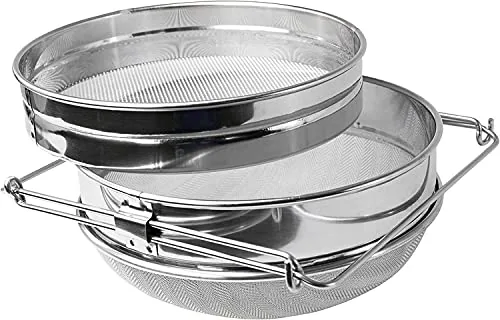
BEEXTM 304 Stainless Double Sieve Strainer, 5 Gal
- Material
- Food-grade 304 stainless steel
- Size
- 9.8 in bowl, arms 9-16 in
- Mesh
- 1875 + 650 micron
BEEXTM's double sieve is food-grade 304 stainless with a 1875-micron coarse mesh over a 650-micron fine mesh. The 9.8 in bowl is 4.3 in deep, and the arms extend from 9 to 16 in to sit on a 5-gallon bucket or a wider pail. 304 is the better stainless grade for long-term contact with acidic honey and repeated washing.
Best for: most backyard harvests
Skip if: you want the finest possible straining in one step
- 304 stainless
- 1875 + 650 micron double mesh
- 9.8 in bowl, arms 9 to 16 in
- 650 micron still passes fine wax
- Mesh needs warm-water cleaning
- Can clog with crystallized honey
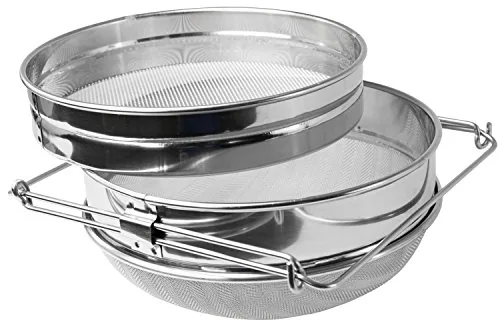
VIVO BEE-V101H Double Sieve Honey Strainer
- Material
- 201 stainless steel mesh
- Size
- 9 in bowl, arms to 15.5 in
- Mesh
- 1875 + 650 micron
VIVO's BEE-V101H has the same 1875 + 650 micron two-stage design in 201 stainless steel mesh, a 9 in bowl, 4 in deep, and extendable arms reaching 15.5 in. It is a widely used design from a familiar beekeeping brand; the trade-off is 201 rather than 304 stainless.
Best for: budget-minded beekeepers who want a proven design
Skip if: you want 304 stainless
- 1875 + 650 micron mesh
- Arms to 15.5 in
- Familiar beekeeping brand
- 201 stainless
- Slightly smaller bowl than BEEXTM
- Can clog when cold
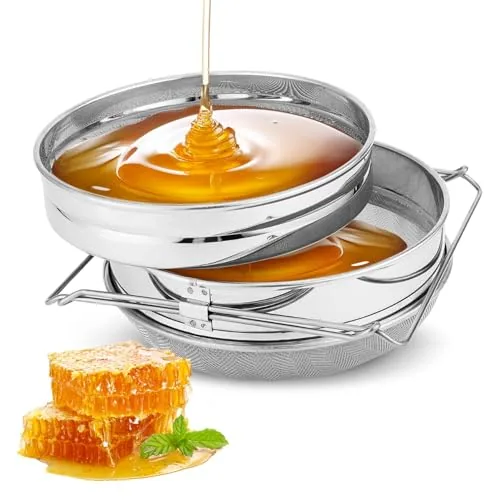
Flexzion 304 Stainless Double Sieve Strainer, 5 Gal
- Material
- 304 stainless steel
- Mesh
- Fine and coarse layers
- Fit
- 5-gallon bucket, extendable arms
Flexzion's double sieve is 304 stainless with fine and coarse layers and extendable arms for hands-free straining on a 5-gallon bucket. Mesh sizes in microns are not listed, so you can't compare fineness directly with BEEXTM or VIVO.
Best for: beekeepers who want 304 stainless from another brand
Skip if: you want mesh sizes stated
- 304 stainless
- Extendable arms
- Fine and coarse layers
- Micron sizes not listed
- Bowl size not listed
- Same clogging care as others
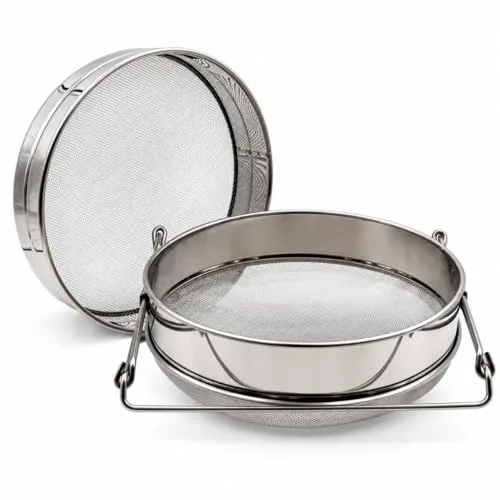
OZBEE Double-Layer Stainless Honey Strainer, 5 Gal
- Material
- Stainless steel
- Mesh
- Double layer fine mesh
- Fit
- 5-gallon bucket
OZBEE's strainer has a double layer of stainless fine mesh and fits a 5-gallon bucket. The listing gives no micron size or stainless grade, so think of it as a general-purpose two-stage strainer.
Best for: a basic reusable strainer
Skip if: you want listed mesh and steel grade
- Double layer stainless mesh
- Fits 5-gallon bucket
- Reusable
- Micron size not listed
- Grade not listed
- Dimensions not listed
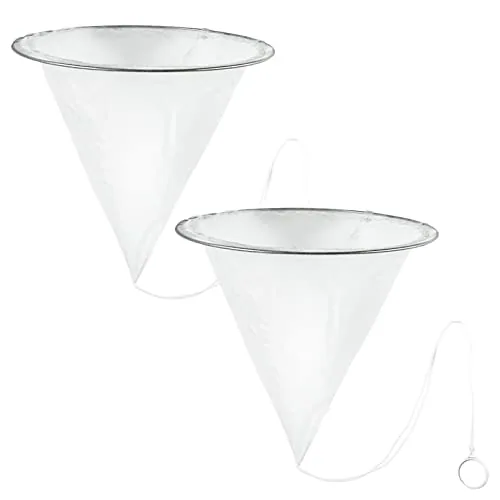
Luwint 400-Micron Honey Strainer Bags, 2 Pack
- Material
- Nylon with stainless ring
- Mesh
- 400 micron nylon
- Fit
- 1-5 gallon buckets
- Count
- 2
Luwint's conical bags are 400-micron nylon mesh with a reinforced stainless ring that sits on 1 to 5 gallon buckets, plus a drawstring at the bottom. Use one under a double sieve for a third, finer stage, or alone for small batches and crush-and-strain harvests.
Best for: clearer honey and crush-and-strain harvests
Skip if: you dislike washing fabric bags
- 400 micron, finer than double sieves
- Stainless ring support
- Pack of 2
- Slow with cool honey
- Fabric needs careful washing
- Can sag with heavy loads
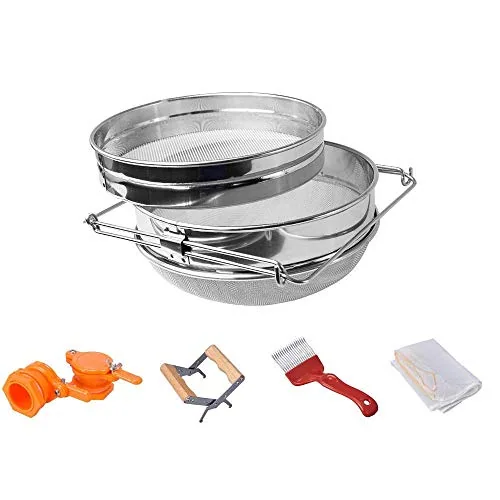
BeeCastle Double Sieve Honey Harvest Kit, 6 Piece
- Material
- Stainless steel, wood, nylon
BeeCastle's 6-piece kit includes a 9 in double sieve (4 in tall), a frame holder, two honey gates, an uncapping fork and an 18 x 22 in filter bag, in stainless steel, wood and nylon. It covers straining plus the small parts for a first harvest, including gates you can fit to a bucket.
Best for: first-time harvesters who need several small tools
Skip if: you already have gates and a fork
- Double sieve + filter bag
- 2 honey gates included
- Uncapping fork and frame holder
- Mesh sizes not listed
- Steel grade not listed
- Bucket not included
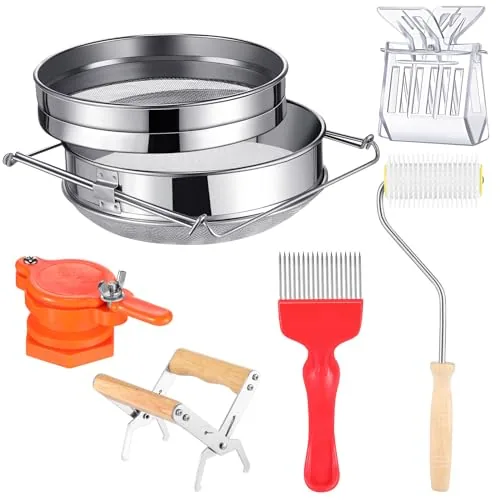
Tandefio 6-Piece Honey Harvest Kit
- Material
- Stainless steel, wood, nylon
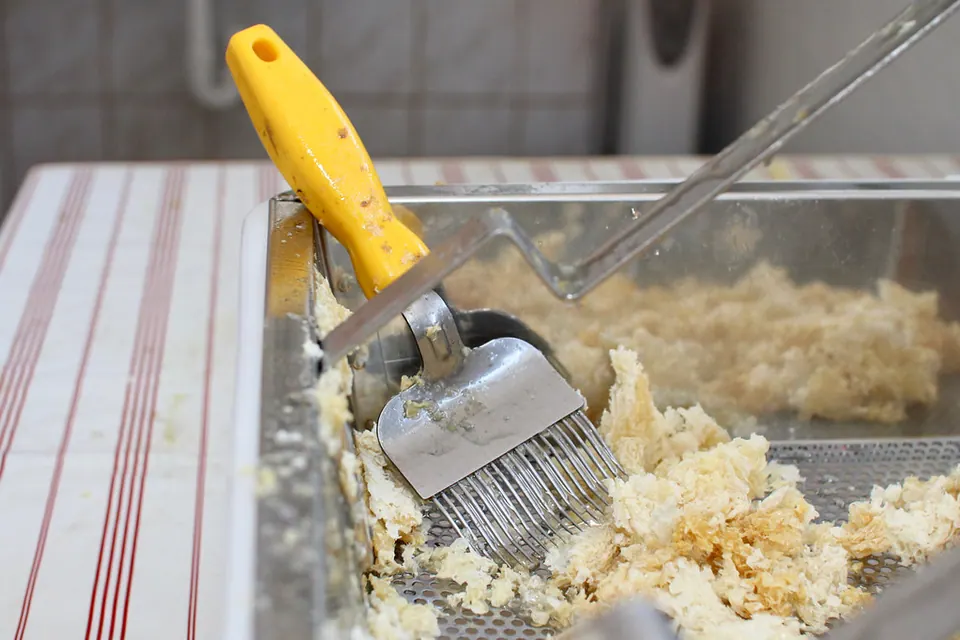
Tandefio's 6-piece kit includes a stainless double sieve strainer, a frame grip, an uncapping fork, an uncapping needle roller, a honey gate and a queen catcher. It is similar to the BeeCastle kit but swaps the filter bag for a roller and queen catcher.
Best for: beginners who want a roller for uncapping
Skip if: you need a fine filter bag
- Double sieve included
- Fork and roller included
- Honey gate included
- Mesh sizes not listed
- No filter bag
- Queen catcher is a filler item for harvest
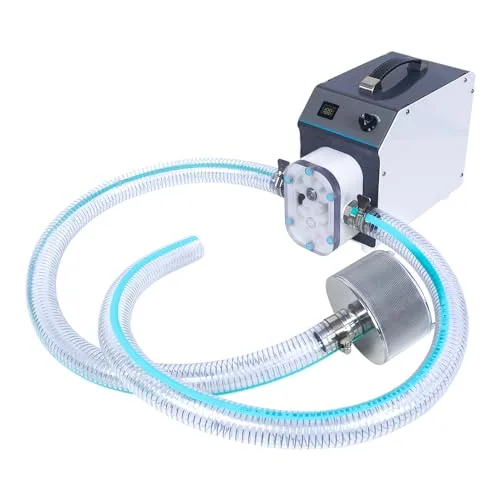
witbee Honey Filter Transfer Pump, 900 kg/h
- Flow
- 900 kg honey/h (adjustable)
- Filter
- 80 mesh
- Voltage
- DC24V / AC100-240V
- Viscosity
- Up to 42 Baume
witbee's honey transfer pump moves honey through an 80-mesh filter screen at up to 900 kg per hour (adjustable), handles viscosity up to 42 Baume and runs on DC24V or AC100-240V, per the listing. It is built for bee farms moving honey from extractor to storage, not for a backyard harvest.
Best for: sideline operations moving large volumes
Skip if: you harvest a few supers a year
- Up to 900 kg/h listed
- 80-mesh filter
- Adjustable speed
- Overkill for hobby use
- Needs ambient above 15°C per listing
- Pump to clean after each use
Honey strainer mesh sizes compared
Mesh size is the hole size; smaller numbers in microns catch finer particles but flow more slowly. Double sieves pair a coarse layer with a fine layer so the fine mesh doesn't clog immediately.
Listed mesh opening
Smaller is finer. Flexzion, OZBEE and the kits do not list microns.
Strainer specs as listed
| Strainer | Mesh | Material | Bowl / fit |
|---|---|---|---|
| BEEXTM double sieve | 1875 + 650 µm | 304 stainless | 9.8 in bowl, arms 9 to 16 in |
| VIVO BEE-V101H | 1875 + 650 µm | 201 stainless | 9 in bowl, arms to 15.5 in |
| Flexzion double sieve | Fine + coarse, µm not listed | 304 stainless | 5-gallon bucket |
| OZBEE double layer | Not listed | Stainless | 5-gallon bucket |
| Luwint bags (2) | 400 µm | Nylon, stainless ring | 1 to 5 gallon buckets |
| BeeCastle 6-piece kit | Not listed | Stainless, wood, nylon | 9 in sieve + 18 x 22 in bag |
| Tandefio 6-piece kit | Not listed | Stainless, wood, nylon | Double sieve |
| witbee pump | 80 mesh | Food-grade (listed) | Up to 900 kg/h |
Source: Hive & Frame catalogue (maker listings, November 2026)
Strained vs filtered honey: what the USDA standard says
The USDA United States Standards for Grades of Extracted Honey define two styles. Strained honey has had most particles, including comb and propolis, removed, but pollen grains, small air bubbles and very fine particles normally remain. Filtered honey has had all or most fine particles, pollen grains and air bubbles removed.
A kitchen double sieve or nylon bag produces strained honey. Commercial filtering typically relies on pressure filtration equipment, not a sieve. Under the same standard, clarity is scored only for filtered honey, not strained.
How to strain honey
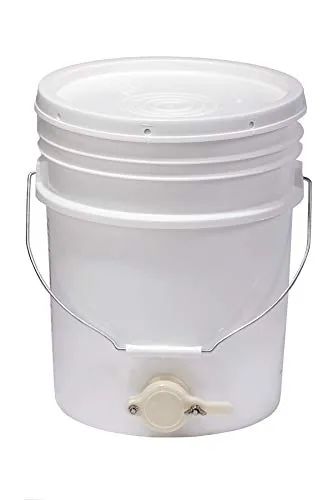
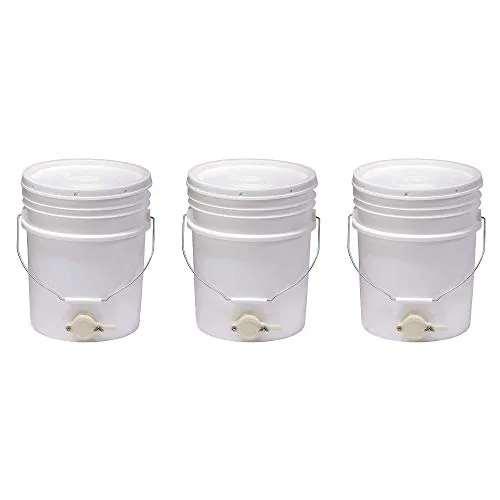
- Set the strainer on a gate bucket
Rest the double sieve on a food-grade bucket with a honey gate.
- Keep honey warm
Strain on a warm day or in a warm room. Cold honey flows slowly and clogs mesh.
- Coarse first, fine second
Let the coarse mesh catch wax chunks. Add a 400-micron bag under the sieve for clearer honey.
- Let it settle
After straining, leave the bucket covered for a day or two so air bubbles rise; then bottle from the gate. See best honey bottling buckets.
- Clean with warm water
Rinse mesh in warm water before honey sets. Save the wax for rendering.
Before bottling, check moisture with our honey moisture guide.
Mistakes to avoid
- Pouring too fast. Fine mesh overflows. Let it drain.
- Straining cold honey. It clogs. Warm the room, not the honey on a stove.
- Using non-food-grade buckets. Use buckets listed as food-grade HDPE.
- Calling strained honey "filtered." The USDA standard uses the terms differently.
Which honey strainer should you buy?
- Most beekeepers: BEEXTM 304 double sieve.
- Lowest spend from a familiar brand: VIVO BEE-V101H.
- Clearer honey or crush and strain: add Luwint 400-micron bags.
- First harvest, few tools: BeeCastle 6-piece kit (includes gates and a fork).
- Sideline volume: witbee pump filter.
Uncap first with the right tool (best uncapping knives) and see how to extract honey. Browse all gear in the honey harvest category or the honey sellers page.
The BEEXTM double sieve is our pick: 304 stainless, 1875 and 650 micron meshes, and arms that span 9 to 16 in. The VIVO BEE-V101H is the same idea in 201 stainless. Add a Luwint 400-micron bag if you want clearer strained honey, and remember that kitchen straining gives you "strained," not "filtered," honey under the USDA standard.
We compared strainer listings by mesh size in microns, stainless grade, bowl size, arm span, bucket fit and included parts. Missing specs are marked not listed. We did not strain honey with these products. Definitions of strained and filtered honey come from the USDA AMS grade standards for extracted honey; labeling guidance from the FDA.