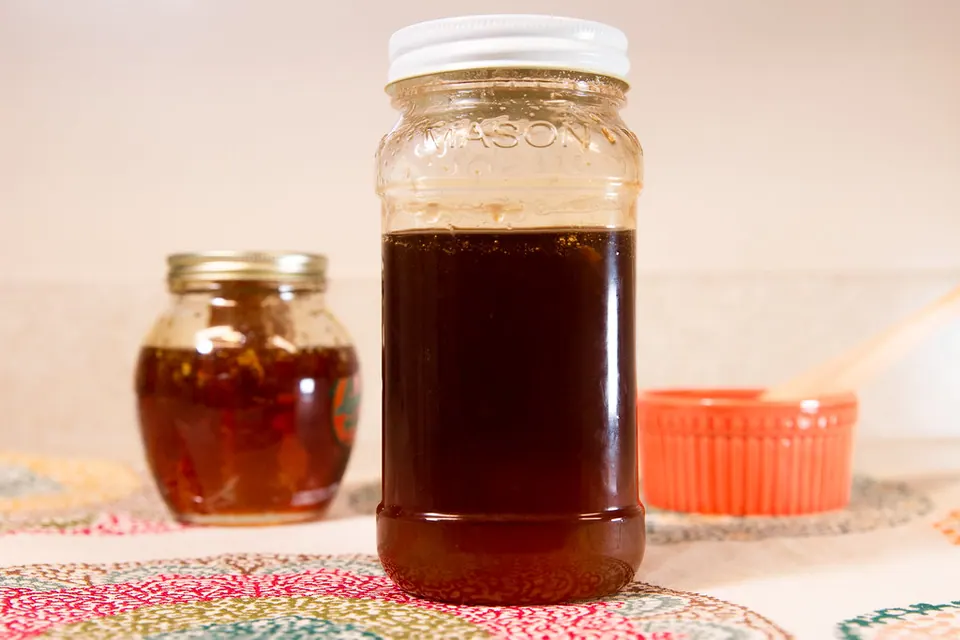
- Under FDA guidance, a jar that contains only honey must be named "honey". You may add a floral source, such as "Clover Honey", if it is truthful.
- Honey mixed with sugar, corn syrup or flavoring cannot be labeled as just honey; it needs a descriptive name and an ingredient list.
- Net weight, your name and place of business, and (unless exempt) nutrition facts are separate federal requirements.
- States add their own rules. Check your state department of agriculture before printing labels. This guide is general information, not legal advice.
Honey label requirements look simple until you print your first batch. The U.S. Food and Drug Administration published a guidance document, Proper Labeling of Honey and Honey Products, in 2018 that answers the most common questions in ten short Q&As. States then layer their own honey, cottage food and weights-and-measures rules on top.
This guide summarizes the FDA guidance in plain language, lists what every honey label should carry, shows a state example and points you to where your own state's rules live. It is not legal advice. When in doubt, ask your state department of agriculture or health department before you sell.
What does the FDA honey label guidance say?
FDA's guidance (docket FDA-2006-P-0207) is non-binding: it describes the agency's current thinking and the laws behind it, mainly sections 402 and 403 of the Federal Food, Drug, and Cosmetic Act. Its key points:
FDA honey guidance in brief
| Question | FDA's answer |
|---|---|
| What is honey? | "A thick, sweet, syrupy substance that bees make as food from the nectar of plants or secretions of living parts of plants and store in honeycombs." |
| What should jars of only honey be called? | "Honey". You may add the source, such as "Clover Honey". No ingredient statement is needed for a single-ingredient food. |
| Is the floral source required? | No. If you do, you need information supporting that the plant named is the chief floral source, and the claim must be truthful. |
| Honey plus sugar or corn syrup? | ✗ Not "honey". Use a descriptive name such as "Blend of honey and corn syrup" (larger ingredient first) and list each ingredient. |
| Honey plus a flavor? | Name it for the flavor, such as "raspberry-flavored honey", and list "honey" and "natural flavor" in the ingredients. |
| Imported honey? | FDA keeps an import alert for honey adulterated with cane or corn sugars. |
Source: FDA, Proper Labeling of Honey and Honey Products: Guidance for Industry (2018)
The guidance also reminds sellers that its answer on naming is only part of the label. Net weight, nutrition labeling and the other parts of 21 CFR Part 101 still apply; FDA points to its Food Labeling Guide for those.
What must a honey label include?
Use this as a checklist for each jar. The federal items apply broadly; the state items are examples of what to look for in your own state.
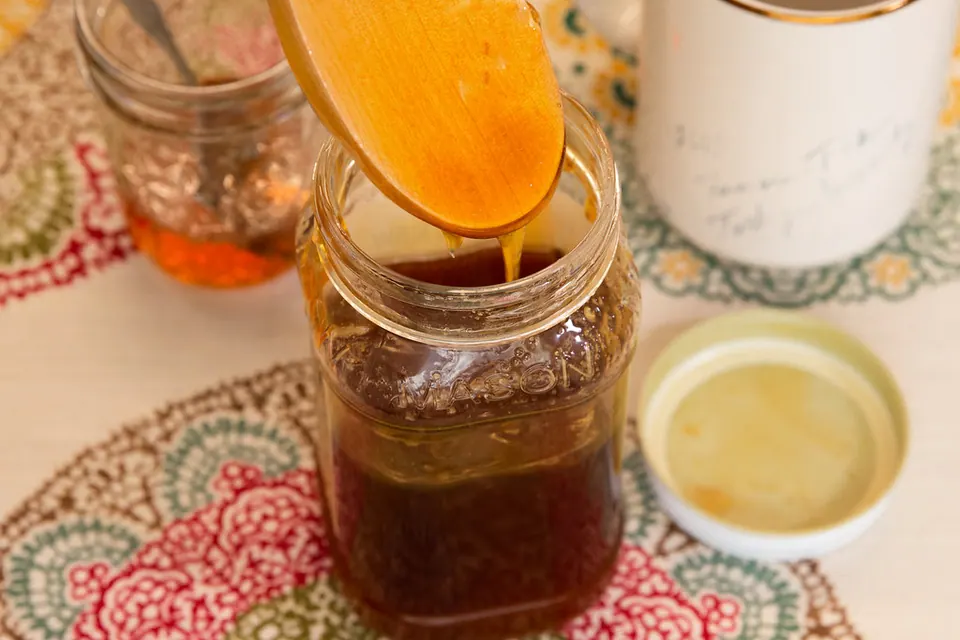
Honey label checklist
| Label element | What to print | Where the rule comes from |
|---|---|---|
| Statement of identity | "Honey" (optionally "Wildflower Honey", "Clover Honey" if truthful) | FDA honey guidance, Q&A 2–3 |
| Net quantity | Weight of honey in both US and metric units, e.g. "Net wt. 16 oz (454 g)" | Federal labeling rules; Texas example lists both units |
| Name and place of business | Your name or business name and address | Federal labeling rules; state rules |
| Ingredient list | Not needed for pure honey; required for blends and flavored honey | FDA honey guidance, Q&A 2, 5, 6 |
| Nutrition Facts | Required unless an exemption applies | FDA small business exemptions |
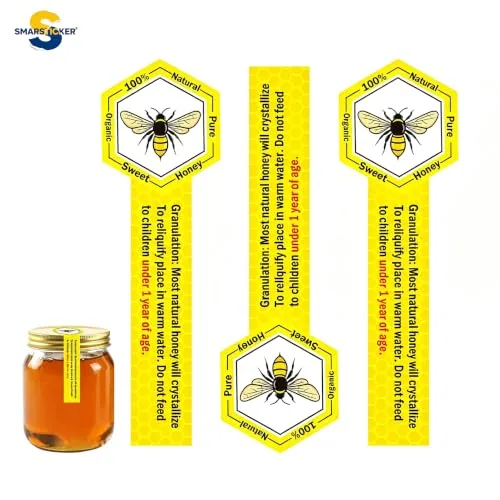
| Infant statement | "Do not feed honey to infants under 1 year of age." Voluntary but recommended in the Texas fact sheet | Texas A&M AgriLife (2024) |
| Cottage food statement | If you sell under a cottage food path, many states require a set disclaimer | State cottage food law (Texas wording below) |
Pure, raw, local and graded: which words are safe?
- "Honey" and "pure honey": only for a product that is entirely honey. FDA treats honey with added sweetener sold as honey as adulterated and misbranded.
- Floral source: "Orange Blossom", "Clover" and "Wildflower" are acceptable to FDA when truthful. Base it on what your bees were working, not on what sells.
- "Raw": FDA's honey guidance does not define it. Some states do, or tie it to processing limits; the Texas fact sheet, for example, allows warming below 50°C (122°F) for beekeeper honey producers and treats heating above that as pasteurizing.
- "Local": not defined federally. Be specific instead: "from hives in Travis County" is clearer and harder to dispute.
- "U.S. Grade A": the USDA standard says the federal inspection service is the only activity authorized to approve U.S. grade designations. Do not print a U.S. grade unless the honey has been officially graded, and check whether your state has its own grading rules.
If you want to know your honey would meet the Grade A moisture line anyway, test it: see honey moisture and refractometers.
What do state honey label laws add?
States can set their own honey definitions, labeling laws, cottage food rules and inspection requirements. Texas is a useful example because its rules are written up clearly by Texas A&M AgriLife Extension:
- Beekeeper honey producer labels must show the commodity name (honey, raw honey, pure honey, creamed honey), the name and location of the business or apiary, and the quantity in metric and standard units, and must conform to the Fair Packaging and Labeling Act.
- Cottage food labels must also list all ingredients and allergens, give the operator's name and physical address, and carry the statement: "This food is made in a home kitchen and is not inspected by the Texas Department of State Health Services or local health department."
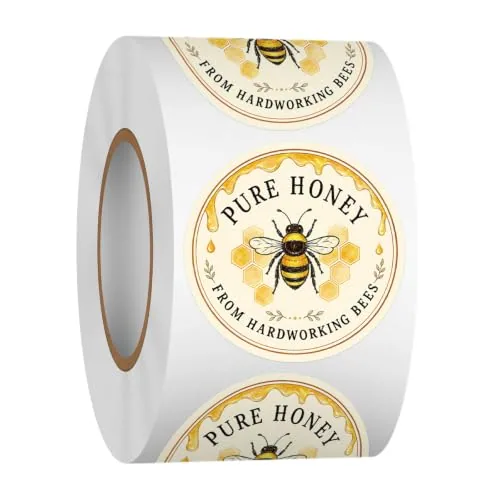
- For cottage food honey, other words cannot be larger or more prominent than "honey", and a bee, hive or comb image may only be used on pure honey.
Your state may be stricter, looser or simply different. Start with your state department of agriculture (find it in our beekeeping laws by state table), then your state health department and your county or city for local permits.
How to make a compliant honey label step by step
- Confirm your selling path
Beekeeper exemption, cottage food or licensed manufacturer. The path decides which statements your label needs.
- Write the statement of identity
"Honey", plus a floral source only if you can support it. For blends or flavored honey, use a descriptive name and an ingredient list.
- Weigh, then print the net weight
Fill by weight, then print the honey weight in ounces and grams. Use the honey net weight, not the jar's fluid capacity.
- Add your name and address
Use your business or apiary name and an address customers can reach.
- Decide on nutrition facts
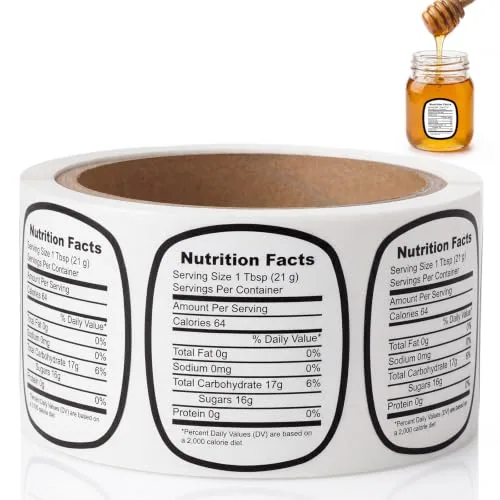
Check whether an FDA exemption applies to you. If not, include a Nutrition Facts panel; generic pre-printed panels must match your product and serving size.
- Add the extras your state requires
Cottage food disclaimers, allergen statements or registration numbers, plus the voluntary infant statement.
- Print on stock that survives honey
Honey jars get sticky. Waterproof or coated labels and a tamper seal keep jars looking clean.
Mistakes to avoid on a honey label
- Calling a honey-and-syrup blend or flavored honey "pure honey".
- Naming a floral source you cannot support.
- Printing "Grade A" as if it were an official U.S. grade.
- Giving fluid ounces or the jar's capacity instead of honey net weight.
- Assuming a nutrition exemption applies without reading the conditions.
- Copying another state's label rules from a blog without checking your own.
Who needs which level of labeling?
- Gifts to friends and family: not a sale, but a simple label with "honey", the date and the infant statement is still good practice.
- Farmers market and roadside sales: full label per your state path; see how to sell honey at farmers markets.
- Stores, cafes and online: often a licensed-manufacturer path, nutrition labeling unless exempt, and sometimes FDA food facility registration. Talk to your state agency first.
Shop labels and jars in bottling and selling, compare containers in best honey jars, or start from the selling honey hub.
For the jars and tools behind a label, see the best honey bottling buckets and the best honey refractometers.
Keep the label honest and simple: "honey" with a supportable floral source, the net weight in both units, your name and address, and whatever your state adds. Read FDA's ten Q&As once, then check your state's rules before every new product, especially blends, flavored honey and cottage food sales.
Federal points summarize FDA's 2018 honey labeling guidance and FDA's small business nutrition labeling exemption page; the state example is Texas A&M AgriLife's 2024 fact sheet; grading language is from the USDA AMS standard. Label products are listed with maker specs only. General information, not legal advice.
Questions
What are the honey label requirements in the US?
Can I call my honey raw?
Do I have to list the floral source on a honey label?
Does honey need a nutrition facts label?
How do I label honey mixed with cinnamon or another flavor?
Is the "do not feed honey to infants" statement required?
Sources
- FDA: Proper Labeling of Honey and Honey Products, Guidance for Industry (2018), web page
- FDA: Proper Labeling of Honey and Honey Products (PDF)
- FDA: Small Business Nutrition Labeling Exemption
- FDA: Guidance for Industry: Food Labeling Guide
- Texas A&M AgriLife Extension: Selling Honey in Texas (NUTR-PU-146, November 2024)
- USDA AMS: U.S. Standards for Grades of Extracted Honey
- Apiary Inspectors of America: US state contacts