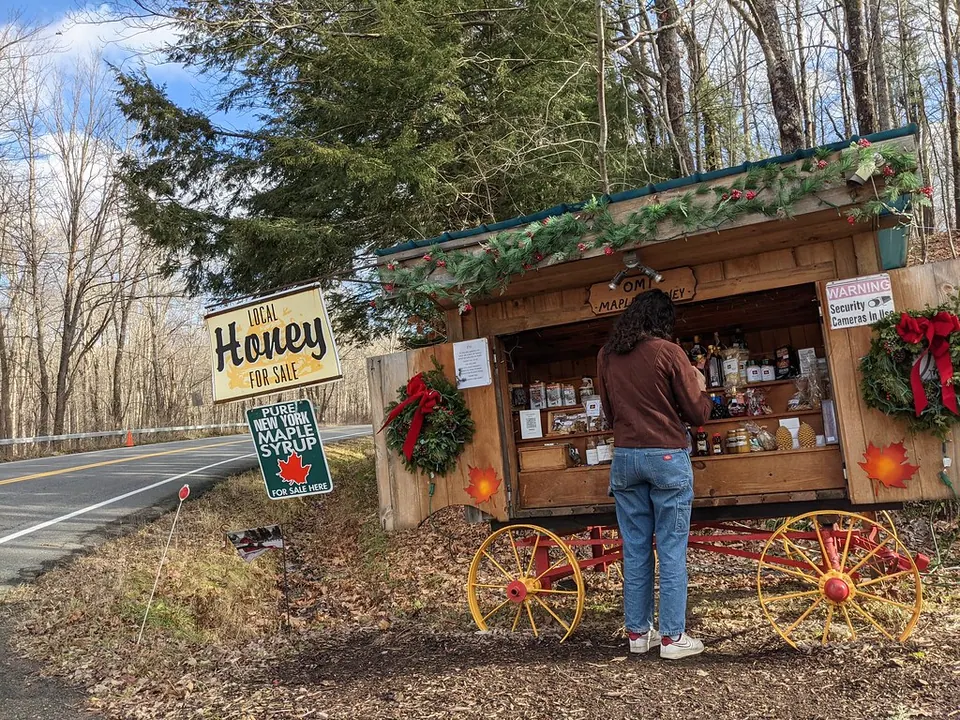
- Rules for selling honey at a farmers market vary by state. Check your state department of agriculture and the market manager before you buy jars.
- Every jar needs a correct label: the name "honey", your name and address and the net weight. Our labeling guide covers the details.
- Offer two or three sizes, keep the honey dry (18.6% moisture or less for USDA Grade A) and explain crystallization at the booth.
- Price from your own costs with the honey yield calculator; we never suggest a price.
Selling honey at a farmers market is how most backyard beekeepers turn a good year into a little income and a lot of conversations. The honey is the easy part. The parts that trip people up are the paperwork, the label, the jar choice and a booth that makes people stop.
This guide walks you through each step in order. State rules differ, so we use published sources, such as Texas A&M's fact sheet and FDA's labeling guidance, as worked examples and point you to your own state's contacts. This is general information, not legal advice.
Do you need a license to sell honey at a farmers market?
It depends on your state, and sometimes on your county and the market itself. Many states have a path for beekeepers who sell their own raw honey, a separate cottage food path for home kitchens and a full food-manufacturer license for everyone else. The thresholds and what each path allows are different everywhere.
Worked example: seller types in Texas
| Seller type | What it covers | Key limits in the Texas fact sheet |
|---|---|---|
| Beekeeper honey producer | Pure, raw honey from your own Texas hives | No added flavors; no heating above 50°C (122°F); may sell in person, by mail or online |
| Cottage food operator | Honey (including flavored) packed in a home kitchen | $50,000 or less gross income from all cottage foods; direct to consumers in Texas only; no shipping; food handler certificate |
| Licensed food manufacturer | Honey bottled in an inspected facility | State license, renewable every 2 years; may sell wholesale |
Source: Texas A&M AgriLife, Selling Honey in Texas (NUTR-PU-146, 2024)
Your state will look different. Use our beekeeping laws by state table to find your state's apiary program, then ask the state department of agriculture (or health department) which path fits honey from your own hives. Ask the market manager too: many markets have their own rules on producer-only sales, insurance and sampling.
What does a honey label need?
Labels are where most first-time sellers get it wrong. FDA's honey guidance says a jar that contains only honey must be named "honey" and may include a floral source such as "Clover Honey" if the claim is truthful. Honey blended with any other sweetener cannot be called just "honey". Other federal rules apply too, including net weight and, unless an exemption applies, nutrition labeling.
The Texas fact sheet lists the label basics for beekeeper honey producers: the name of the product, your name and location, and the quantity in both metric and standard units. It also recommends the voluntary statement "Do not feed honey to infants under 1 year of age." Our honey labeling rules guide covers each line in detail.
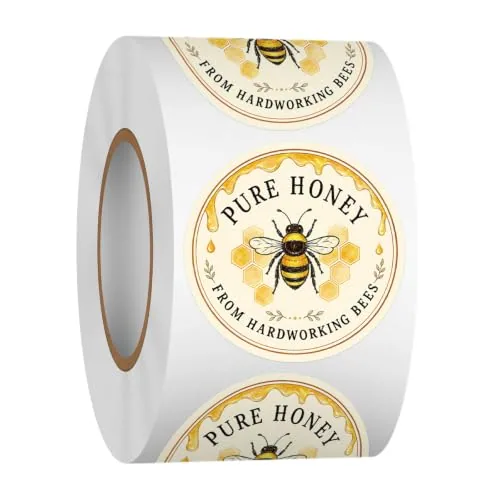
Louise Maelys 1.5" Pure Honey Jar Labels, 500
- Size
- 1.5 in round
- Count
- 500
- Material
- Waterproof sticker
Best for Quick labels for market jars
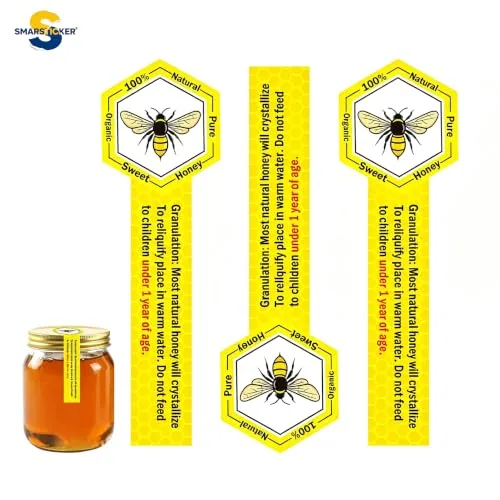
SMARSTICKER Pure Honey Tamper-Evident Seals 1.5x4"
- Size
- 1.5 x 4 in
- Count
- 300 (title) / 500 (listing)
- Material
- Paper
Best for Sealing jars for retail
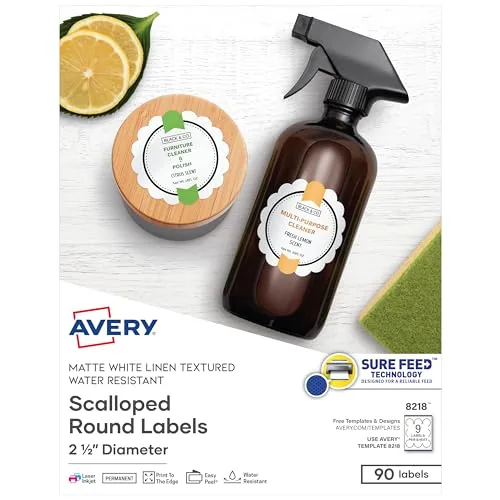
Avery 2.5" Round Scallop Labels, Textured White, 90
- Size
- 2.5 in round
- Count
- 90 labels
- Material
- Textured white paper
Best for Printing your own honey jar labels
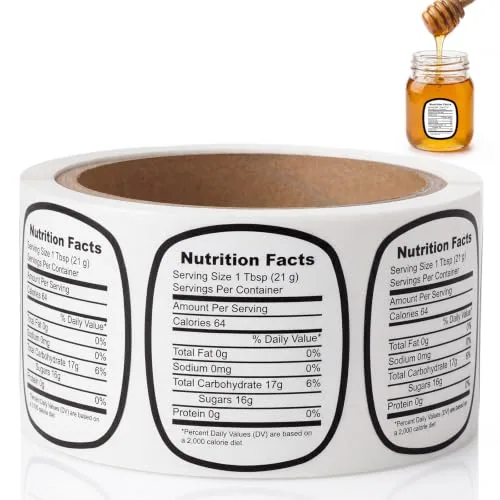
Trandraft Honey Nutrition Facts Labels, 250
- Size
- 2 x 2-3/8 in
- Count
- 250
- Material
- Self-adhesive paper
Best for Adding a nutrition panel
How much honey will you have to sell?
Plan your jar order from a realistic harvest, not a hopeful one. Two published figures set the scale, and the chart shows how many jars an average colony's crop fills at common net weights.
Jars filled by 48 lb of honey
48 lb (USDA 2025 average per colony) divided by the jar's net honey weight
A first-year colony often makes little or no surplus, so do not order jars for a full crop until the supers are on and filling. Before you bottle, check every bucket with a refractometer; see honey moisture and refractometers.
Honey yield and profit calculatorEnter your hives, pounds per hive and jar size to see how many jars you need, then add your own prices and costs.Which jars sell best at a market table?
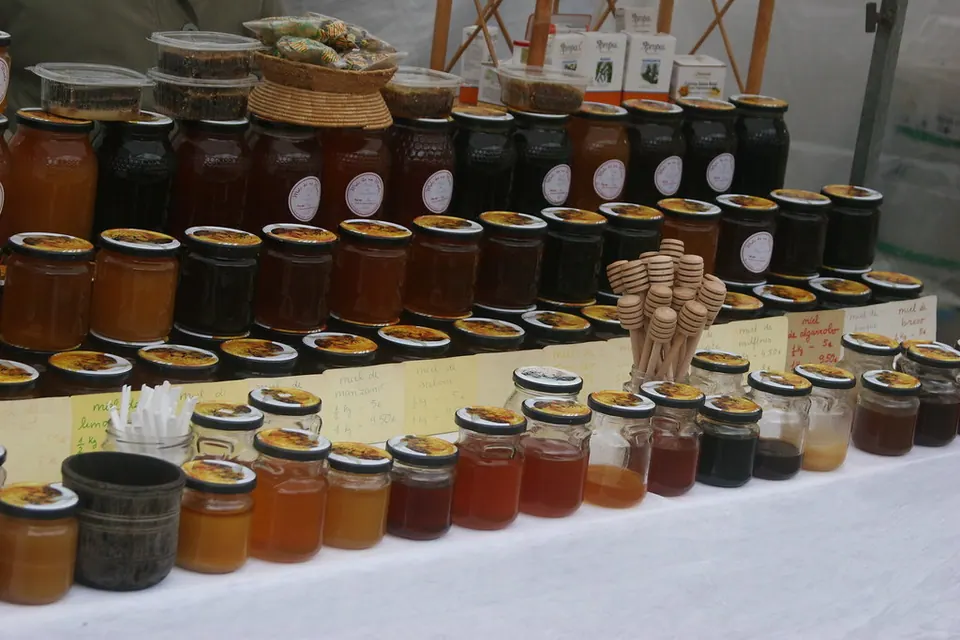
There is no single answer, but most tables do well with a small range: one everyday size, one squeeze bottle and one small gift size. Glass looks premium and is easy to reuse; plastic squeeze bears are light, safe around kids and easy to carry home.
| Product | Size | Count | Material | Lid |
|---|---|---|---|---|
| Little Giant 16 oz Glass Skep Honey Jars, 12 Pack | 16 oz | 12 | Glass | Airtight metal lid |
| Nakpunar 16 oz Muth Glass Honey Jars with Cork, 12 | 16 oz (1 lb) | 12 | Glass | Cork stopper |
| Mann Lake CN235 1 lb Inverted Squeeze Jars, 24 Pack | 1 lb | 24 | PETE plastic | 38 mm valve closure |
| Mann Lake CN530 12 oz Squeeze Honey Bears, 24 Pack | 12 oz | 24 | PETE plastic | Yellow flip-top |
| Bekith 12 oz Glass Honey Bear Jars, 12 Pack | 12 oz (honey net weight) | 12 | Glass | Silver metal lids |
| RetroPak 4 oz Muth Honey Jars with Cork, 36 Pack | 4 oz honey (2.67 fl oz) | 36 | Glass | Cork stopper |
| Patelai 2 oz Plastic Honey Bear Bottles, 120 Pack | 2 oz / 60 ml | 120 | Plastic | Yellow screw caps |
| Foxhound Comb Honey Cassette Packaging, Deep, 40 | Deep-frame cassette | 40 | Card sleeve plus cellophane wrapper | — |
Specs as listed by the maker or seller; check the listing before you buy.
- Everyday size: a 1 lb jar, such as the Little Giant 16 oz glass skep or the Mann Lake 1 lb inverted squeeze jar.
- Squeeze bears: 12 oz bears (Mann Lake CN530, Bekith glass bears) are a familiar shape and easy for kids.
- Gift and sample sizes: 4 oz Muth jars (RetroPak) or 2 oz mini bears (Patelai) for gift baskets and wedding favors.
- Comb honey: cassettes or comb boxes such as the Foxhound deep-frame cassette, if your state allows comb sales on your permit path.
Check a jar's listed size carefully. Some listings give the honey net weight (12 oz honey) and others give fluid capacity, which holds more weight of honey. Label by the actual net weight you fill. Compare more options in our best honey jars list.
Before market day, see the best honey bottling buckets and the best honey refractometers for checking moisture.
How should you price honey?
We do not publish honey prices, and you should be wary of anyone who gives one number for the whole country. Start from your own costs: jars, lids, labels, treatments, feed, fuel, market fees and your time. Then look at what other local sellers charge for the same size and type.
- Price per jar, not per pound, and keep the prices easy to add up.
- Small jars cost more per ounce to pack; that is normal and fair.
- Comb honey, creamed honey and single-varietal honey usually take more work; price for it.
- Keep a simple record of what sells each week so next year's jar order is easier.
The honey yield calculator lets you enter your own price and costs and keeps the numbers in your browser.
How to set up a honey booth step by step
- Before the season: paperwork
Confirm your state path, register your apiary if your state requires it, get the market's vendor approval and ask about insurance and sales tax. Keep copies in a folder at the booth.
- Two weeks out: bottle and label
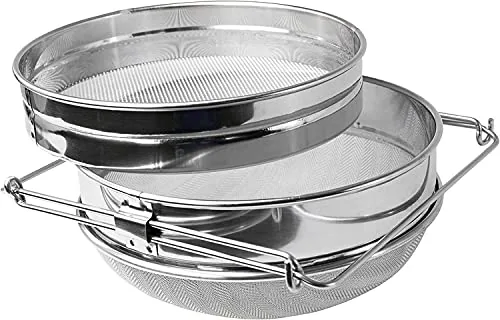
Test moisture, strain, bottle and label. Fill to the stated net weight; a kitchen scale that reads grams and ounces makes this easy.
- Build the display
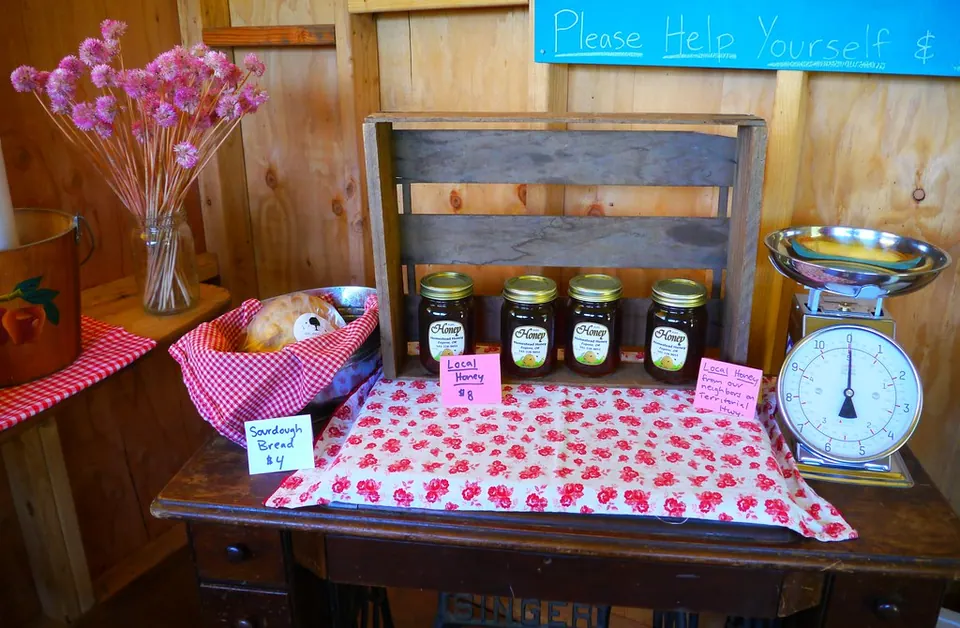
Use a table cloth, a tiered stand and a clear price sign. Put one jar of each size up front where sunlight shows the color. Keep stock in boxes under the table, out of the sun.
- Explain your honey
A small card that says where the bees are, what was flowering and that raw honey naturally crystallizes answers the three most common questions before anyone asks.
- Plan payment and change
Take cash with plenty of small bills and at least one card or app option. Round prices make change faster.
- Ask before you sample
Many health departments and markets regulate open food samples. Ask first, and use single-use spoons or sticks if samples are allowed.
- After market: record and restock
Note what sold, what people asked for and what was left. Adjust sizes before you bottle the next batch.
Mistakes to avoid
- Buying hundreds of jars before you know your state's rules or your harvest.
- Calling a blend or flavored product "pure honey". FDA guidance says honey with added sweetener cannot be labeled as just honey.
- Bottling honey without checking moisture; fermented jars come back.
- Leaving jars in full sun all day; honey darkens and labels fade.
- Apologizing for crystallized honey. Explain it and offer to show how to re-liquefy gently.
- Forgetting a simple sign with your name, location and how to reach you between markets.
Who should sell what?
- One or two hives: a single jar size and a handful of gift jars, or share a table with another vendor.
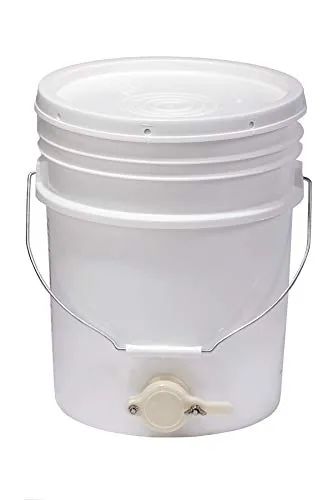
- Five or more hives: two or three sizes plus comb or creamed honey; a 5-gallon bottling bucket with a gate saves hours.
- Sideline sellers: look at your state's licensed-manufacturer path, product liability insurance and nutrition labeling exemptions; FDA's small-business exemption has a retail test of $500,000 in annual gross sales or $50,000 in food sales to consumers.
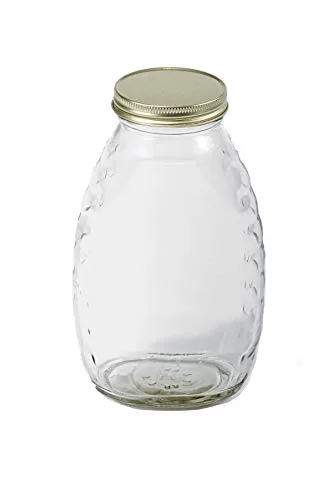
Little Giant 16 oz Glass Skep Honey Jars, 12 Pack
- Size
- 16 oz
- Count
- 12
- Material
- Glass
Best for Glass jars for market honey
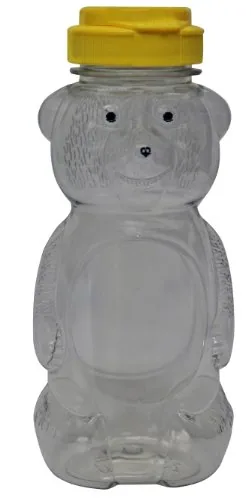
Mann Lake CN530 12 oz Squeeze Honey Bears, 24 Pack
- Size
- 12 oz
- Count
- 24
- Material
- PETE plastic
Best for Standard honey bears in bulk
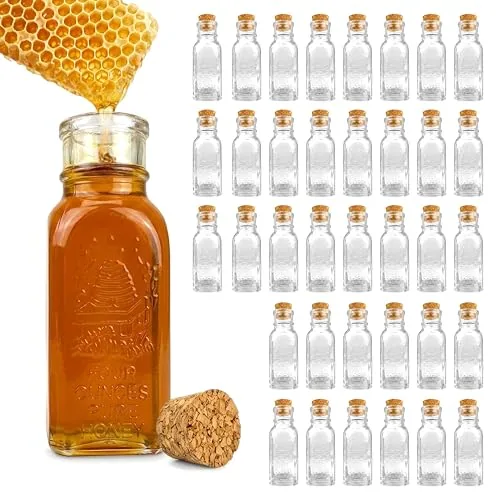
RetroPak 4 oz Muth Honey Jars with Cork, 36 Pack
- Size
- 4 oz honey (2.67 fl oz)
- Count
- 36
- Material
- Glass
Best for Small jars for market tables
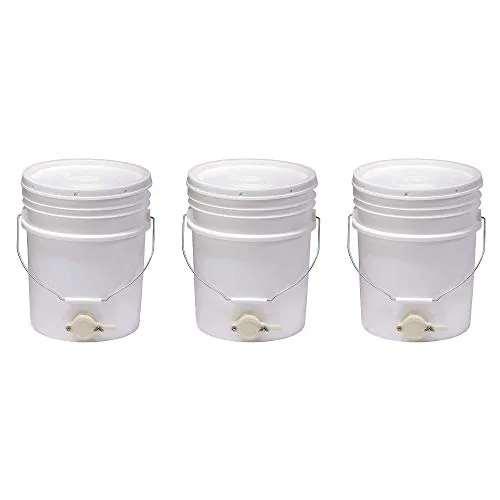
Little Giant BKT5 5-Gal Honey Bucket with Gate, 3 Pack
- Gate
- Honey gate, tight lid
- Material
- Food-grade HDPE (listed), metal handle
- Size
- 5 gallon each
Best for Settling and bottling larger harvests
Browse all bottling and selling gear or start from the selling honey hub. Wax candles are a natural second product; see how to make beeswax candles.
Get the rules and the label right first, then keep the table simple: dry honey, two or three sizes, a clear sign and a story about where your bees forage. Price from your own costs and records, not from a national number.
State-specific examples come from the Texas A&M AgriLife fact sheet; federal points come from FDA's honey labeling guidance and small-business exemption page; yields come from USDA NASS and Mississippi State Extension. Jar sizes are copied from maker listings. This is general information, not legal advice.
Questions
Do I need a license to sell honey at a farmers market?
What should a honey label say?
Can I sell flavored or infused honey at a farmers market?
Do I need nutrition facts on honey jars?
Why does raw honey crystallize?
How much honey should I bring to my first farmers market?
Sources
- Texas A&M AgriLife Extension: Selling Honey in Texas (NUTR-PU-146, November 2024)
- FDA: Proper Labeling of Honey and Honey Products, Guidance for Industry (2018)
- FDA: Small Business Nutrition Labeling Exemption
- USDA NASS: Honey (released March 2026), 2025 crop
- Mississippi State University Extension P4124 (2026): economic considerations for beekeeping
- USDA AMS: U.S. Standards for Grades of Extracted Honey