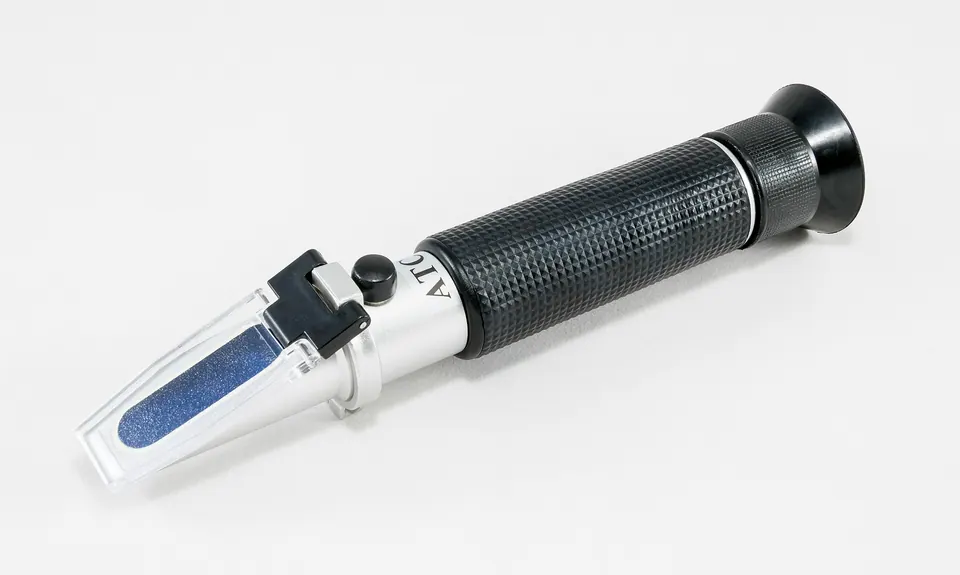
- Honey moisture is the share of water in your honey. The USDA grade standard sets a minimum of 81.4% soluble solids for Grade A, which is 18.6% moisture.
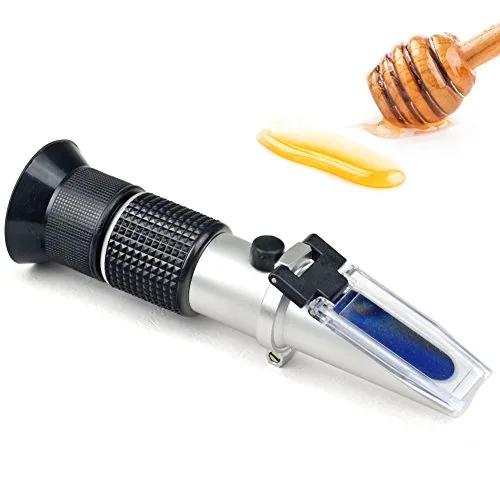
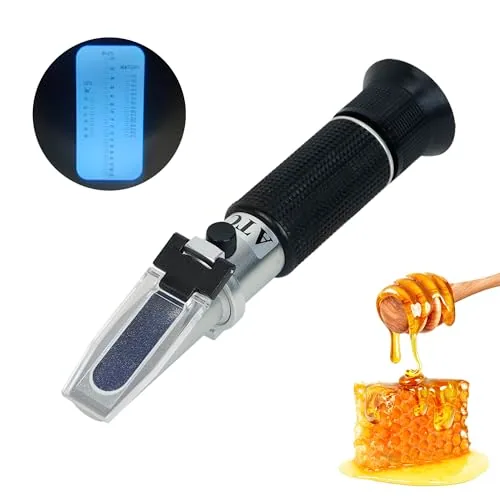
- A honey refractometer reads moisture from a single drop. Pick one with a moisture scale and automatic temperature compensation (ATC).
- Calibrate with the standard the maker supplies, test samples from several frames and write the numbers down.
- Wet honey is a storage problem, not a disaster: keep it separate, dry it, or use it yourself soon. Never blend it into a good batch without testing the mix.
Honey moisture is the single number that tells you whether a bucket of honey will stay sweet on the shelf or start to ferment. Bees ripen nectar by evaporating water and then cap the cell, but a rainy flow, uncapped frames or a humid honey house can leave you with honey that is wetter than it looks.
This guide gives you the official USDA numbers, explains how a honey refractometer works, walks through calibration and testing step by step, and shows what to do when a reading comes back high. Specs come from the maker listings in our catalogue; the grade numbers come straight from the USDA standard.
What is honey moisture and why does it matter?
Honey is mostly sugar dissolved in a small amount of water. The lower the water content, the more stable the honey. As moisture rises, the honey becomes easier for naturally present yeasts to work on, and fermented honey picks up a sour, yeasty or alcoholic note that buyers notice at once.
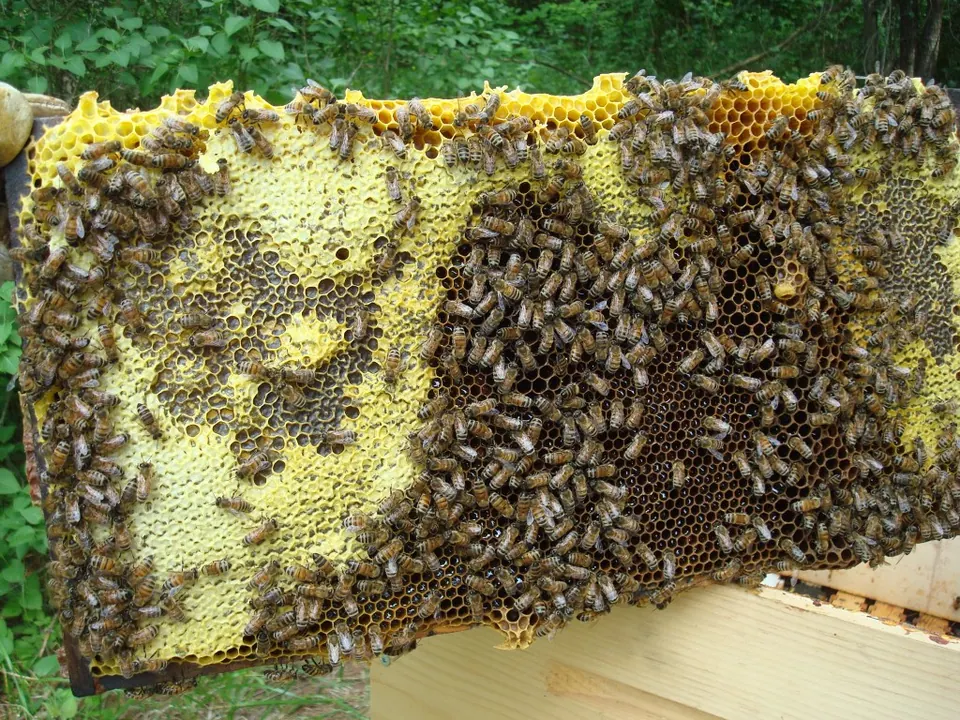
The USDA grade standard treats this as a quality issue twice over. Moisture is the one analytical factor, measured as percent soluble solids, and the flavor factor explicitly marks down honey with an off flavor caused by fermentation. Grading is voluntary for a backyard seller, but the numbers are the best published yardstick for deciding whether a batch is ready to bottle.
What moisture should honey be? The USDA grade numbers
The U.S. Standards for Grades of Extracted Honey (effective May 23, 1985) give a minimum soluble-solids figure for each grade. Here they are, converted to the moisture figure your refractometer shows.
USDA grade minimums for extracted honey
| Grade | Minimum soluble solids | Equivalent maximum moisture | Also required |
|---|---|---|---|
| U.S. Grade A | 81.4% | 18.6% | Score of 90+ for flavor, defects (and clarity if filtered) |
| U.S. Grade B | 81.4% | 18.6% | Score of 80+ |
| U.S. Grade C | 80.0% | 20.0% | Score of 70+ |
| Substandard | Fails Grade C | Over 20.0% | Fails Grade C requirements |
Source: USDA AMS, U.S. Standards for Grades of Extracted Honey, Tables IV and V
Maximum moisture by USDA grade
Lower is drier; the bars show the ceiling for each grade
Notice that Grades A and B share the same moisture limit; what separates them is flavor, defects and clarity. If you plan to sell, treat 18.6% as your working ceiling. Many sellers aim a little lower so a jar that sits in a warm, humid kitchen still has some margin.
How does a honey refractometer work?
A refractometer measures how much a thin film of liquid bends light. Sugar-rich honey bends light more than watery honey, so the boundary line you see through the eyepiece moves along a printed scale. The USDA standard itself specifies a refractometer reading at 68°F (20°C) and lists the refractive index for every tenth of a percent of moisture.
Temperature matters because warm honey bends light slightly less. The USDA footnote adds 0.00023 to the refractive index for each degree Celsius above 20°C. Honey meters with automatic temperature compensation (ATC) do this correction for you within a working range, so you can read in a normal room without a lookup table.
Moisture scale vs. Brix scale
Honey refractometers usually print three scales: water (moisture) percent, Brix and Baumé. Read the water scale and you are done. General-purpose Brix meters, including many digital units, show sugar content only; the maker's honey conversion is then needed to turn Brix into moisture. If you only ever test honey, a meter with a printed moisture scale saves a step and a source of error.
| Product | Type | Range | Resolution |
|---|---|---|---|
| aichose 3-in-1 Honey Refractometer with ATC | Analog refractometer, ATC | 12-27% moisture, 58-90% Brix, 38-43 Baume | 0.5% water, 0.5% Brix |
| NANBEI Honey Refractometer, Triple Scale, ATC | Analog refractometer, ATC | 12-27% moisture, 58-90% Brix, 38-43 Baume | — |
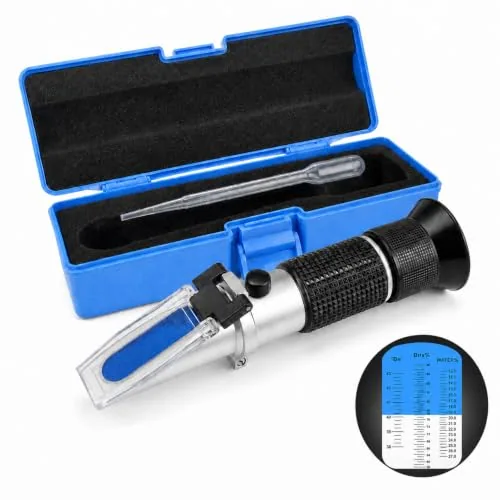
| GYE 3-in-1 Honey Refractometer with ATC | Analog refractometer, ATC | 12-27% moisture, 58-90% Brix, 38-43 Baume | 0.5% moisture, 0.5% Brix |
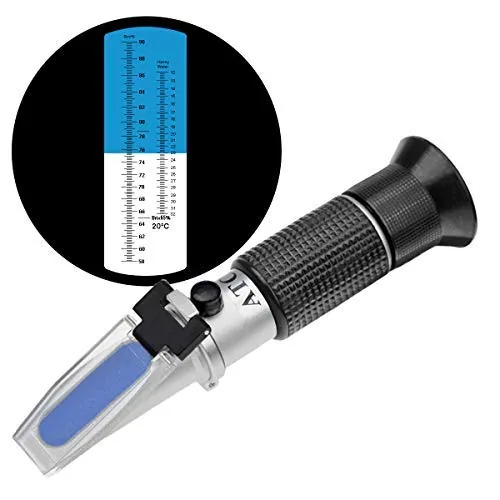
| TRZ Honey Refractometer, 10-32% Water, ATC | Analog refractometer, ATC | 10-32% water, 58-90% Brix | 0.2% |
| ZffXH 3-in-1 Honey Refractometer with ATC | Analog refractometer, ATC | 10-33% moisture, 58-90% Brix, 38-43 Baume | 1% moisture, 1 Brix |
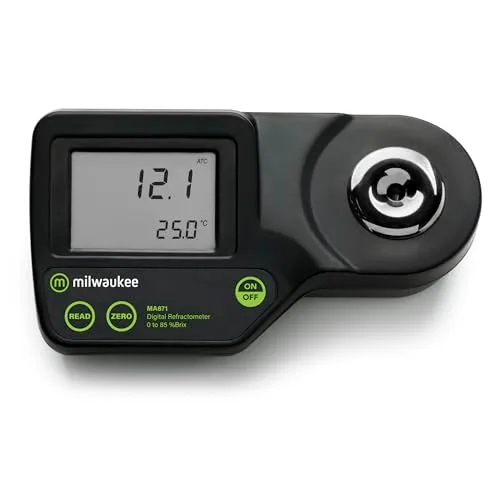
| Milwaukee MA871 Digital Brix Refractometer, 0-85% | Digital refractometer, ATC | 0-85% Brix | 0.1% Brix |
| Ade Advanced Optics AO-81150-14 Honey Refractometer | Analog refractometer | 58-90% Brix | 1.0% |
Specs as listed by the maker or seller; check the listing before you buy.
Two details from the listings are worth a second look. The TRZ reads 10–32% water at 0.2% resolution, finer than the common 0.5% honey meters; the ZffXH covers 10–33% but resolves to 1%, which is coarse when you are deciding between 18.4% and 18.9%. The Milwaukee MA871 is a digital Brix meter (0–85% Brix, ±0.2%), not a moisture meter.
How to calibrate a honey refractometer
Calibration sets the zero so the scale reads true. Most honey meters ship with a calibration standard (often a small block or a reference liquid) and a tiny screwdriver for the adjustment screw. Use what the maker supplies and follow the printed manual; methods differ between models. The ZffXH listing, for example, warns not to calibrate with plain water, and the TRZ listing calls for a 65% Brix standard.
- Let the meter and standard reach room temperature
Leave both on the bench for 20–30 minutes so the prism, the standard and the air are at the same temperature. ATC works best when nothing is warming up or cooling down.
- Clean and dry the prism
Wipe the glass with a soft, lint-free cloth. A trace of old honey or water will throw the reading.
- Apply the standard and close the cover plate
Use the amount the manual specifies. Press the daylight plate down gently so the film spreads evenly with no air bubbles.
- Turn the calibration screw to the reference value
Look through the eyepiece toward a bright light and turn the screw until the blue/white boundary sits exactly on the value printed for your standard.
- Clean up and recheck at the start of each session
Calibration can drift if the meter is dropped or stored in a hot car. A thirty-second check before each harvest day is cheap insurance.
How to test honey moisture step by step
Test before you extract if you can, and test again in the bucket. A frame-by-frame check lets you pull wet frames out before they dilute the rest.
- Sample several frames
Take a drop from capped and partly capped areas on frames across the super. Partly capped frames are where wet honey hides.
- Read in normal room conditions
Even with ATC, read away from a hot window or a heater. Hold the eyepiece toward daylight or a bright lamp and focus until the scale is sharp.
- Read the water scale where the shading starts
The boundary between the shaded and clear areas is your reading. On a three-scale meter, make sure you are on the water column, not Brix.
- Record frame, super and reading
Write it down. A record shows which hives and which flows give wet honey, and it backs up any label or sale later. Our hive inspection log works for this.
- Retest the bucket after straining
Mix gently, take a drop from the middle and read again before bottling. The bucket number is the one that matters for your jars.
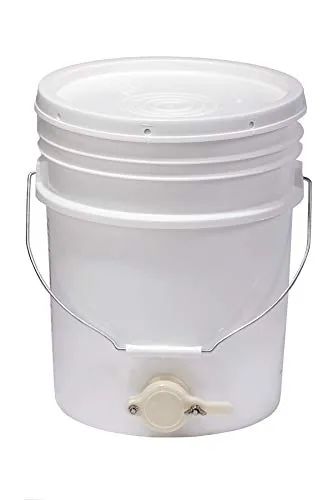
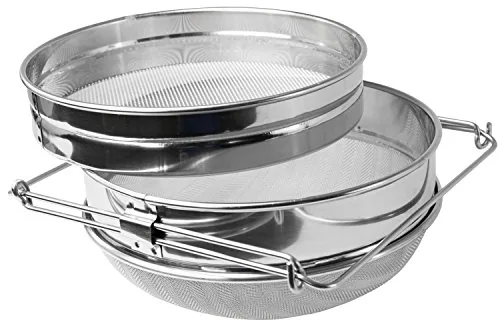
What to do if honey moisture is too high
A high reading is common after a humid flow or when a super came off early. You have several options, from least to most effort.
- Keep it separate. Label the bucket with the reading and do not mix it into a dry batch until you have tested a small trial blend. Blending moves the average, but it never makes wet honey dry.
- Leave supers on longer next time. Bees finish ripening honey and cap it when the flow allows; pulling frames that are mostly capped is the simplest prevention.
- Dry it in a closed room. Many beekeepers stack supers or set open buckets in a small, closed room with a dehumidifier and a fan, then retest every day. Keep the room clean and bee-proof.
- Use it yourself, soon. Wetter honey can still be good for your own kitchen. Store it cold and use it first.
- Do not overheat it. Gentle warming makes honey easier to handle and strain, but heat does not remove much water in a bucket and can darken honey and change its flavor.
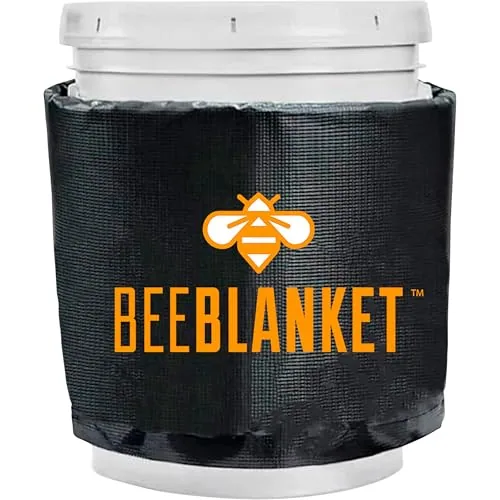
Powerblanket BB05 Bee Blanket 5-Gal Pail Heater
- Drive
- 120W, 120V
- Size
- 5-gallon
- Motor
- Ambient to 110 F (+/-10 F)
Best for Keeping bucket honey liquid
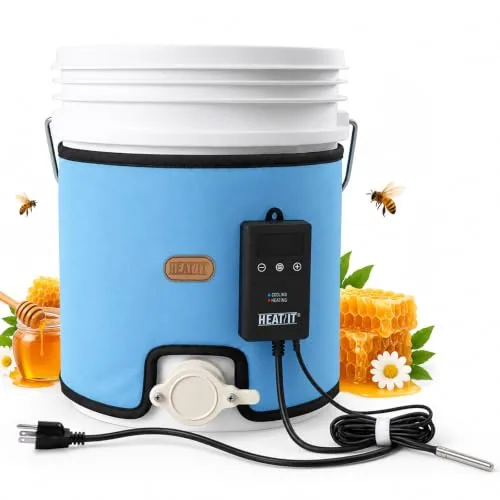
HEATIT 5-Gal Insulated Honey Bucket Heater, 200W
- Drive
- 200W, 120V
- Gate
- Cutout for gate valve
- Size
- 5-gallon, 39.37 x 12.2 in
Best for Liquefying crystallized honey
The Powerblanket BB05 holds a pail from ambient to about 110°F per its listing; the HEATIT wrap has a 0–210°F thermostat, so it is your job to keep the setpoint low.
Crystallized honey and refractometer readings
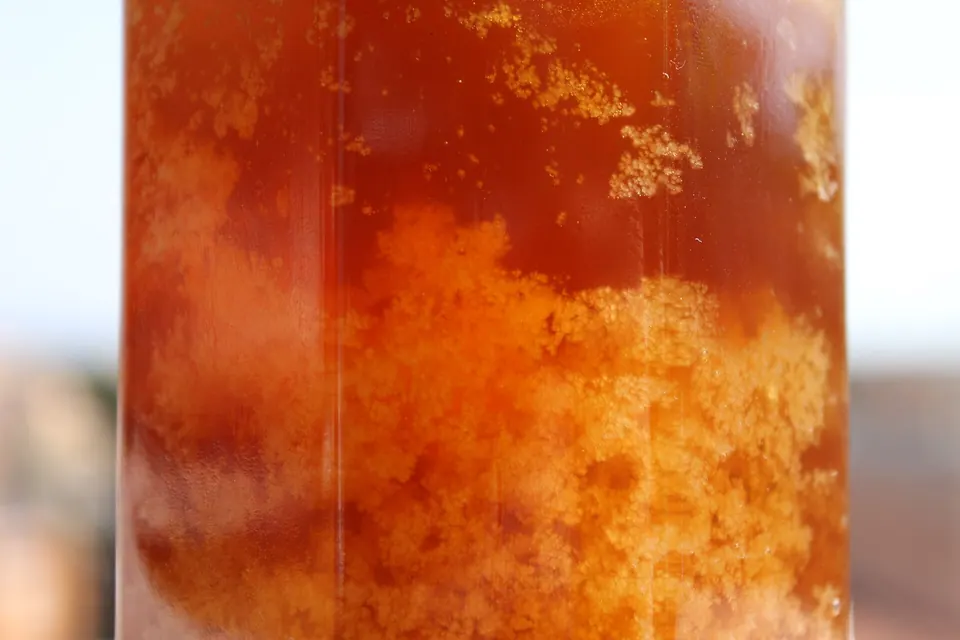
A refractometer needs a clear liquid film. Crystals scatter light and give a fuzzy or false line. The USDA standard handles this by liquefying crystallized honey at about 130°F (54.4°C) and cooling it to about 68°F before grading. At home, warm a small sample in a closed vial in warm water until it is clear, let it cool to room temperature and then read it. Keep the lid on so the sample does not lose or gain water while it warms.
Mistakes to avoid
- Reading the Brix column when you meant the water column on a three-scale meter.
- Skipping calibration because the meter is new. Shipping and storage can shift the zero.
- Testing a single capped frame and assuming the whole super matches.
- Blending a wet bucket into a dry one without testing a small trial mix first.
- Heating honey hard to "cook off" water. It mostly changes color and flavor.
- Storing extracted honey in an open bucket in a humid garage. Honey pulls moisture from the air.
Which honey refractometer should you choose?
- Most hobby beekeepers: a three-scale analog meter with ATC and a 12–27% water range, such as the aichose, NANBEI or GYE. They read moisture directly at 0.5% steps.
- Sellers who want finer steps: the TRZ lists 0.2% resolution across 10–32% water, useful when your batches sit close to 18.6%.
- Budget, rough checks: the ZffXH covers 10–33% but resolves to 1%; fine for spotting a clearly wet frame, less useful near the line.
- People who also test syrups or other foods: a Brix meter like the Milwaukee MA871 or Ade AO-81150-14, accepting that honey moisture needs a conversion.
TRZ Honey Refractometer, 10-32% Water, ATC
- Type
- Analog refractometer, ATC
- Range
- 10-32% water, 58-90% Brix
- Resolution
- 0.2%
Best for Fine moisture readings
GYE 3-in-1 Honey Refractometer with ATC
- Type
- Analog refractometer, ATC
- Range
- 12-27% moisture, 58-90% Brix, 38-43 Baume
- Resolution
- 0.5% moisture, 0.5% Brix
Best for Checking honey is dry enough to bottle
Milwaukee MA871 Digital Brix Refractometer, 0-85%
- Type
- Digital refractometer, ATC
- Range
- 0-85% Brix
- Resolution
- 0.1% Brix
Best for Precise sugar readings
For a ranked list with more models, see our best honey refractometer picks, and browse all honey harvest gear or the selling honey hub. When the batch passes, move on to selling at a farmers market.
Moisture starts at the frame: our honey extraction guide covers when frames are ready, and the best honey bottling buckets cover warming and bottling.
If you sell even a few jars, a three-scale honey refractometer with ATC pays for itself the first time it stops a wet bucket from going into jars. Use the USDA line of 18.6% moisture as your ceiling, calibrate before each session, and keep a written record of every batch.
Grade numbers, the refractive-index table and the temperature correction are taken from the USDA AMS U.S. Standards for Grades of Extracted Honey. Refractometer ranges and resolutions are copied from maker or seller listings in our catalogue. We did not test these instruments.