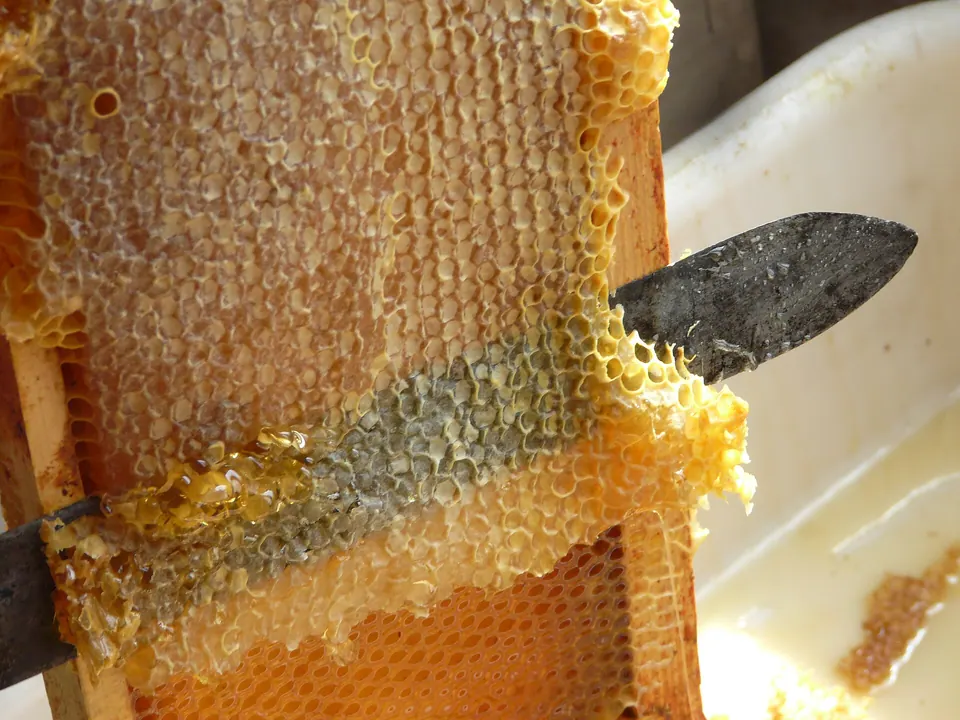
- Best heated knife: GLOGLOW 110V electric, 17.32 in overall, stainless, US plug.
- Best cold knife: WEICHUAN serrated, 11 in blade, 16 in overall, beech handle.
- Best fork: QWORK 21-tine stainless, 3-pack: every harvest needs one for low spots.
- Don't forget a station: a frame holder over a 5-gallon bucket or a two-layer uncapping tub keeps cappings and honey contained.
An uncapping knife is the fastest way to open the wax cappings bees put on each cell, and honey can't leave the comb until they're open. A knife slices cappings off in sheets; a fork lifts them in patches; a roller punctures them. The best uncapping knife for you depends on how many frames you uncap and how even your comb is. Most beekeepers end up with one knife and one fork.
We compared ten uncapping tools and stations from ten brands by type, blade material and length, power and heat as listed, handle, and what the tool is meant for. Then we explain heated vs cold knives and how to set up an uncapping station.
Our picks
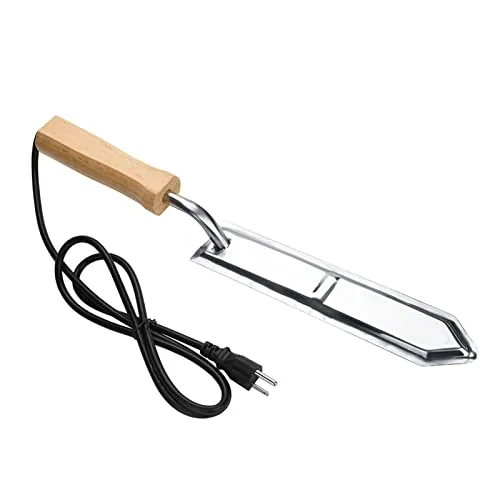
GLOGLOW Electric Hot Uncapping Knife, 110V
- Material
- Stainless steel
- Type
- Electric heated knife
- Voltage
- 110V, US plug
- Length
- 17.32 in
GLOGLOW's electric hot knife is 110V with a US plug, stainless steel and 17.32 in long overall. The listing says the blade heats once powered and reaches a maximum of "140-160" without stating a unit. The listing suggests keeping a tub of water nearby. A heated blade glides through cappings with less tearing than a cold one on full, even frames.
Best for: uncapping several supers per harvest
Skip if: you have no outlet near your uncapping area
- 110V, US plug
- 17.32 in overall length
- Stainless steel
- Heat figure has no unit
- No thermostat listed
- Burn risk: unplug when not in use
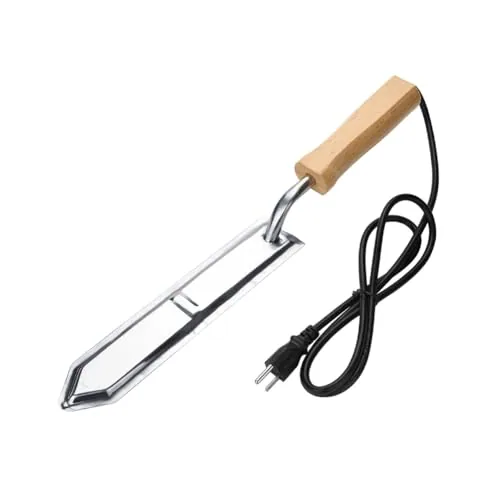
Joyzan Electric Serrated Uncapping Knife, US Plug
- Material
- Stainless serrated blade, wood handle
- Type
- Electric heated knife
- Plug
- US
Joyzan's electric uncapping knife has a stainless serrated blade and solid wood handle, with a US plug. The listing says the power connector is firmly fixed and the one-piece scraper resists loosening. A serrated heated edge helps on uneven comb and thicker cappings.
Best for: uneven comb and thick cappings
Skip if: you want listed length and heat specs
- Serrated heated blade
- Wood handle
- US plug
- Length not listed
- Heat not listed
- Turn off when not in use, per listing
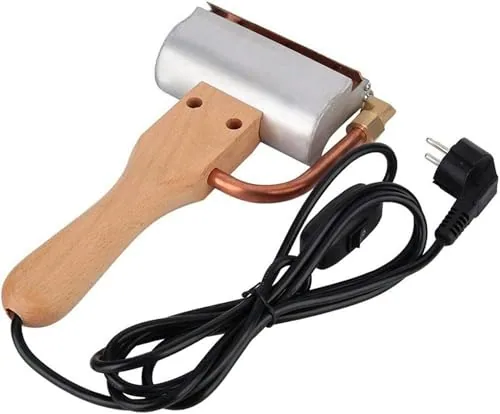
LGEOELIAS Electric Hot Uncapping Knife
- Material
- Stainless body, insulated handle
- Type
- Electric heated knife
LGEOELIAS lists a stainless body with an insulated handle, fast heating, easy cleaning and a design that lets you work for a long time without overheating. An insulated handle matters on long sessions with a heated tool.
Best for: long uncapping sessions
Skip if: you want voltage and length listed
- Insulated handle
- Stainless body
- Fast heating per maker
- Voltage and plug not listed in our data
- Length not listed
- Heat not listed
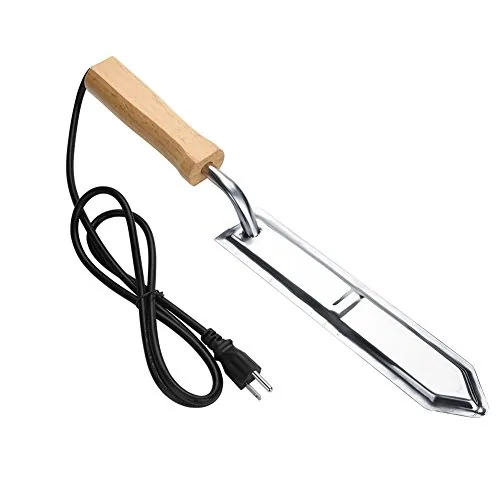
Fdit Electric Uncapping Knife, US Plug
- Type
- Electric heated knife
- Temperature
- Up to 140-160 (unit not stated)
- Plug
- US
Fdit's electric uncapping knife has a US plug and the same listing wording as the GLOGLOW, including a maximum of "140-160" with no unit stated. It may share a manufacturer with the GLOGLOW, but the listing doesn't say. Choose based on current availability and seller support.
Best for: a basic heated knife with a US plug
Skip if: you want clearly stated length and voltage
- US plug
- Heats when powered
- Simple design
- Heat figure has no unit
- Length not listed
- Same listing text as another brand
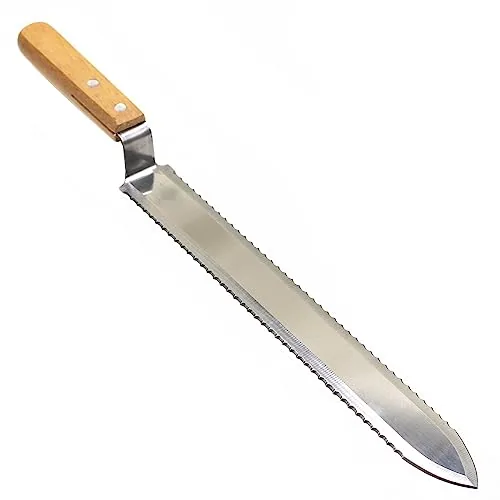
WEICHUAN Serrated Uncapping Knife, 11" Blade
- Material
- Stainless blade, beech handle
- Type
- Cold serrated knife
- Length
- 16 in total, 11 in blade
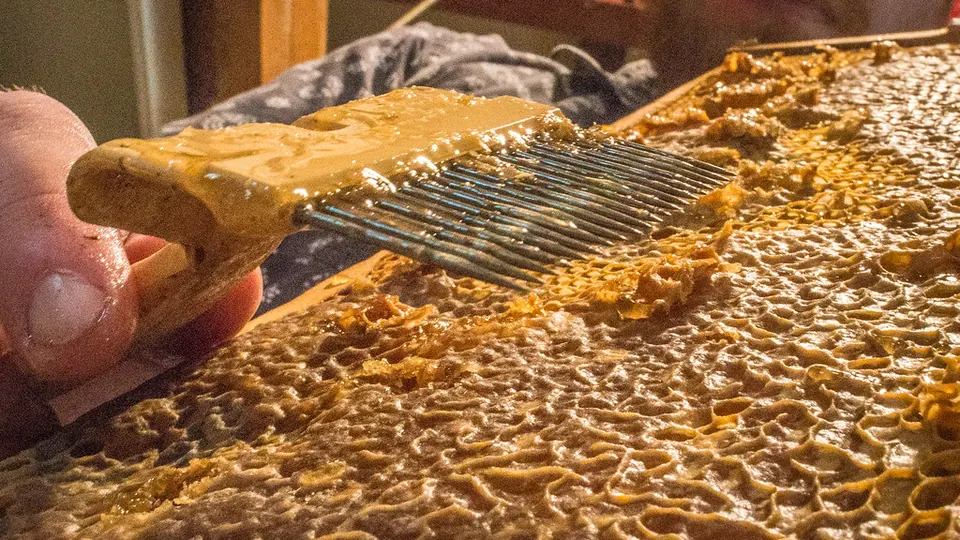
WEICHUAN's serrated uncapping knife has an 11 in stainless blade and a beech handle, 16 in overall. A cold knife needs no outlet and costs less. Warm it in hot water between frames for easier cutting, and wipe it dry before it touches comb.
Best for: one to three hives or uncapping away from power
Skip if: you uncap many supers at once
- 11 in serrated blade
- No power needed
- Beech handle
- Slower than heated
- Can tear cold, hard cappings
- Needs warming between frames
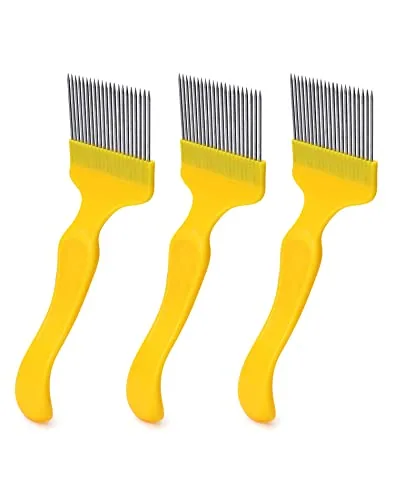
QWORK 21-Tine Stainless Uncapping Fork, 3 Pack
- Material
- Stainless tines, plastic handle
- Type
- 21-tine straight fork
- Count
- 3
QWORK's uncapping forks have 21 straight stainless tines and plastic handles, in a pack of three. A fork lifts cappings in sunken spots a knife skips, and is handy for checking drone brood for mites. Three forks means one for each helper, or spares.
Best for: every harvest, alongside a knife
Skip if: you want a fork for whole frames (it's slow)
- 21 stainless tines
- Pack of 3
- Clean with hot water and soap
- Slow as the only tool
- Plastic handle
- Tines are sharp: store covered
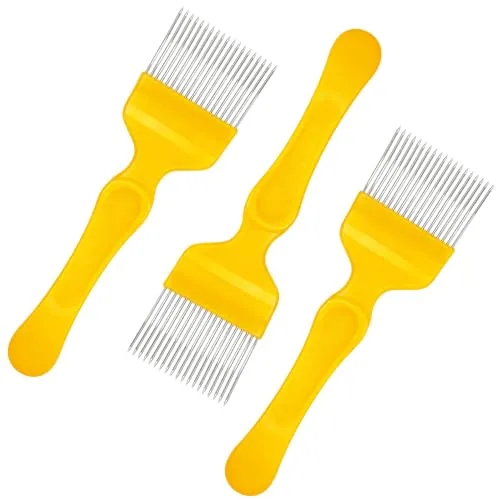
Zelerdo Steel Uncapping Fork, 21 Tines, 3 Pack
- Material
- Steel tines, plastic handle
- Size
- 150 mm handle
- Count
- 3
Zelerdo's 3-pack has steel tines (stainless not stated) and plastic handles, with a 150 mm handle and 70 mm width, per the listing. It does the same job as the QWORK for low spots and touch-ups.
Best for: a spare set of forks
Skip if: you want stainless tines stated
- Pack of 3
- Dimensions listed
- Easy to clean
- Steel grade not stated
- Plastic handle
- Slow on full frames
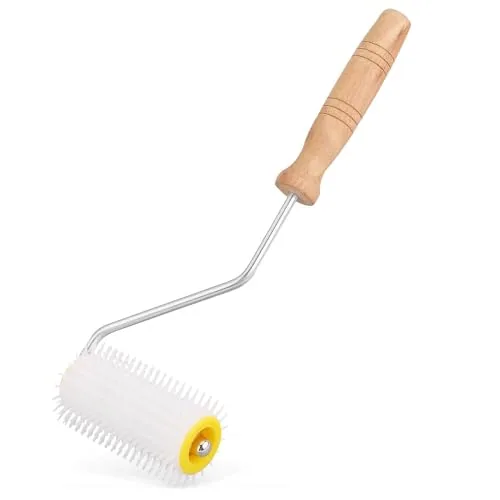
Flexzion Honey Uncapping Roller, 5" Wood Handle
- Material
- Plastic needles, wood handle
- Length
- 12.5 in total, 5 in handle
Flexzion's roller has plastic needles on a roller with a 5 in wood handle, 12.5 in overall. You roll it across the frame to puncture cappings rather than remove them. It is fast and easy for beginners, but punctured cappings stay in the comb and end up in the extractor, so strain well.
Best for: quick uncapping by beginners and kids with supervision
Skip if: you want clean cappings for wax
- Fast, easy to use
- 12.5 in total length
- Wood handle
- Wax bits go into the honey
- Plastic needles
- Less wax harvested
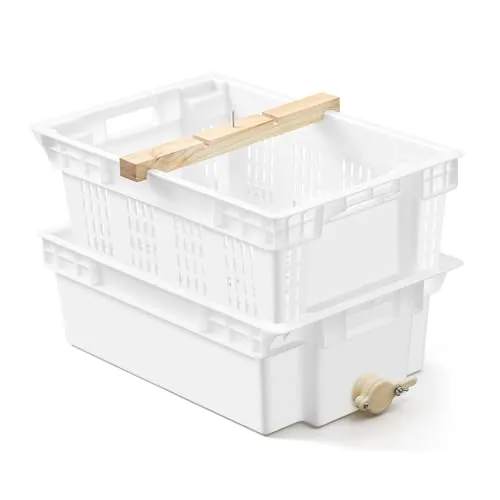
Zonon Double-Layer Uncapping Tray Set, HDPE
- Material
- Food-grade HDPE
- Type
- Two-layer uncapping tub with wooden slats
Zonon's food-grade HDPE uncapping station is a two-layer tub with wooden slats: frames rest on top while you cut, cappings collect above and honey drains into the lower section. The listing says it also works as a honey storage and bottling tank.
Best for: a contained uncapping setup that saves capping honey
Skip if: you only uncap a few frames a year
- Two-layer drain design
- Food-grade HDPE
- Wooden frame slats
- Takes floor space
- Capacity not listed
- Gate details not listed
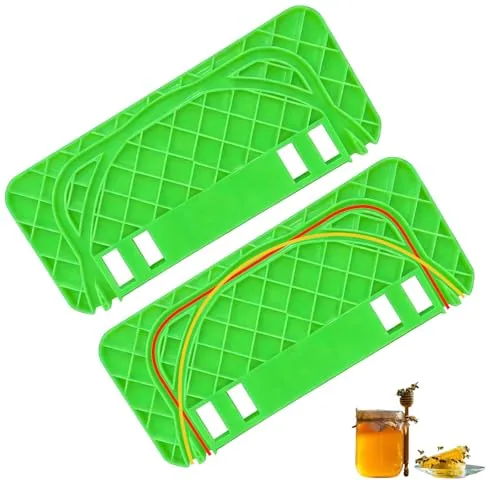
HIMO Uncapping Frame Holder, Round & Square 5-Gal, 2 Pk
- Material
- Thick ABS plastic
- Fit
- 5-gallon round and square buckets
- Count
- 2
HIMO's frame holders are thick ABS racks that fit both round and square 5-gallon buckets, in a pack of two. A frame stands on the rack while you uncap, and cappings fall into the bucket. It is the cheapest way to build an uncapping station.
Best for: beekeepers using 5-gallon buckets
Skip if: you want a dedicated tub with a drain layer
- Fits round and square buckets
- Pack of 2
- Thick ABS
- Bucket not included
- No strainer layer
- Plastic flex with heavy frames
Uncapping knife vs fork vs roller
Uncapping tools compared
| Heated knife | Cold knife | Fork | Roller | |
|---|---|---|---|---|
| Speed on full frames | ✓ fast | ~ medium | ✗ slow | ✓ fast |
| Handles low spots | ~ | ~ | ✓ | ~ |
| Needs power | ✓ yes | ✗ | ✗ | ✗ |
| Clean cappings for wax | ✓ | ✓ | ~ | ✗ wax stays in |
| Burn risk | ✓ yes | ✗ | ✗ | ✗ |
Source: Hive & Frame summary
Listed overall length
Only tools with a listed length are shown.
Heated or cold: which uncapping knife do you need?
A heated knife melts its way through cappings, which means less dragging and tearing, especially on cool days or with thick wax. It is the faster choice once you uncap more than a couple of supers. A cold serrated knife is cheaper, works anywhere and is fine for a few frames; dip it in hot water between frames to help it glide.
None of the heated knives here lists a thermostat, and the two that mention heat give a "140-160" figure with no unit, so expect to manage temperature by unplugging or resting the blade.
How to set up an uncapping station
- Contain the mess
Use a two-layer tub or a frame holder on a 5-gallon bucket so cappings and drips stay in one place.
- Stand the frame on end
Rest the frame on its end bar and tilt it slightly so cappings fall away from the comb.
- Slice from the bottom up
Saw gently with a heated or cold knife just under the cappings, using the frame's end bars as a guide.
- Fork the low spots
Use a fork for cells the knife missed.
- Drain cappings, then render
Let cappings drain for honey, then melt them for clean wax. See how to render beeswax.
Mistakes to avoid when uncapping
- Cutting too deep. Take off only the cappings so the bees have less comb to rebuild.
- Leaving a hot knife on the bench. Use a rest and unplug it.
- Uncapping in a room bees can reach. Open honey attracts robbers. Work indoors or screened.
- Skipping the strainer after a roller. Punctured wax ends up in the honey; strain it with a double sieve strainer.
Which uncapping tools should you buy?
- One to three hives: WEICHUAN cold knife + QWORK fork + HIMO holder.
- Several supers per harvest: GLOGLOW or Joyzan heated knife + fork + Zonon tub.
- Beginners and family harvest days: Flexzion roller, with a fork for gaps, and close supervision.
The next step is the spin: see best honey extractors and our guide on how to extract honey. All harvest tools are in the honey harvest category; selling gear on the honey sellers page.
Next step: manual vs electric extractors and how to extract honey.
For most harvests, pair a knife with a fork. The GLOGLOW 110V heated knife is our pick if you uncap several supers; the WEICHUAN cold serrated knife covers small harvests without a cord. Add a QWORK fork for low spots and a Zonon tub or HIMO holder to keep cappings and honey contained.
We compared uncapping tool listings by type, blade material and length, power, heat claims, handle and intended use, and uncapping stations by material, fit and design. Missing specs are marked not listed, and heat figures without units are reported as given. We did not uncap frames with these tools.