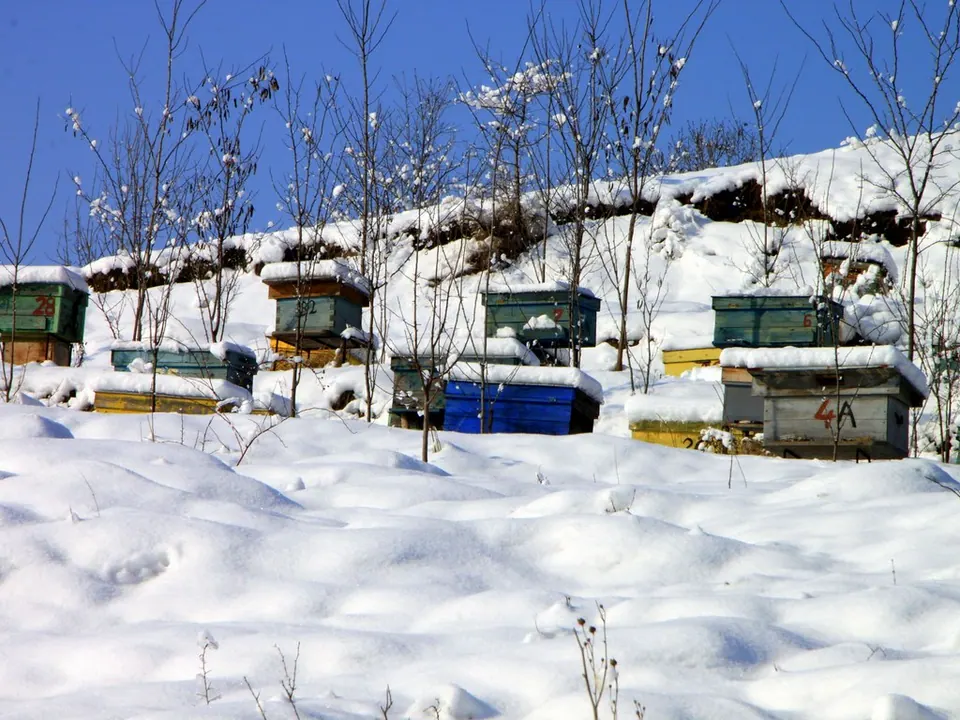
- To winterize a beehive, start in late summer: winter bees are raised in August and September and must develop with low mite loads.
- Reach your region’s honey target by fall: about 75–90 lb in the Northeast, 80–100 lb in the Mountain West, 65–70 lb in the Deep South, 60 lb or more in the Mid-Atlantic.
- Feed 2:1 syrup to light hives, and stop syrup before daytime highs fall below about 50°F; switch to fondant or a candy board after that.
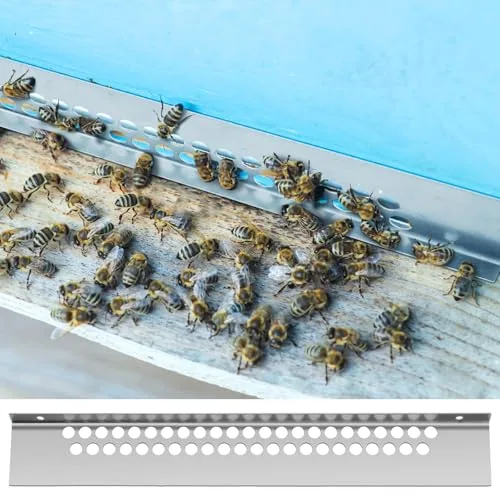
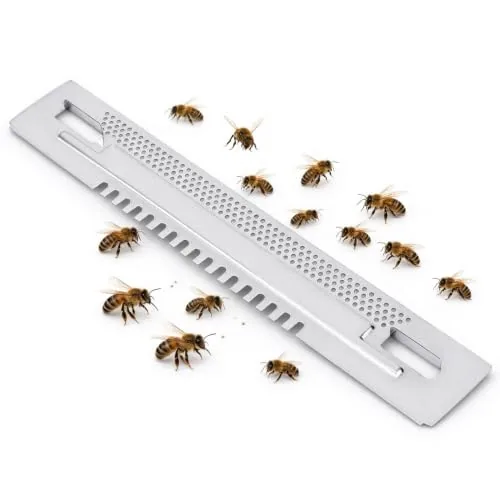
- Fit entrance reducers and mouse guards, strap or weight lids, and give the hive an upper vent, moisture board or quilt box. Condensation is a bigger threat than cold.
- Wraps and insulated boxes help in cold, windy or high places. In the South and low desert, they are usually unnecessary.
Learning how to winterize a beehive is mostly learning what to do before the cold arrives. A honey bee colony doesn’t hibernate. It forms a cluster and generates heat by eating honey, so it needs enough stores, a healthy population of long-lived winter bees, protection from mice and wind, and a way to vent the moisture it produces. Get those right and most colonies come through. Get the mites wrong in August and no amount of insulation in November will help.
This guide follows UF/IFAS ENY-161 Overwintering Honey Bee Colonies in Northern Climates, the University of Arizona’s fall and winter management guide, Penn State’s seasonal management guide and the regional calendars in our seasonal calendar. Use the seasonal checklist to tick off the fall tasks for your region.
When should you start winterizing a beehive?
Earlier than most beginners think. The jobs fall into three windows:
Winter prep timeline (northern and temperate regions)
| When | Job | Why |
|---|---|---|
| August | Mite wash; treat with an EPA-registered product if over threshold | Winter bees are raised in August and September |
| Late August–September | Re-test 2–3 weeks after treatment; combine weak colonies | Confirm the treatment worked; weak colonies rarely overwinter |
| September | Weigh or heft; feed 2:1 syrup if light | Bees need time to store and cure syrup |
| October | Remove empty supers and excluders; fit reducers and mouse guards; add moisture control | Before the cluster forms |
| October–November | Stop syrup before highs fall below ~50°F; strap lids; set windbreaks | Bees can’t cure cold syrup |
| December–February | Heft monthly; add fondant over the cluster if light; clear entrances | Starvation risk rises as brood rearing restarts |
Source: Hive & Frame seasonal calendar (Northeast, Mid-Atlantic and Mountain West calendars)
In the Deep South, Florida and the low desert, the timeline is shorter and gentler, and the main risks are fall dearths, robbing and small hive beetles rather than deep cold. The University of Arizona notes that October brood becomes the winter bees there.
How much honey does a hive need for winter?
Store targets depend on how long and cold your winter is. These are the figures in our regional calendars, adapted from the extension calendars for each region.
Fall honey target by region
Lower end of each calendar’s range, lb of honey per colony
The simplest check is to heft the back of the hive: tip it forward an inch and feel the weight. It is subjective, so many beekeepers weigh each side with a hanging scale in early fall and again in winter. Arrange frames so honey sits above and beside the brood nest, where the cluster will move up into it.
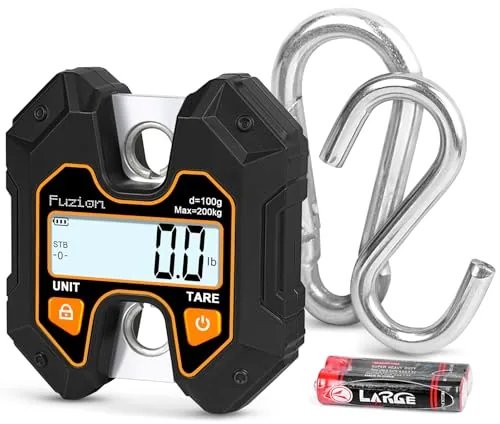
Fuzion 440 lb Digital Hanging Crane Scale
- Measures
- Weight
- Range
- Up to 440 lb, 0.2 lb resolution
- Features
- Hold and tare
Best for Checking hive weight
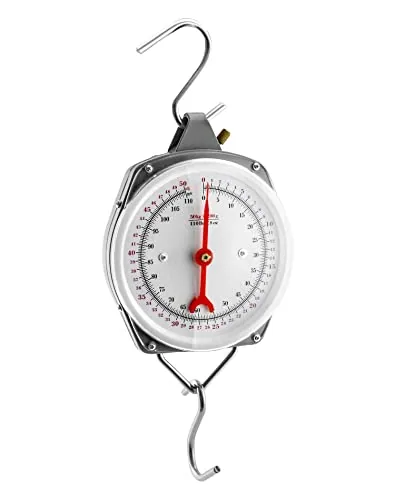
QWORK 110 lb Mechanical Hanging Scale
- Measures
- Weight
- Range
- 10–110 lb, ±2%
- Display
- Dial, lb and kg
Best for Checking hive weight
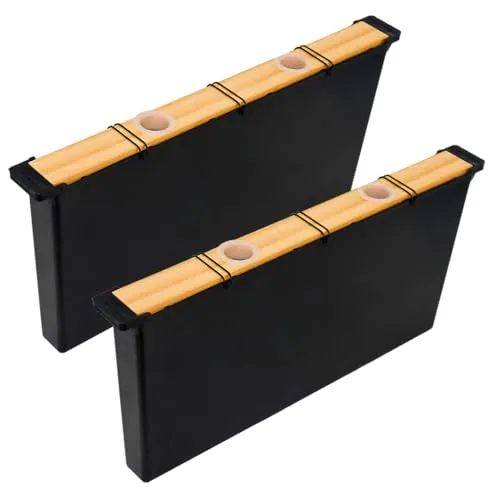
BeeCastle 3.5 L Deep Frame Feeders, 2 Pack
- Type
- Frame feeder
- Fits
- Deep boxes
- Capacity
- 3.5 L each
Best for Feeding inside the hive
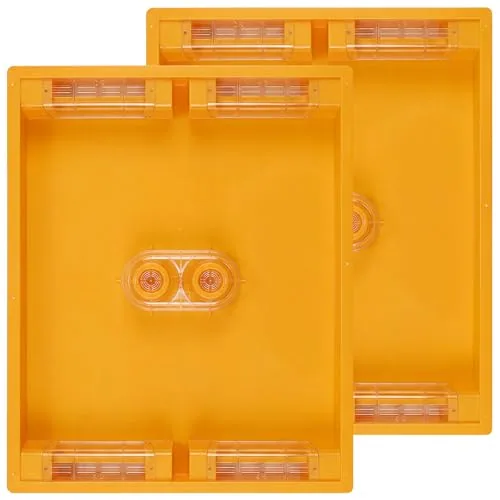
NUOMIC 10-Frame Top Feeders, 1.2 Gal, 2 Pack
- Type
- Top feeder (6 channels)
- Fits
- 10-frame
- Capacity
- 1.2 gallons
Best for Feeding several 10-frame hives
How to winterize a beehive, step by step
- Get mites below threshold in late summer
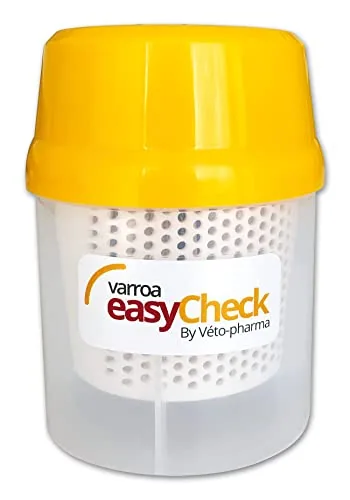
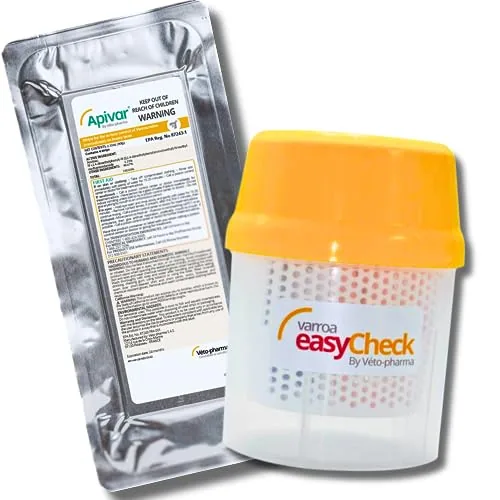
Wash about 300 bees in August. At 2 or more mites per 100 bees (HBHC 9th edition, population decrease), treat with an EPA-registered product, used per its label, and re-test 2–3 weeks later. See the varroa mite treatment guide.
- Combine weak colonies
A colony covering only a few frames in fall rarely makes it. Combine weak, disease-free colonies with queenright ones before it gets cold. The Mid-Atlantic calendar suggests combining colonies with fewer than about four deep frames of bees.
- Feed light hives 2:1 syrup
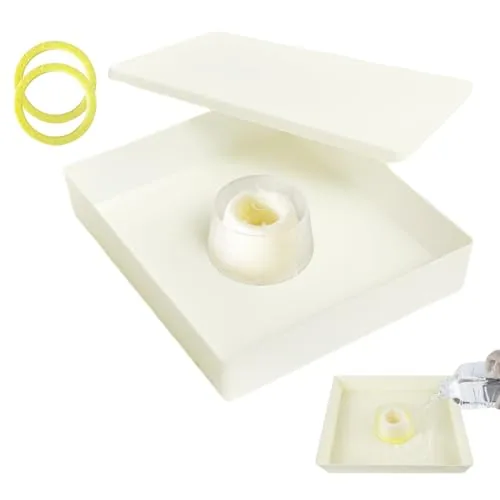
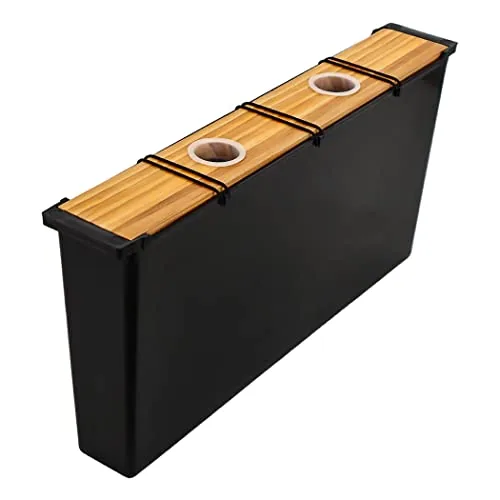
Use an in-hive feeder (top or frame) to reduce robbing, and feed until the hive reaches its regional weight target or highs drop below about 50°F.
- Remove what the bees don’t need
Take off empty supers, queen excluders (so the queen can move up with the cluster) and any mite treatment the label says to remove.
- Reduce the entrance and fit a mouse guard
Mice move into hives as nights cool. Fit a metal mouse guard or set the reducer to its smallest opening before the cluster forms.
- Control moisture
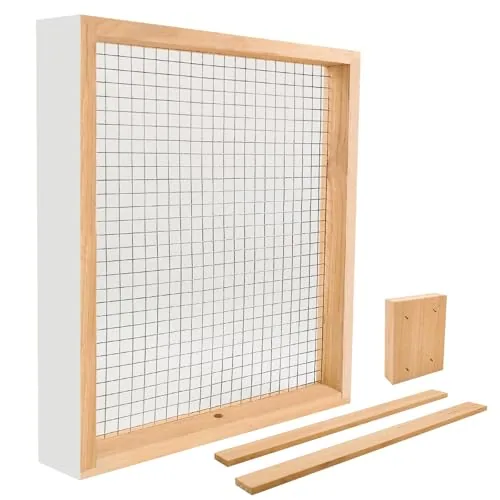
A cluster gives off warm, damp air that condenses on a cold lid and drips onto the bees. Give an upper vent, a moisture board, a quilt box or top insulation, and tilt the hive slightly forward so water runs out of the entrance.
- Strap the lid and block the wind
Weight or strap covers against winter storms, set hives up off the ground, and use a fence, hedge or straw bales as a windbreak on the windward side.
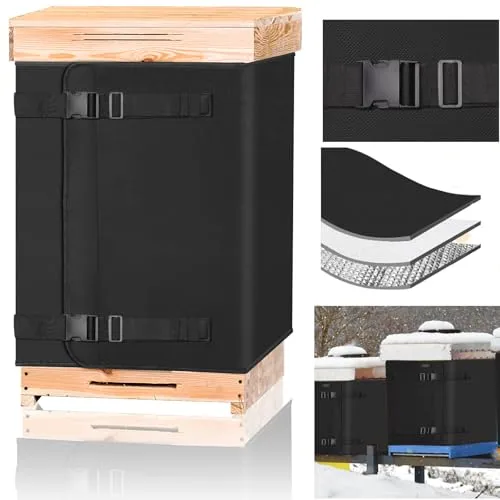
- Wrap if your region calls for it
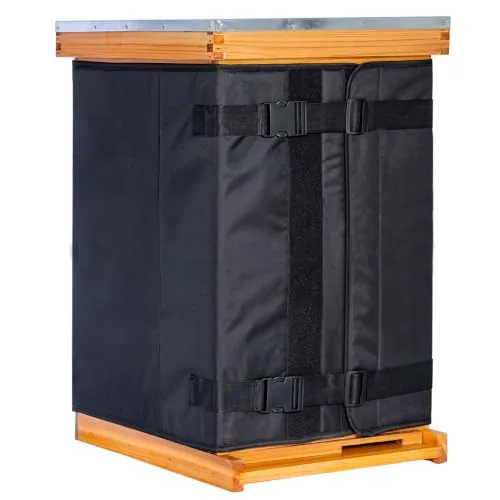
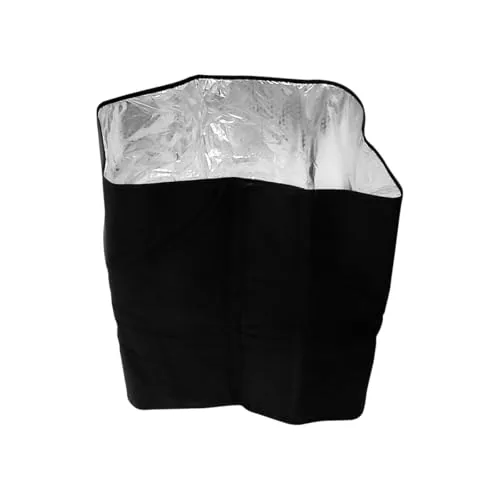
In cold, windy or high places, a wrap or insulated boxes reduce heat loss. Leave the entrance and upper vent clear.
- Then leave them alone
Don’t open the hive below about 50°F. Heft it monthly, clear dead bees and snow from the entrance, and lay fondant over the cluster on a calm day if it feels light.
Do you need to wrap or insulate a hive?
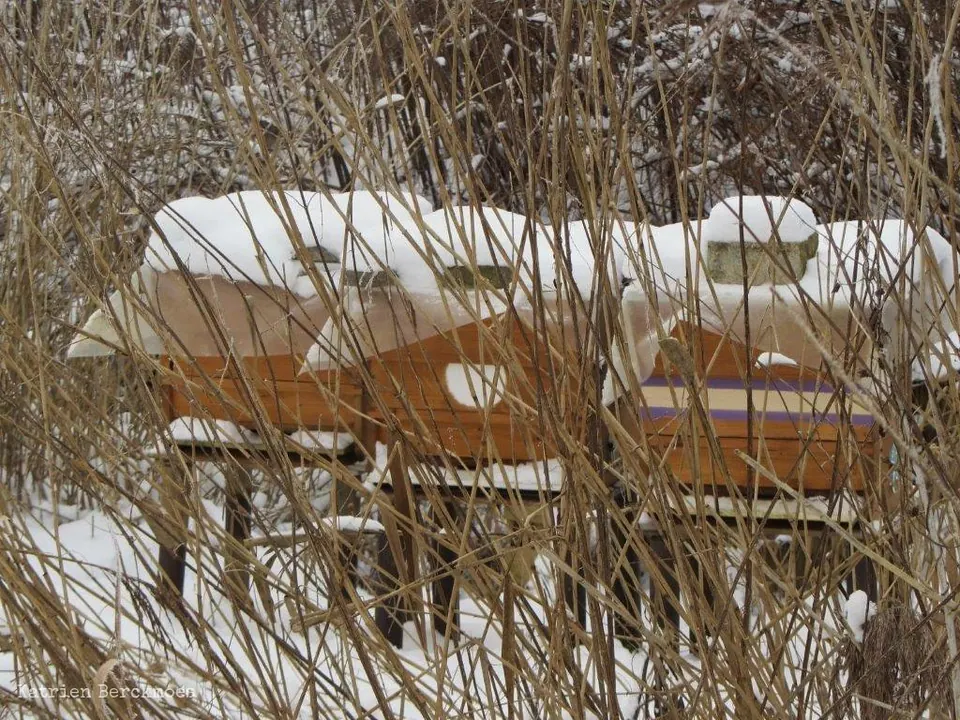
It depends on region. Our Northeast, Mountain West and high-elevation Southwest calendars suggest wraps or top insulation in cold or windy spots. Mid-Atlantic and Deep South calendars focus on stores, moisture and robbing instead. In Florida and the low desert, the summer heat is the bigger stress.
| Product | Size | Material | Fit | Closure |
|---|---|---|---|---|
| POLLIBEE Winter Hive Wrap for 8 & 10 Frame, 2D+1M | 76.8 x 24.8 in | 600D Oxford, 3 mm pearl cotton, 2 foil layers | 8 and 10 frame, 2 deeps + 1 medium | Velcro straps and buckles |
| Windspeed 8-Frame Winter Hive Wrap, 76 x 24.8 in | 76 x 24.8 in | 600D Oxford, 3 mm pearl cotton, aluminum film | 8-frame hives | Hook-and-loop strips, 2 buckles |
| Trademark Innovations 8-Frame Winter Hive Wrap | 72.2 x 23.6 in | 600D Oxford, foil lining, pearl cotton | 8-frame hives | Velcro strip |
Specs as listed by the maker or seller; check the listing before you buy.
Check that a wrap matches your hive: some fit 8-frame boxes only, and some are cut for one brand’s 10-frame deep. Insulated hive bodies, such as the plastic Apimaye boxes and Lyson polystyrene hives, are another route; their insulation figures are maker claims, so compare them with care. Our catalogue’s insulated hives come from just these two makers, plus a Layens-style horizontal hive.
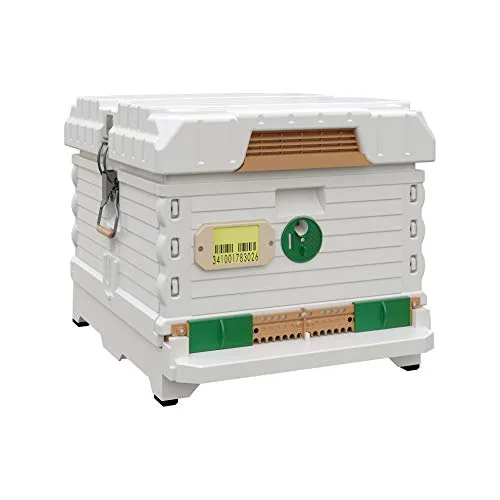
Apimaye Ergo Insulated 10-Frame Hive Set, No Frames
- Frames
- 10 (frames not included)
- Boxes
- Double deep
- Material
- Insulated plastic
Best for Cold-winter apiaries using their own frames
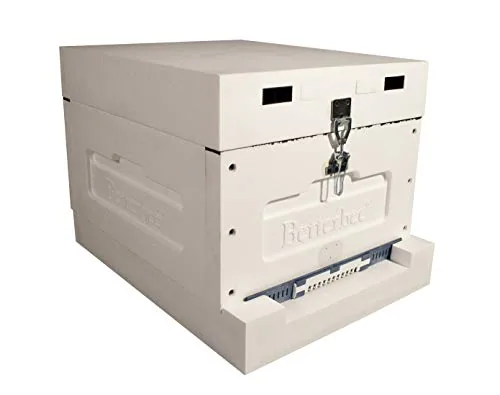
Lyson Insulated Polystyrene 10-Frame Hive Kit
- Frames
- 10 assembled wooden with plastic foundation
- Boxes
- 1 deep (9.5")
- Material
- Insulated polystyrene
Best for Cold climates without wrapping
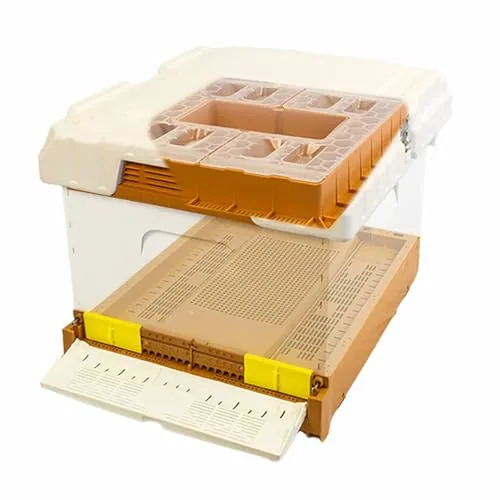
Apimaye Hive Upgrade Kit for 10-Frame Wood Hives
- Fits
- 10-frame Langstroth (wood)
Best for Upgrading wooden 10-frame hives
Compare wraps and foam hives in the best insulated beehives and the Apimaye insulated hive review.
How do you feed bees in winter?
Once it is too cold for syrup, use solid sugar: fondant, a candy board or dry sugar on newspaper over the top bars, placed directly over the cluster. The Northeast calendar notes that late winter is the riskiest time, because queens resume laying and the colony burns through stores. Heft every two weeks from mid-February in cold regions.
Hold off on pollen patties until spring is close and forage will follow; the Pacific Northwest calendar warns against pushing brood rearing too early.
Feeder types are compared in the best beehive feeders.
Winterizing mistakes to avoid
- Late mite control. Treating in October is too late to protect winter bees raised in September.
- Feeding syrup in the cold. Bees can’t evaporate it; it adds moisture and can ferment.
- Leaving the queen excluder on. The cluster moves up; the queen can’t follow and may be left behind.
- No moisture control. Condensation dripping on the cluster is deadly.
- Sealing the hive. Bees need an entrance for cleansing flights and an upper vent.
- Opening the hive to check. Heft and listen instead.
- Harvesting fall honey from a light hive. Fill the brood boxes first.
Who needs what for winter?
- Northern and mountain beekeepers: mouse guards, moisture boards or quilt boxes, wraps for exposed sites, and a large store target. See winter prep.
- Mid-Atlantic and Upper South: stores, a candy board as insurance and mouse guards; wraps are optional.
- Deep South, Florida and low desert: reduced entrances against robbing, beetle traps and fall feeding where flows fail. See bee health and feeding.
- Anyone with an 8-frame hive: fewer frames means less stored honey per box, so check weight carefully.
Winterizing a beehive starts in August, not November. Bring mites below the HBHC threshold while winter bees are being raised, combine weak colonies, feed light hives 2:1 syrup until about 50°F, then fit mouse guards, reduce entrances, give the hive an upper vent or moisture board, strap the lid, and wrap only where your region calls for it. After that, heft monthly and leave the cluster alone.
Questions
How do you winterize a beehive?
How heavy should a hive be for winter?
When should I stop feeding sugar syrup?
Should you wrap a beehive in winter?
Do bees need ventilation in winter?
Can I open a hive in winter?
Sources
- UF/IFAS EDIS ENY-161: Overwintering Honey Bee Colonies in Northern Climates
- University of Arizona: Fall and Winter Management of Honeybees in Arizona (AZ2019, 2022)
- Penn State Center for Pollinator Research: Honey Bee Management Throughout the Seasons
- Cornell CALS: Beekeeping calendar for the Northeast
- University of Minnesota Bee Lab: Beekeeping in Northern Climates, 3rd ed. (Aug. 2026)
- Utah State University Extension: Beekeeping annual calendar
- Honey Bee Health Coalition: Tools for Varroa Management, 9th edition (June 11, 2026)